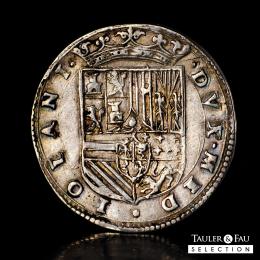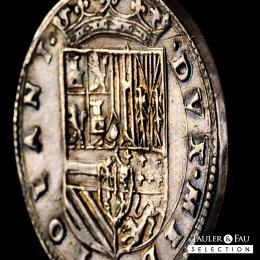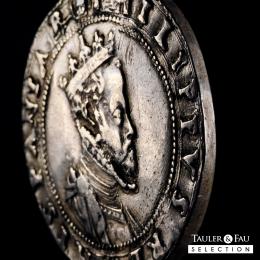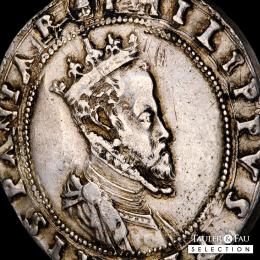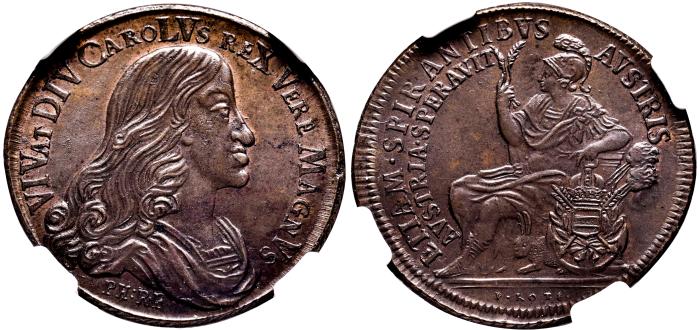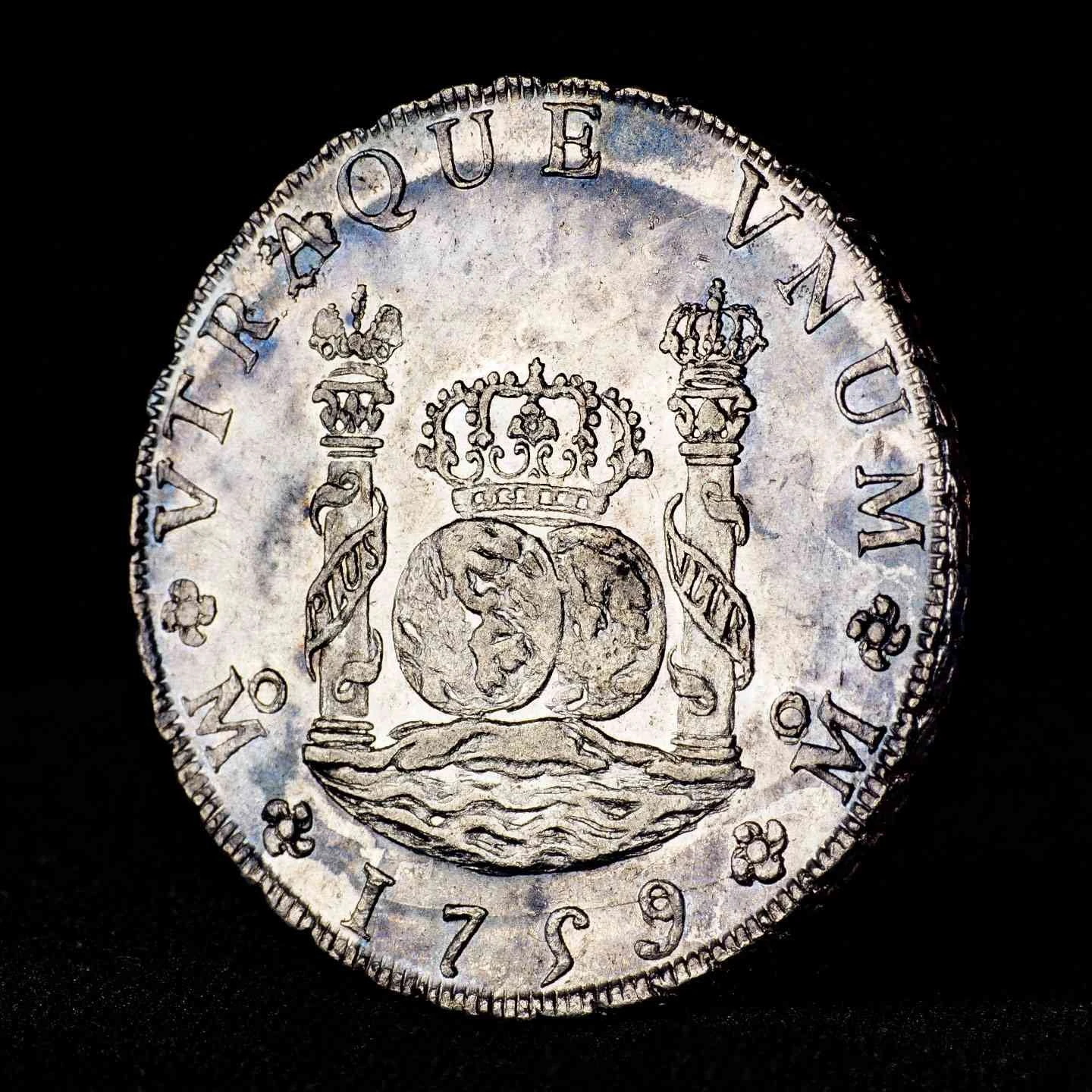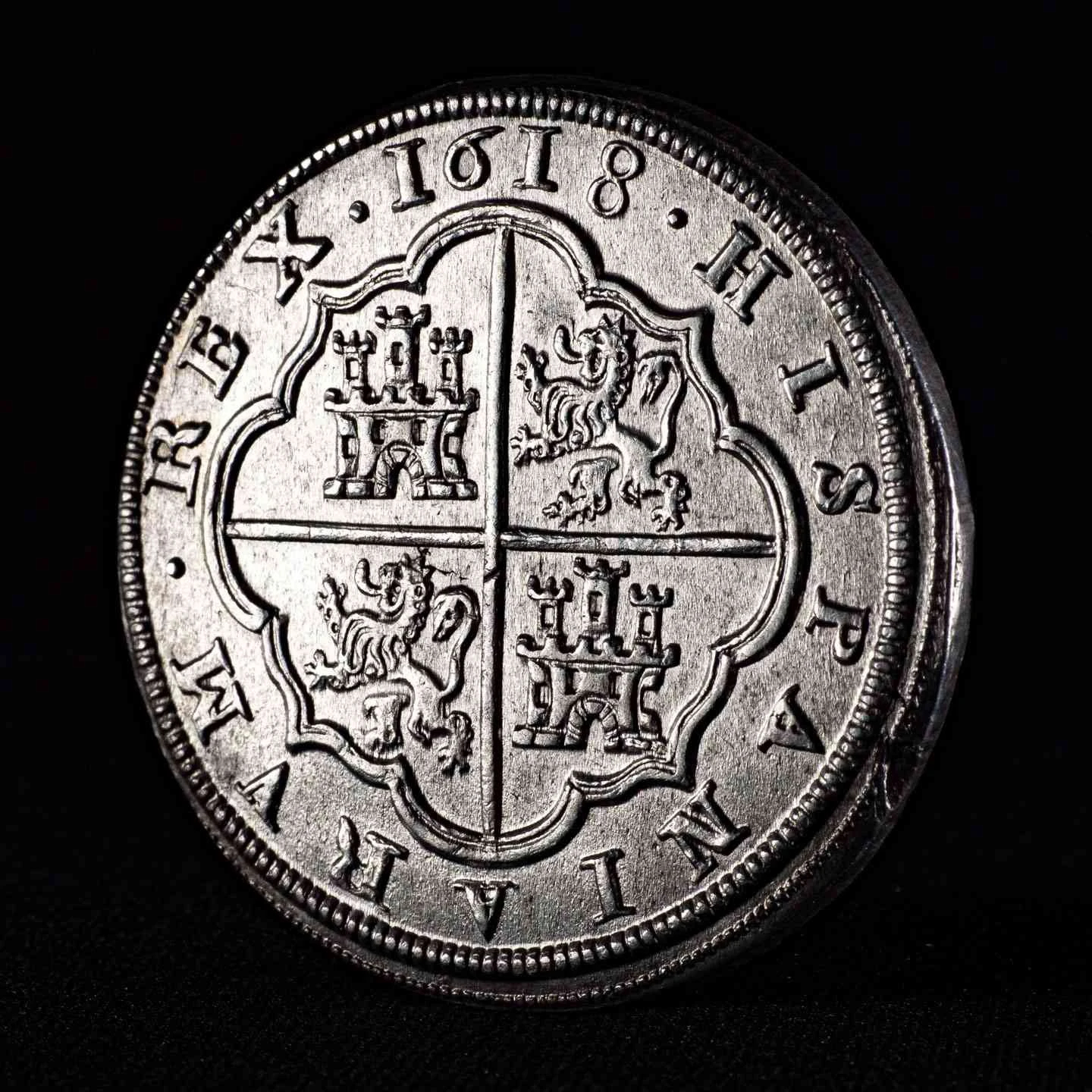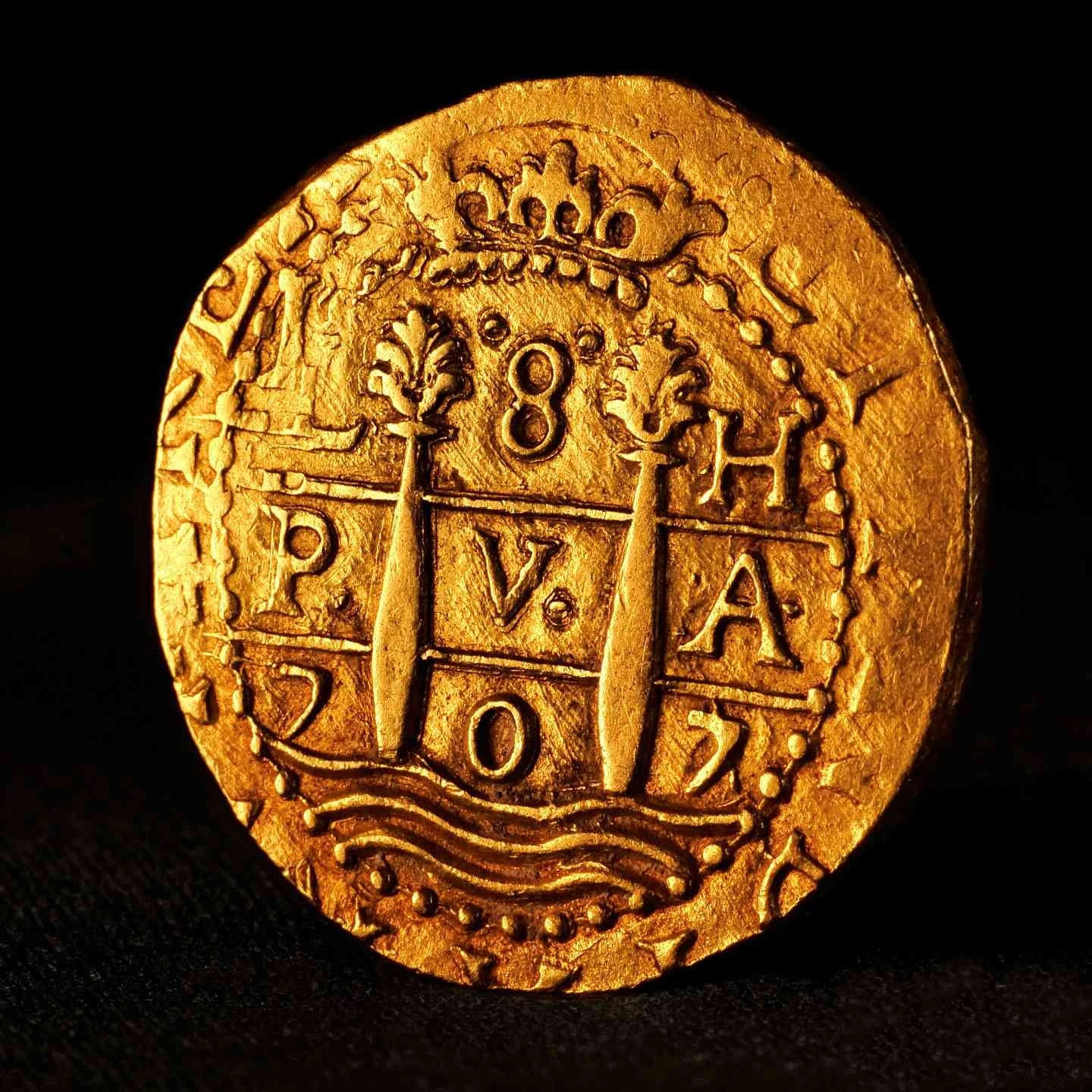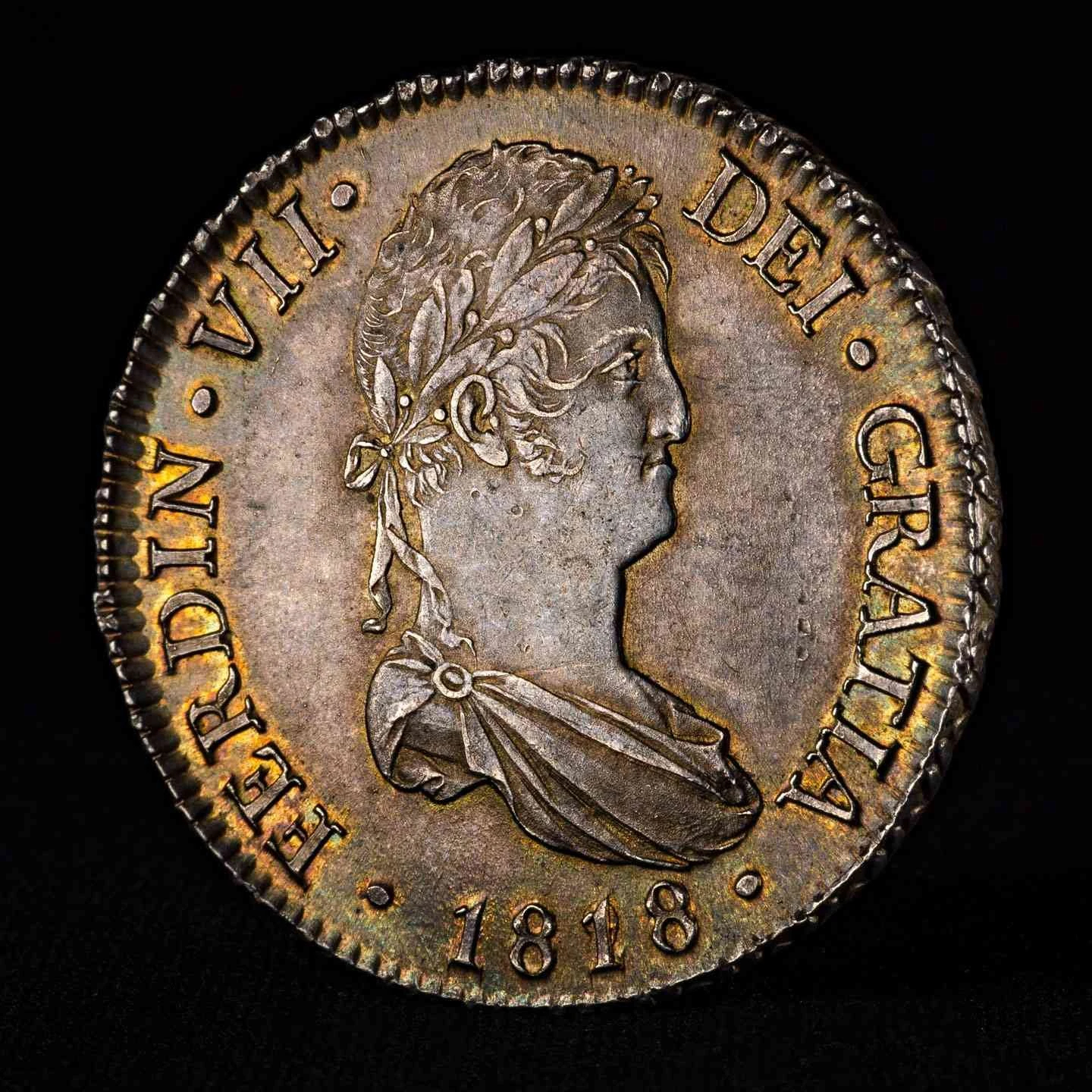
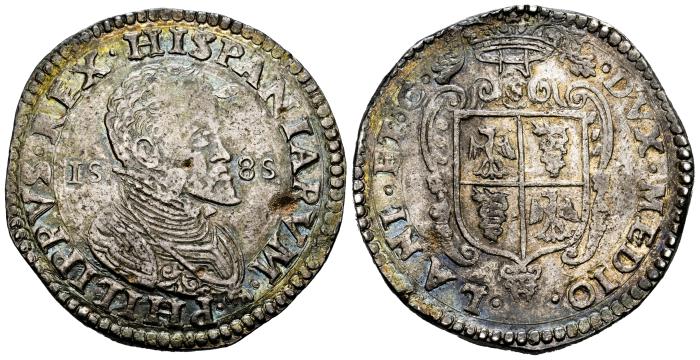
NGC - MS 61 Top Pop!!
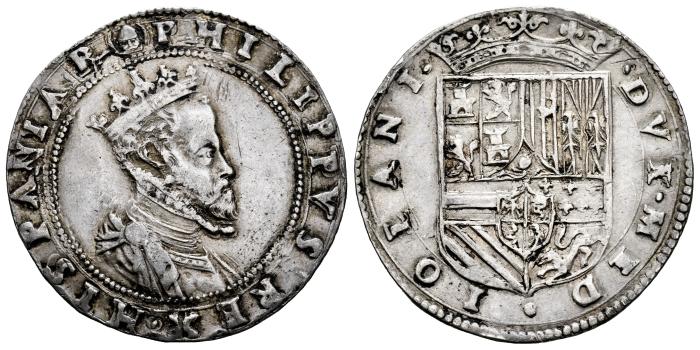
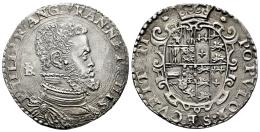
Philip II (1556-1598). 1 ducaton. 1585. Milano. (Tauler-486). (Vti-52). (Mir-308). . Cabinet tone with bluish and golden hues that enhance its excellent eye appeal. Only a slight striking defect near to the legend on obverse. Very rare in this condition. Slabbed by NGC as MS 61 (Top Pop), the finest known in the NGC census. Est...1200,00.
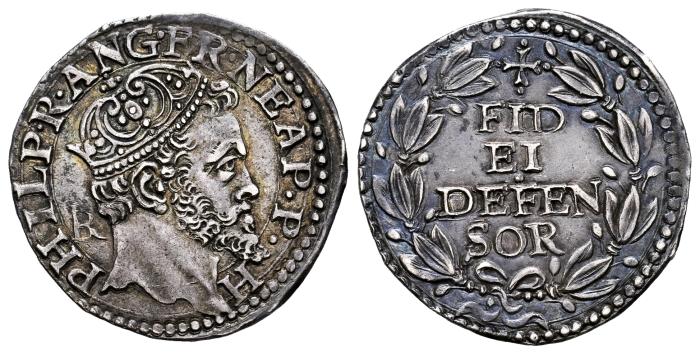
NGC - AU 55 Top Pop!!
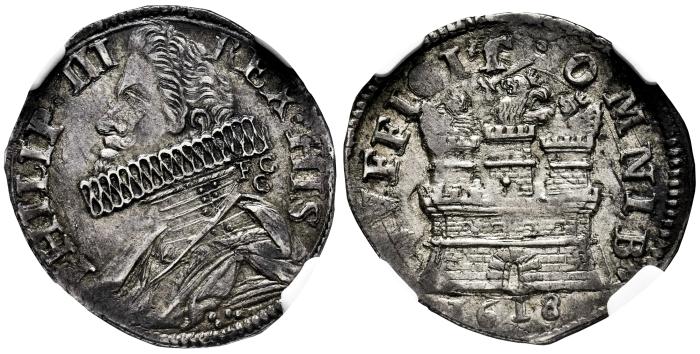
Philip II (1556-1598). 1 carlino. ND. Naples. IBR. (Tauler-620). (Vti-312). (Mir-165). . 2,94 g. Reverse legend in 4 lines. Variety with no marks below the bust. Nice cabinet tone with bluish hues on reverse. Rare in this condition. Slabbed by NGC as AU 55 (Top Pop), the finest known in the NGC census. Est...600,00.
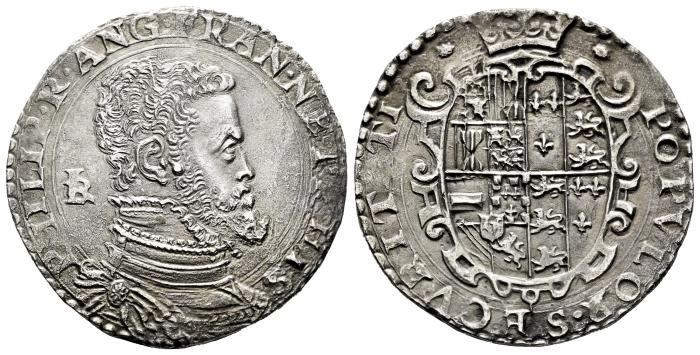
PCGS - AU 55 Top Pop!!
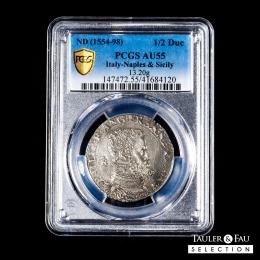
Philip II (1556-1598). 1/2 ducado. ND. Naples. IBR. (Tauler-669). (Vti-349). (Mir-160). . 13,20 g. With the title of King of England and Prince of Spain. Slight patina. Rare in this condition. Slabbed by PCGS as AU 55 (Top Pop), the finest known in the PCGS census. Est...500,00.
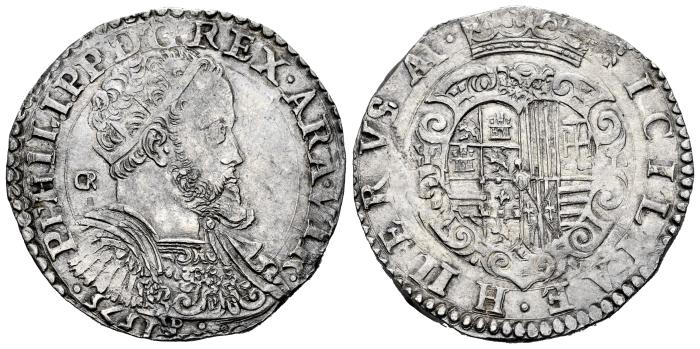
PCGS - AU 55 Top Pop!!
Philip II (1556-1598). 1/2 ducado. 1575. Naples. GR/VP. (Tauler-684). (Vti-360). (Mir-174/7). . 14,91 g. GR behind and VP below the bust. Soft tone on obverse. Nice strike, good specimen for this type. Rare in this condition. Slabbed by PCGS as AU 55 (Top Pop), the finest known in the PCGS census. Est...600,00.
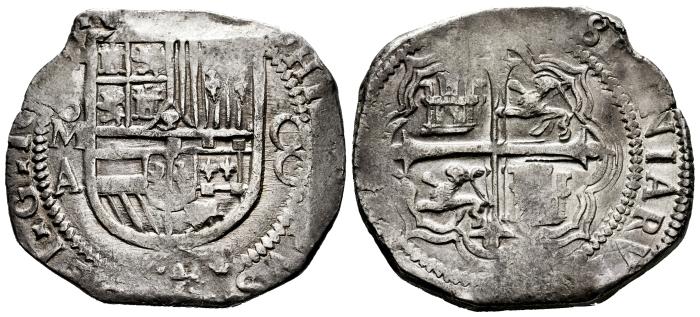
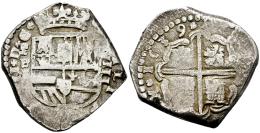
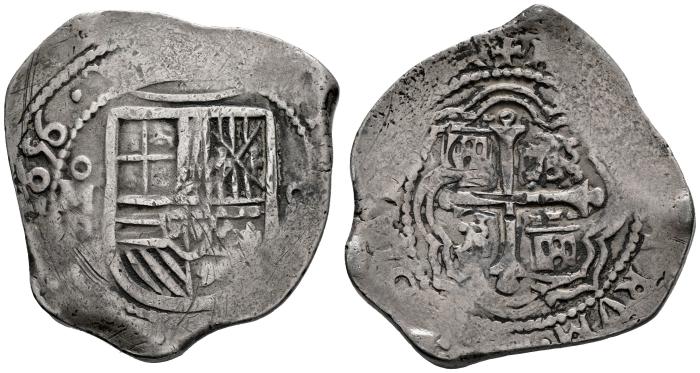
Philip III (1598-1621). 8 reales. (1608-1609). Mexico. A. (Cal-890/891). . 27,15 g. No date but according to the assayer, it corresponds to 1608 or 1609. Attractive with ample surviving mint frost throughout. Well struck in the centers, the peripheral details somewhat soft. Rare. Ex S.P. Rutherford Collection. Choice VF. Est...1500,00.
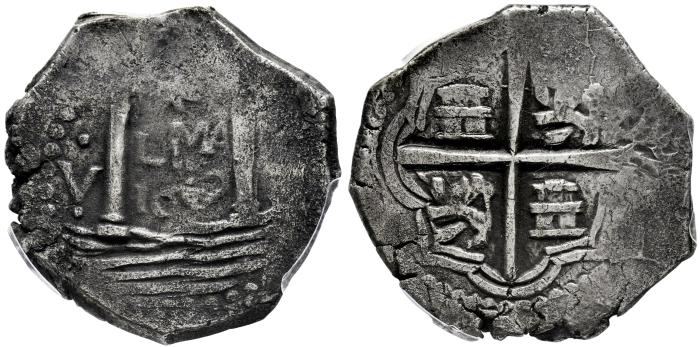
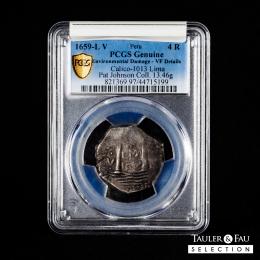
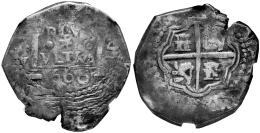
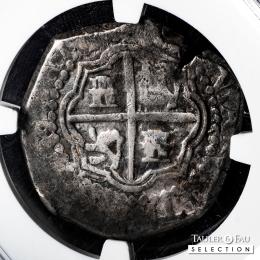
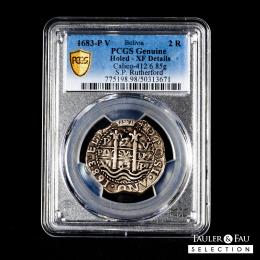
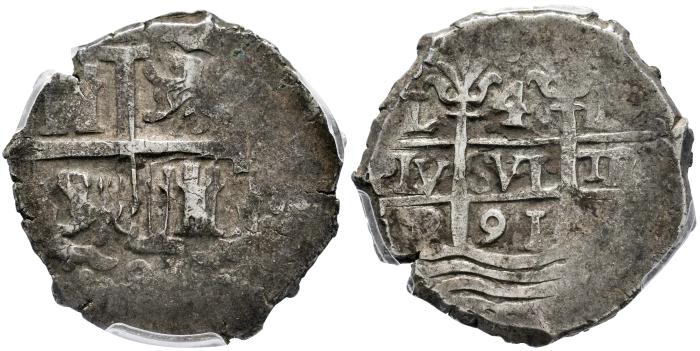
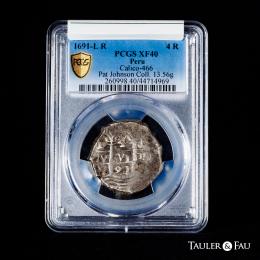
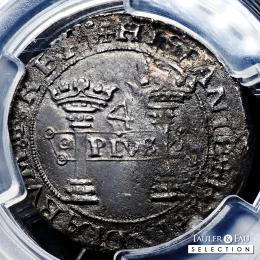
1659 "Star of Lima" - VF Details
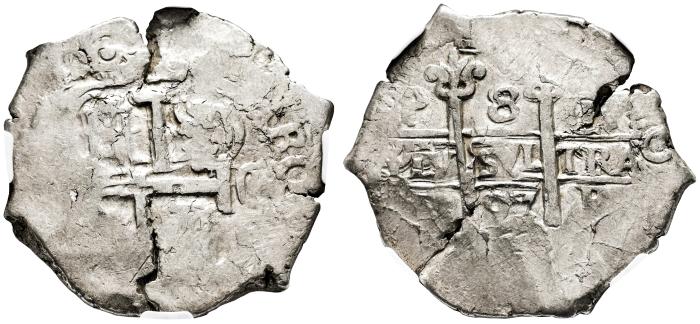
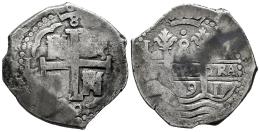
Philip IV (1621-1665). 4 reales. 1659. Lima. V. (Cal-1013). . 13,46 g. “Star of Lima” type. Mintmark ★ above LIMA, V to left and 4 not visible to right. An exceedingly rare example of what is regarded as the first variety of this unauthorized issue, struck for only two years. Well-centered pillars with the clear assayer’s initial V to the left, showing a slight central weakness more pronounced toward the right side of the obverse.
The reverse displays particularly sharp castles and lions with a fully formed cross of notable presence. An excellent opportunity to acquire an attractive specimen of an exceptionally difficult type that seldom appears at auction.
Slabbed by PCGS as Genuine, Environmental damage – VF Details.
Ex Pat Johnson Collection.
Ex Kagin’s ANA sale, August 1983, with the original auction tag preserved.
This rare issue is a direct result of the Great Potosí Mint Fraud of 1649. World trade was shaken to its core after the discovery of a vast conspiracy at the Potosí mint, which for years had been issuing countless underweight and debased silver Reales. With Spain’s commercial reputation at stake, the Crown imposed severe punishments on the guilty and initiated a series of reforms.
These reforms had the unintended consequence of encouraging the public to hoard the newer, finer issues, creating a widespread shortage of good coinage in circulation. In response, Luis Enríquez de Guzmán, Viceroy of Peru, took the initiative of reopening the Lima mint in 1658.
This decision, made unilaterally by Guzmán without the Crown’s permission, ended the 66-year inactivity of the Lima mint, which had been closed since 1592 in favor of Potosí due to the difficult journey between Lima and the Cerro Rico mines. As soon as the king was informed of the illegal reopening, he ordered the mint to close once again, just 16 months after its reopening.
During this brief period, the mint produced a singular series of issues featuring prominently the star symbol of Lima, the so-called “City of Kings.” The surviving examples of this extraordinary issue are of great rarity and numismatic importance. Est...3000,00.
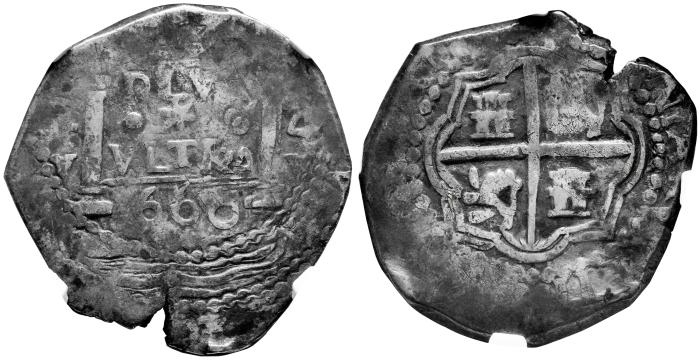
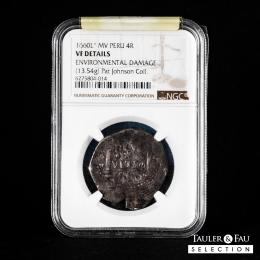
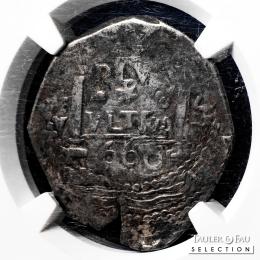
1660 "Star of Lima" - VF Details
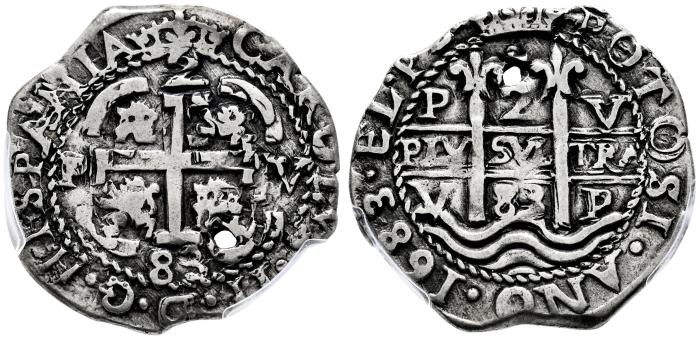
Philip IV (1621-1665). 4 reales. 1660. Lima. V. (Cal-1015). . 13,54 g. “Star of Lima” type. Obverse with PLVS / •★• / VLTRA, displaying a clear date and traces of minor doubling, with the assayer’s V and the denomination 4 visible at the sides. On the reverse, the cross is nearly complete. Light striking weakness, though the central design elements remain visible on both sides. Attractive cabinet tone.
A very presentable specimen for this date, certain to draw strong interest from collectors of the series. Extremely rare.
Slabbed by NGC as VF Details, Environmental damage.
Ex Pat Johnson Collection;
acquired privately from Mike Dunigan in the late 1970s, with the original tag preserved. Est...7000,00.
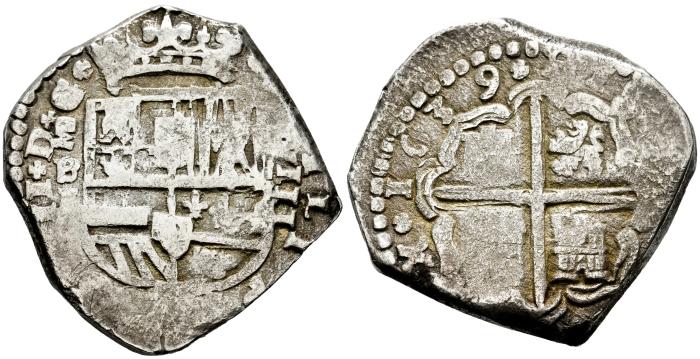
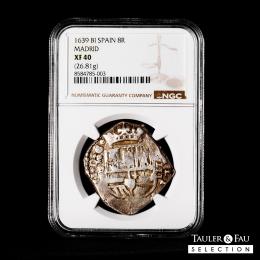
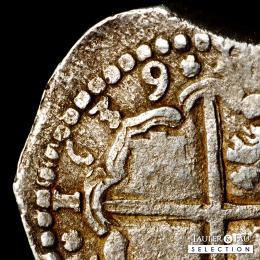
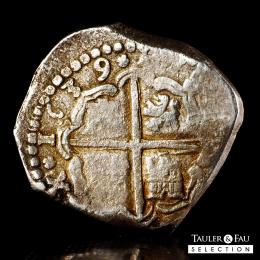
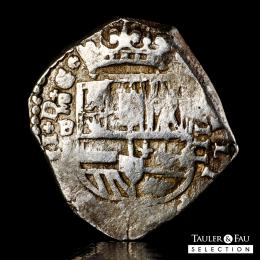
NGC - XF 40
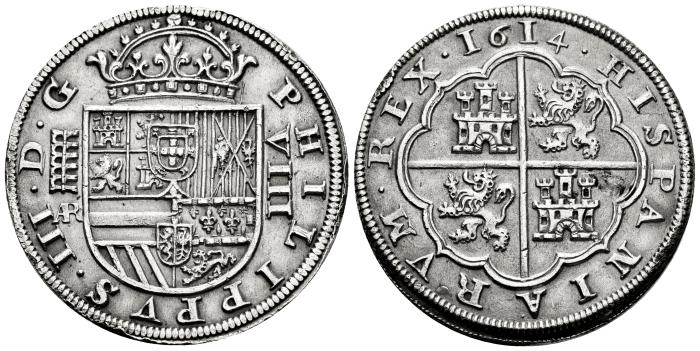
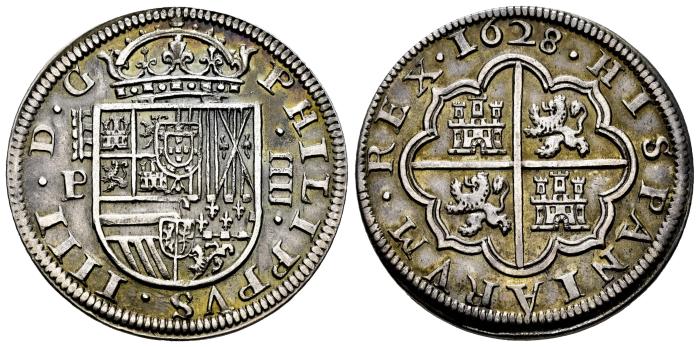
Philip IV (1621-1665). 8 reales. 1639. Madrid. BI. (Cal-1261). (Jarabo-Sanahuja-C44). . 26,81 g. Very complete with all details visible. MD mintmark in vertical position with assayers to the left, denomination to the right, and four-digit date on reverse. Three fleurs-de-lis in the ancient arms of Burgundy. Very rare. Slabbed by NGC as XF 40. Only 1 finer specimen in the NGC census. Est...1500,00.
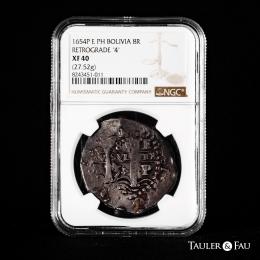
NGC - XF 40 Top Pop!!
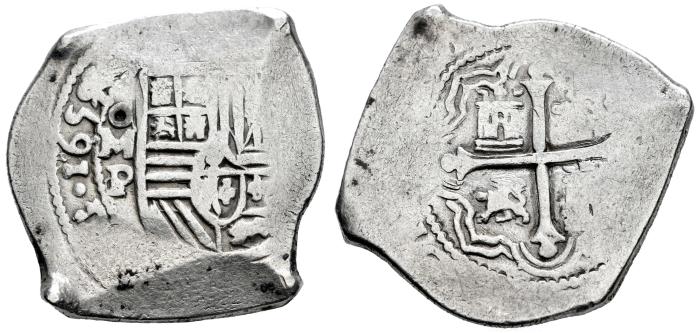
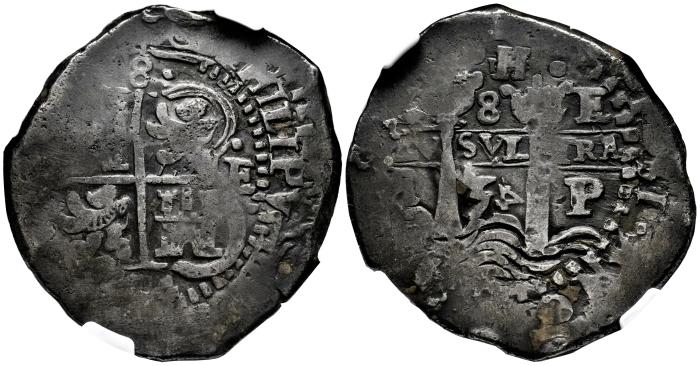
Philip IV (1621-1665). 8 reales. 1654. Potosi. E. (Cal-1508). . 27,52 g. Rare variety retrograde 4 in the date. PH below the crown on reverse. Double date, one of them partially visible and triple assayer. Patina. Slabbed by NGC as XF 40 (Top Pop), the finest known in the NGC census. Est...900,00.
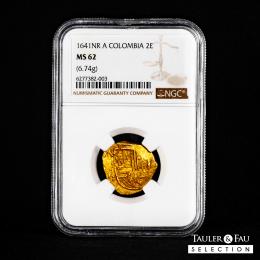
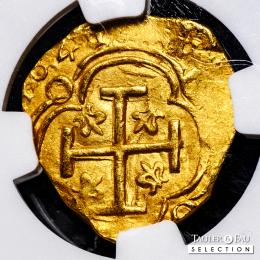
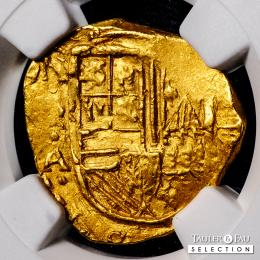
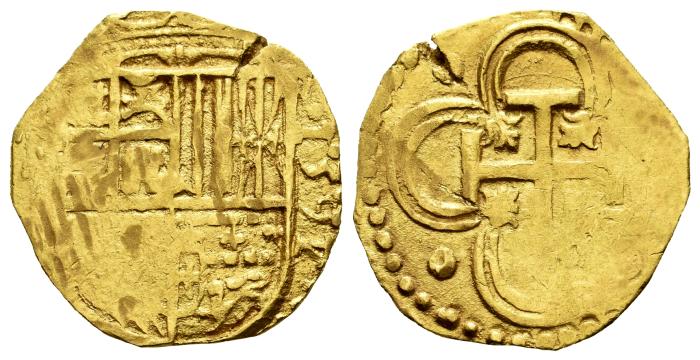
NGC - MS 62 Top Pop!!
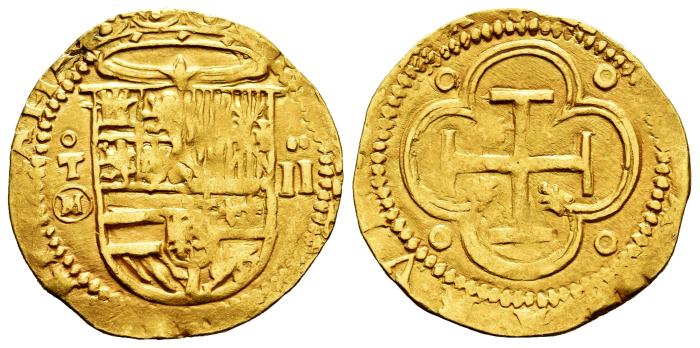
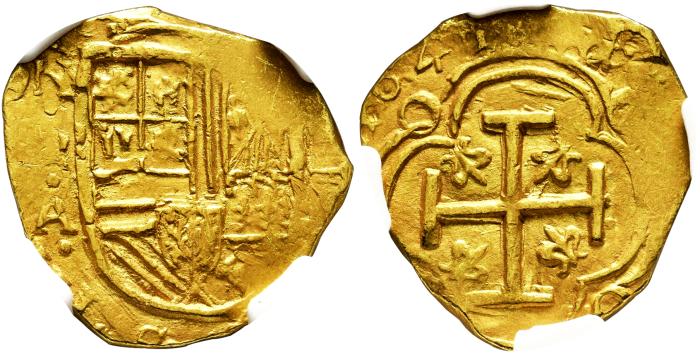
Philip IV (1621-1665). 2 escudos. 1641. Santa Fe de Nuevo Reino. A. (Cal-1798). (Tauler-147). (Restrepo-M50-17). . 6,74 g. N/(R)/A to the left, horizontal value II to the right. Full 4-digit date on the reverse. This nicely preserved survivor exhibits a bold strike with lovely satiny surfaces, displaying an attractive yellow-gold coloration complemented by a slight rose hue in the protected areas. The obverse shows a strong and nearly complete shield with clear assayer’s letter and partials of the mintmark and denomination, while the reverse boasts a sharp complete cross with full fleur-de-lis in the angles, partial quadrilobe, and full 4-digit date. A charming representative of the type with many desirable attributes. Very good specimen for this type, which is rarely encountered in such condition. Slabbed by NGC as MS 62 (Top Pop), the finest known in the NGC census. Est...5000,00.
NGC - AU Details
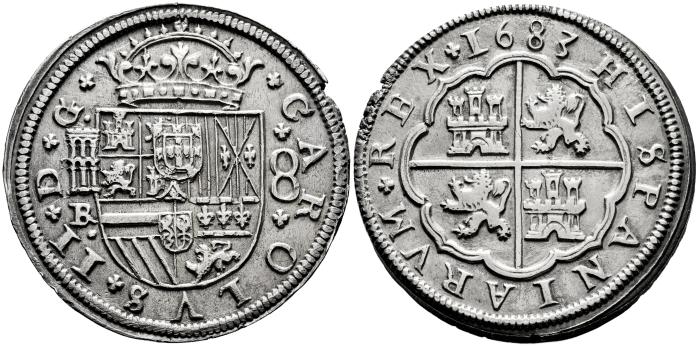
Charles II (1665-1700). 8 reales. 1683. Segovia. BR. (Cal-767). (Jarabo-Sanahuja-F19v). . No rosette after date and aqueduct touching the shield. Three bars in Aragón. Dots flanking mintmark and assayer; crosses flanking denomination. Rare. Slabbed by NGC as AU Details, Rev. Scratched. Est...2500,00.
Ex Caballero de las Yndias
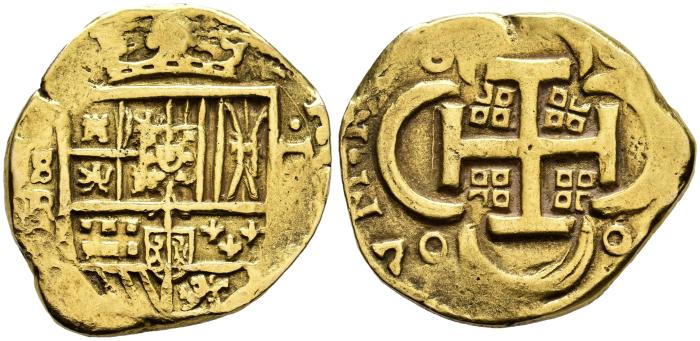
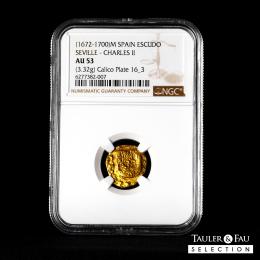
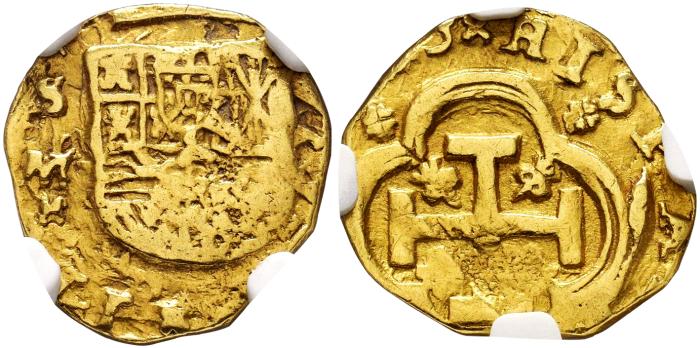
Charles II (1665-1700). 1 escudo. (169)3. Sevilla. M. (Cal-845, Plate coin). . 3,32 g. Full but crude shield with bold full S-M to left, nearly full but off-center cross with clear 3 of date in legend (slab label just says 16_3) and interesting four-leaf clover ornaments in tressure-dimples.
Very rare. Slabbed by NGC as AU 53. Only 1 finer specimen in the NGC census.
Ex Caballero de las Yndias (22/10/2009), lot 1937. Est...3500,00.
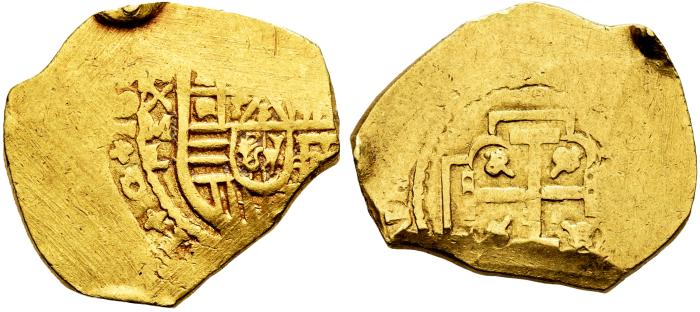
NGC - AU 55
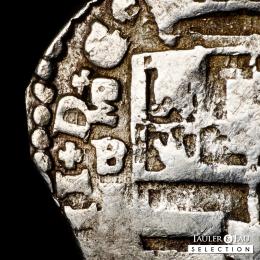
Charles II (1665-1700). 4 escudos. 169?. Mexico. L. (Cal-Tipo 164). . 13,17 g. Visible mintmark, assayer, and king’s ordinal. The final digit of the date is not visible. Jeweled cross on the reverse. Very rare, even without the full date. Certified by NGC as AU 55. Only 1 finer specimen in the NGC and PCGS census. Est...6000,00.
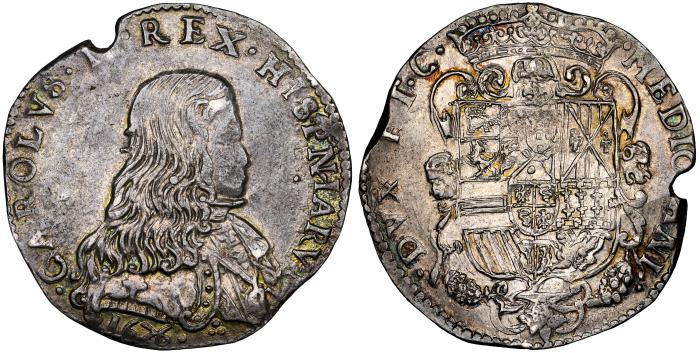
NGC - MS 63 Top Pop!!
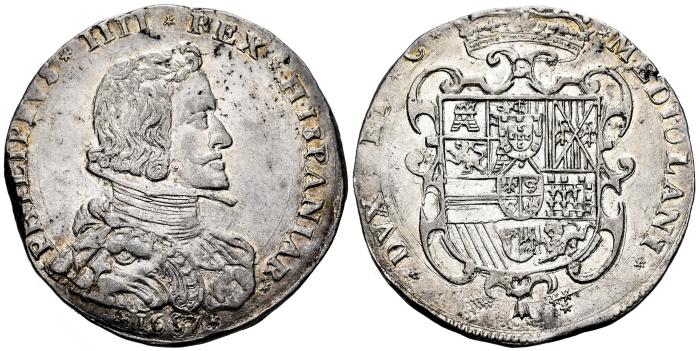
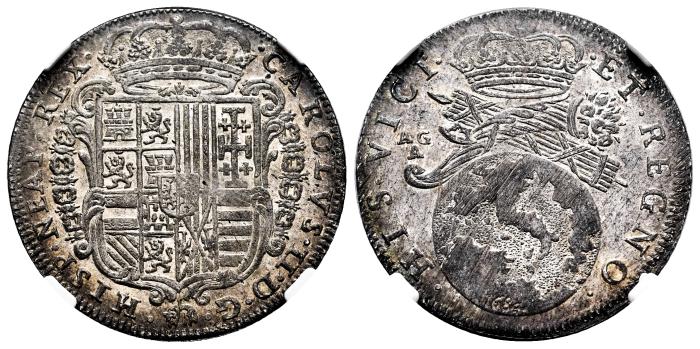
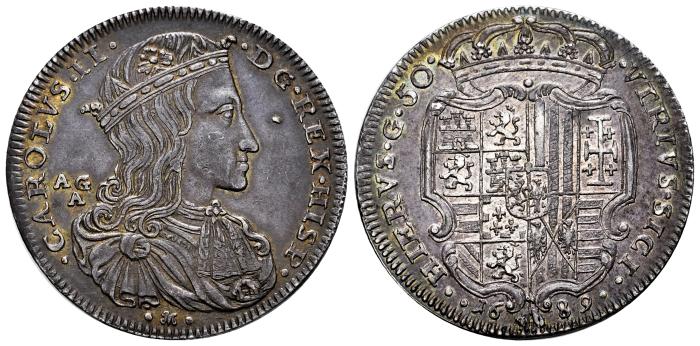
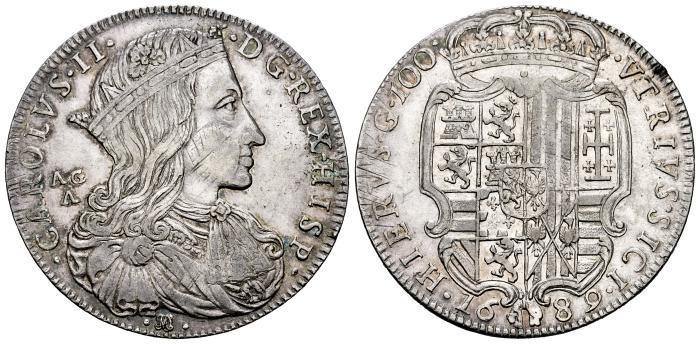
Charles II (1665-1700). 1 felipe. 1676. Milano. (Tauler-3101). (Vti-19). (Mir-387/1). . 27,84 g. Nice cabinet tone with underlying luster. Strong strike with all details perfectly visible and excellent eye appeal. Minor defect on edge. Very rare in this condition. Slabbed by NGC as MS 63 (Top Pop), the finest known in the NGC census. Est...1500,00.
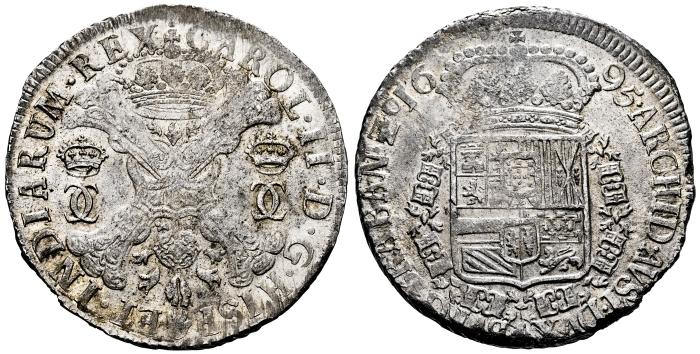
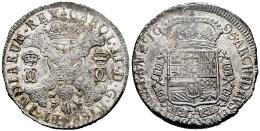
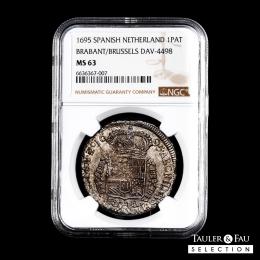
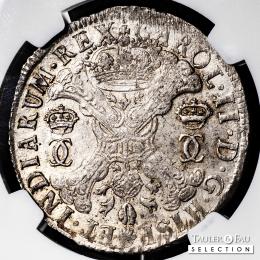
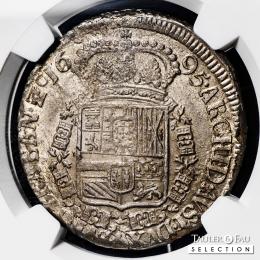
NGC - MS 63 Top Pop!!
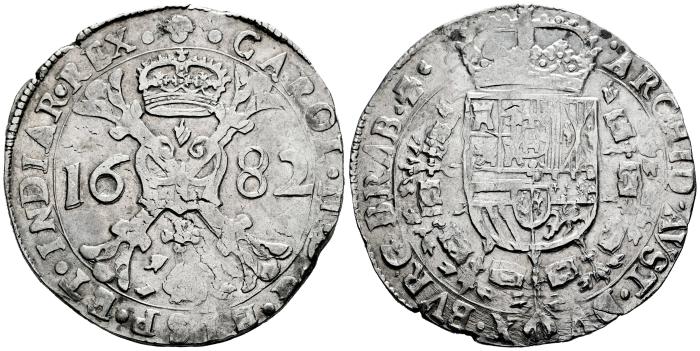
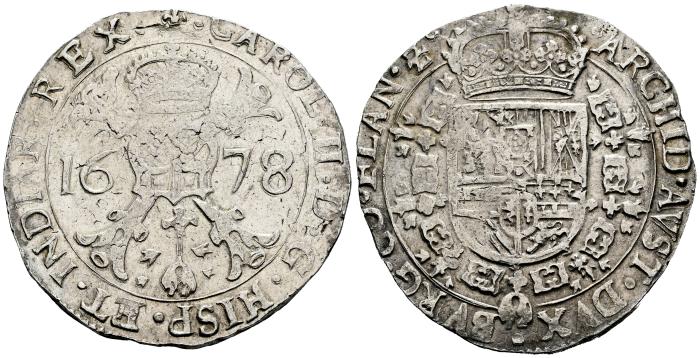
Charles II (1665-1700). 1 patagon. 1695. Brussels. (Tauler-3391). (Vti-458). (Vanhoudt-715.AN). . Very nice patina with underlying luster. Magnificent eye appeal. Very rare, even more in this grade. Slabbed by NGC as MS 63 (Top Pop), the finest known in the NGC census. Est...1000,00.
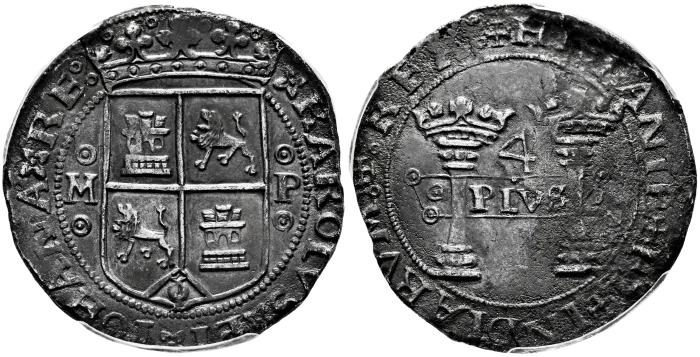
PCGS - AU Detail
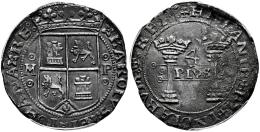
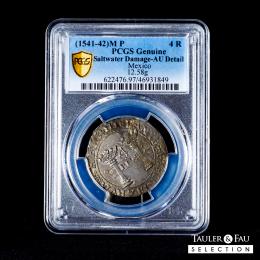
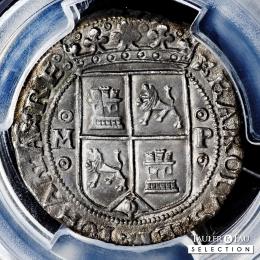
Shipwreck coins. Charles and Joanna (1504-1555). 4 reales. ND (1541-1542). Mexico. oMo - oPo. (Cal-123). . 12,58 g. Despite showing some unfortunate signs of saltwater damage—more pronounced on the obverse and barely visible on the reverse—this example remains highly attractive and well-preserved, with full legends and a lovely steel-gray tone.
Probably recovered from the wreck of the “Golden Fleece,” sunk around 1550 in the northern Caribbean.
A coin that can proudly claim an authentic connection to the age of piracy and treasure fleets.
Slabbed by NGC as PCGS Genuine, Saltwater damage – AU Detail.
The Golden Fleece wreck, lost around 1550 in the northern Caribbean, takes its name from the royal “Golden Fleece” stamp found on several gold “finger” ingots. Nearly all the coins recovered were Mexican Charles-and-Joanna issues struck before assayer “S,” including multiple rarities and, most notably, three specimens of the 1538 Rincón “Early Series” 8 reales, the very first eight-reales coins minted in the New World. Although the exact location of the wreck remains undisclosed, the find—amounting to only a few thousand coins—became the primary source of these early Mexican issues on the market since the mid-1990s. Also remarkable are the gold and silver ingots, some cut for accounting purposes, bearing fineness markings and, in the case of the silver bars, royal tax stamps consistent with mid-16th-century practice. Est...2500,00.
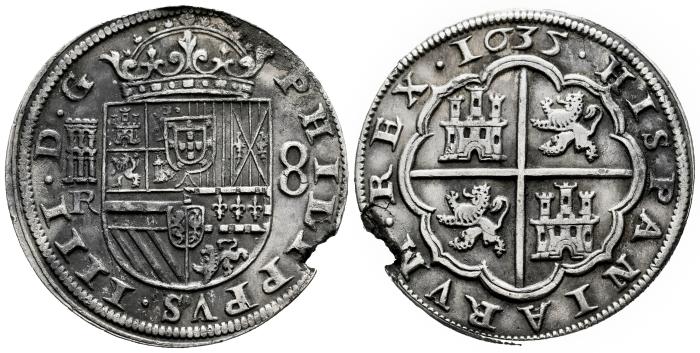
H.M.S. Association
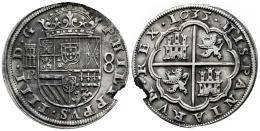
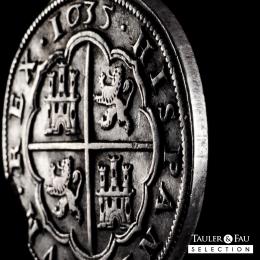
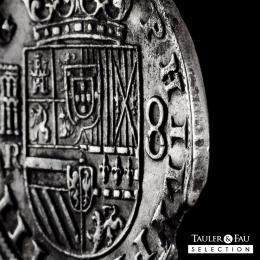
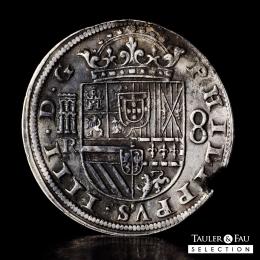
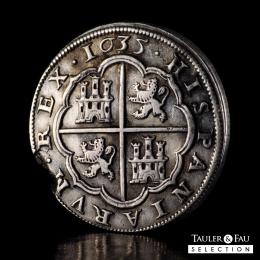
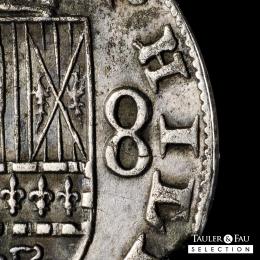
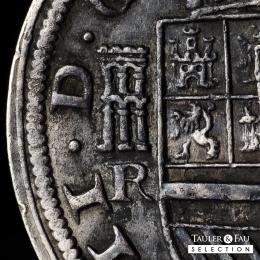
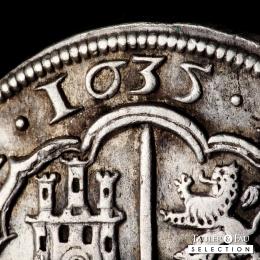
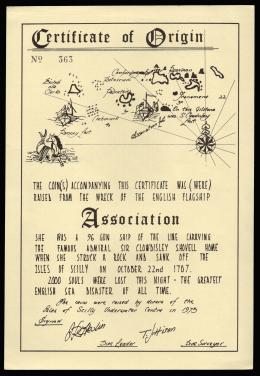
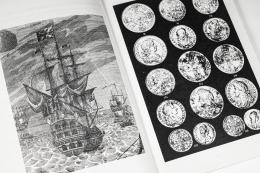
Shipwreck coins. Philip IV (1621-1665). 8 reales. 1635. Segovia. R. (Cal-1606). . 27,14 g. Recovered from the wreck of the “H.M.S. Association,” sunk in 1707 off the Isles of Scilly, southwest of England. Accompanied by original certificate of authenticity no. 363.
Magnificent specimen with full weight and practically unaffected by saltwater, with all details complete and sharply struck, along with a pleasant light patina. Defect on the edge.
A similar specimen struck in Segovia, but of an earlier date, was auctioned by Daniel F. Sedwick on 04/05/2022 and realized $7,500.
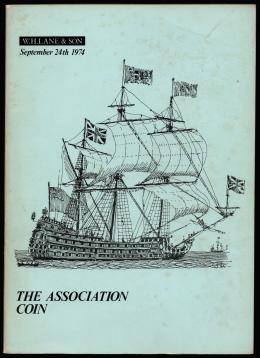
Very rare, with an extraordinary pedigree. Ex W. H. Lane & Son (24/09/1974), lot 1372.
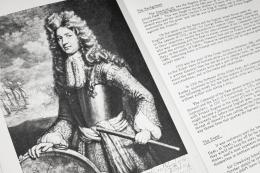
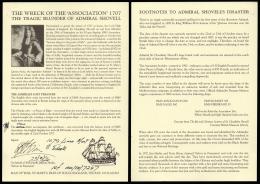
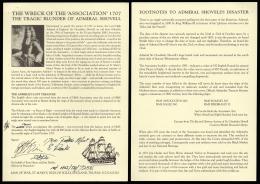
Includes the original catalog from the special auction of coins and artifacts recovered from the wreck.
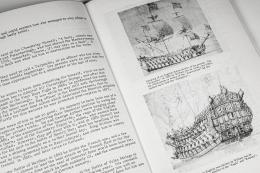
The HMS Association sank in 1707 off the Scilly Isles in one of the worst naval disasters in British history. The fleet, returning from the Mediterranean, was caught in a storm, and faulty navigation drove the ships straight onto the reefs. The vessel went down with a lot of men, including Admiral Sir Cloudesley Shovell, whose personal treasure —ten chests— was believed to be on board.
The wreck was located in 1967, triggering years of intensive salvage activity. Between 1969 and the early 1970s, thousands of coins entered the market at auction, mainly British gold and silver issues, along with numerous Spanish and Spanish-American pieces, notably 8 reales from various mints, including a rare 1676 Royal.
Recovery was especially challenging due to the massive boulders that pinned sections of the wreck to the seabed. Est...5000,00.
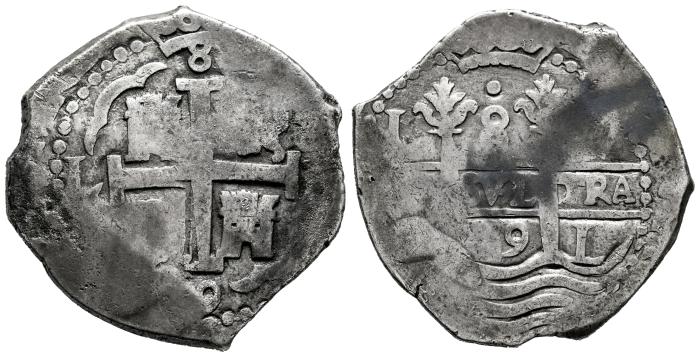
H.M.S. Association
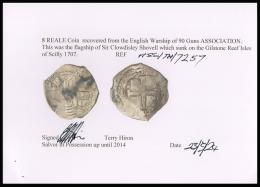
Shipwreck coins. Charles II (1665-1700). 8 reales. 1689. Lima. V. (Cal-594). . 26,98 g. Recovered from the wreck of the “H.M.S. Association,” sunk in 1707 off the Isles of Scilly, southwest of England. Minor traces of marine corrosion and light tone.
Accompanied by photo-certificate ASS/TH/7257 issued by the salvor.
Rare, with an extraordinary pedigree. Ex W. H. Lane & Son (24/09/1974), lot 1072, accompanied by photocopies of the catalog cover and the original purchase invoice.
The HMS Association sank in 1707 off the Scilly Isles in one of the worst naval disasters in British history. The fleet, returning from the Mediterranean, was caught in a storm, and faulty navigation drove the ships straight onto the reefs.
The vessel went down with up to 2,000 men, including Admiral Sir Cloudesley Shovell, whose personal treasure —ten chests— was believed to be on board.
The wreck was located in 1967, triggering years of intensive salvage activity. Between 1969 and the early 1970s, thousands of coins entered the market at auction, mainly British gold and silver issues, along with numerous Spanish and Spanish-American pieces, notably 8 reales from various mints, including a rare 1676 Royal.
Recovery was especially challenging due to the massive boulders that pinned sections of the wreck to the seabed. Est...1000,00.
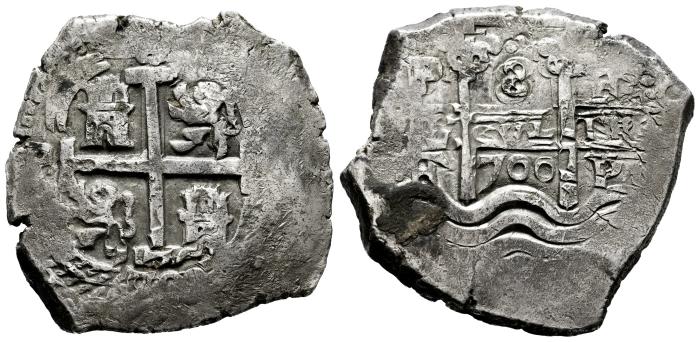
H.M.S. Association
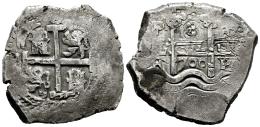
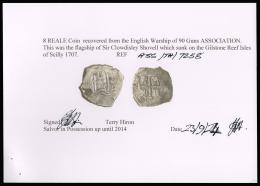
Shipwreck coins. Charles II (1665-1700). 8 reales. 1700. Potosi. F. (Cal-1746). . 26,77 g. Recovered from the wreck of the “H.M.S. Association,” sunk in 1707 off the Isles of Scilly, southwest of England. Accompanied by photo-certificate ASS/TH/7258 issued by the salvor.
Boldly struck and practically unaffected by saltwater. Double date, one of them partial, and double assayer. Light tone.
Rare, with an extraordinary pedigree. Ex W. H. Lane & Son (24/09/1974), lot 1360.
The HMS Association sank in 1707 off the Scilly Isles in one of the worst naval disasters in British history. The fleet, returning from the Mediterranean, was caught in a storm, and faulty navigation drove the ships straight onto the reefs.
The vessel went down with up to 2,000 men, including Admiral Sir Cloudesley Shovell, whose personal treasure —ten chests— was believed to be on board. The wreck was located in 1967, triggering years of intensive salvage activity.
Between 1969 and the early 1970s, thousands of coins entered the market at auction, mainly British gold and silver issues, along with numerous Spanish and Spanish-American pieces, notably 8 reales from various mints, including a rare 1676 Royal.
Recovery was especially challenging due to the massive boulders that pinned sections of the wreck to the seabed. Choice VF. Est...1000,00.
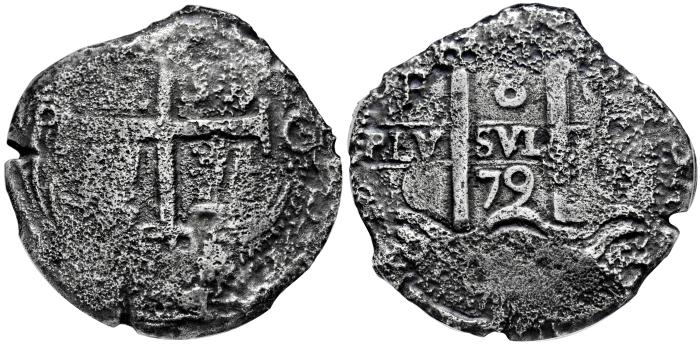
Consolación - VF 30
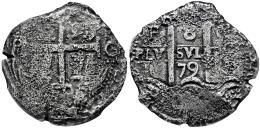
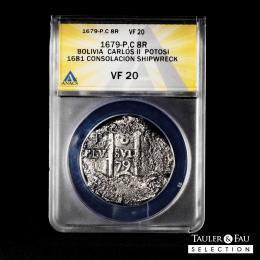
Shipwreck coins. Charles II (1665-1700). 8 reales. 1679. Potosi. C. (Cal-714). . Double date, one of them partial, and double assayer. Saltwater damage. Recovered from the wreck of Nuestra Señora de la Consolación, sunk in 1681 off Santa Clara Island, Ecuador.
Slabbed by ANACS as VF 20.
The Consolación, a galleon assigned to the 1681 South Seas Fleet, was delayed departing Lima and ended up sailing alone until it reached the Gulf of Guayaquil, where it encountered English pirates under Bartholomew Sharpe.
To prevent capture, the crew deliberately grounded the ship on a reef off Santa Clara Island and set it ablaze, dying as they attempted to escape. Unable to reach the treasure, the pirates killed the surviving Spaniards and failed in their attempts to recover the cargo, which consisted mainly of Potosí silver cobs, along with gold and silver ingots.
The wreck remained untouched until the 1990s, when thousands of coins—many in low grade—were recovered and first auctioned as finds from the “Isla de Muerto.”
Subsequent research confirmed the ship’s true identity, and later discoveries were encapsulated by ANACS for the market. The site still holds promise, as the ship’s manifest listed 146,000 pesos in silver coinage, plus an even larger amount in contraband. Est...600,00.
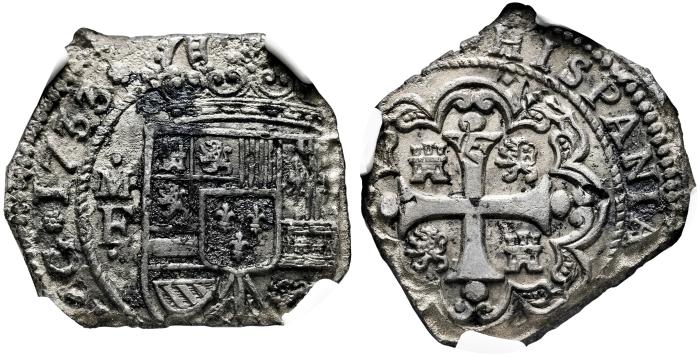
Rooswijk - AU Details
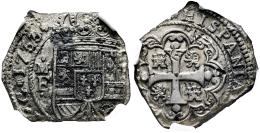
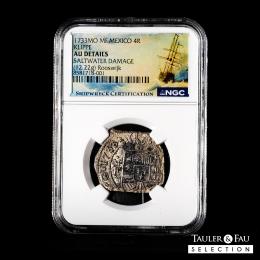
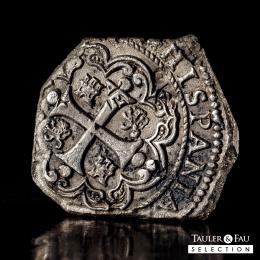
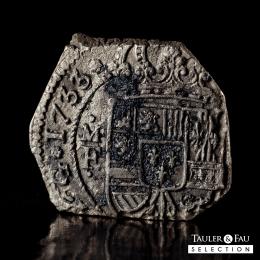
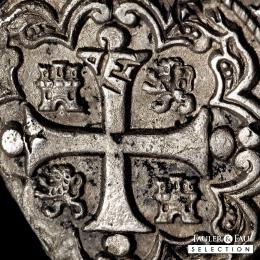
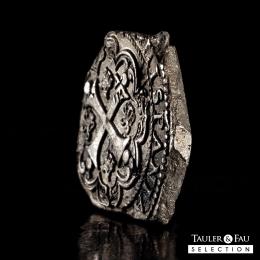
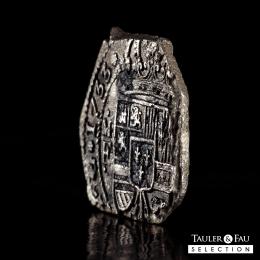
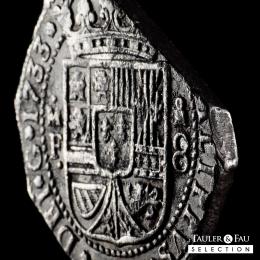
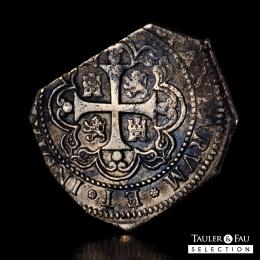
Shipwreck coins. Philip V (1700-1746). 4 reales. 1733. Mexico. MF. (Cal-1100). . 12,22 g. “Klippe” type. Full date. Some minor marine corrosion. Very sharp and bold with all details well defined. Lightly toned.
Small Oriental chopmarks on the reverse, an exceptional feature and probably the only specimen known to date with this characteristic.
Excellent specimen for this type. Very rare, especially in this preservation.
Recovered from the “Rooswijk” shipwreck, sunk in 1739 off the southeast coast of England.
Slabbed by NGC as AU Details, Saltwater damage. Special label "Shipwreck Blue Label".
The Rooswijk, a Dutch East Indiaman, sank in 1739 on the treacherous Goodwin Sands off southeast England, going down with her entire crew and 30 treasure chests. The wreck remained buried under shifting sandbanks until 2004, when changing tides exposed it and allowed the recovery of two complete chests and hundreds of silver ingots.
Salvage operations continued in 2005 under official supervision. Since then, the market has seen hundreds of Mexican silver cobs from the 1720s–1730s, several transitional klippes dated 1733–1734, and numerous pillar dollars, along with a handful of pieces from other mints. Est...3500,00.
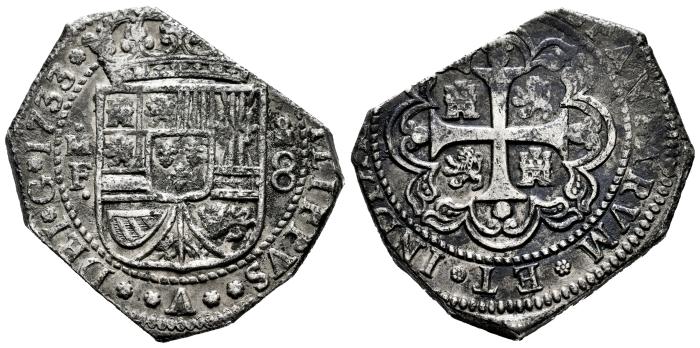
Hollandia
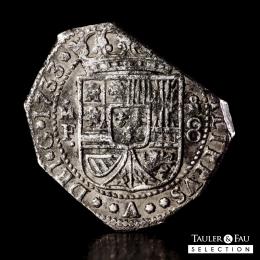
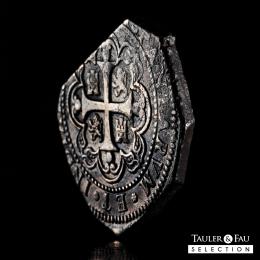
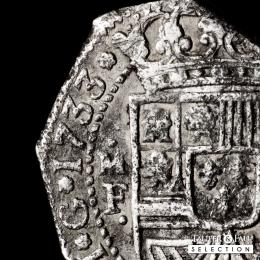
Shipwreck coins. Philip V (1700-1746). 8 reales. 1733. Mexico. MF. (Cal-1431). . 26,57 g. “Klippe” type. Very complete, with full 4-digit date and all details clearly visible, included the name of the king. Some light surface marine corrosion. Light tone. Rare.
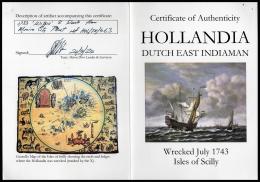
Recovered from the “Hollandia” shipwreck, was a ship of the Dutch East India Company that sunk on her maiden voyage on 13 July 1743 at Gunner Rock, west of Annet, Isles of Scilly.
Accompanied by photo-certificate HOL/TH/463 issued by salvors Terry Hiron & Jim Heslin.
The Hollandia, a Dutch East Indiaman, sank on July 13, 1743 after being blown off course and striking Gunner Rock, descending to about 110 feet of depth near the Scilly Isles with no survivors. The wreck was located in 1971 by a team led by Rex Cowan, who in the following years recovered more than 35,000 silver coins, part of the roughly 130,000 guilders recorded as its monetary cargo.
Most of the coins were Mexican pillar dollars, accompanied by a number of silver cobs —including the rare transitional klippes of 1733–1734— and a few Guatemalan cobs, found in mixed condition. Choice VF. Est...2000,00.
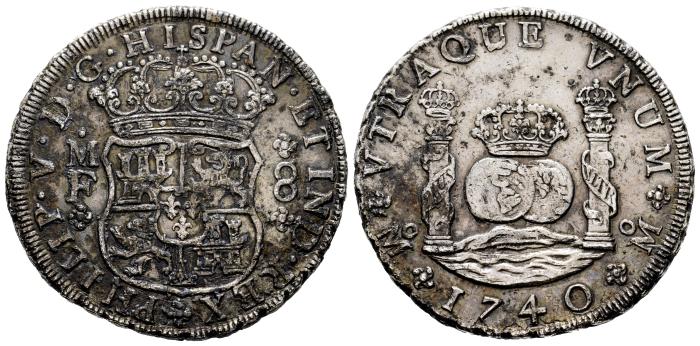
Hollandia - AU Details
Shipwreck coins. Philip V (1700-1746). 8 reales. 1740. Mexico. MF. (Cal-1456). . Recovered from the Hollandia shipwreck, sunk in 1743 off the Isles of Scilly, southwest of England.
Slabbed by NGC as AU Details, Saltwater damage. Special label "Shipwreck Blue Label".
The Hollandia, a Dutch East Indiaman, sank on July 13, 1743 after being blown off course and striking Gunner Rock, descending to about 110 feet of depth near the Scilly Isles with no survivors. The wreck was located in 1971 by a team led by Rex Cowan, who in the following years recovered more than 35,000 silver coins, part of the roughly 130,000 guilders recorded as its monetary cargo.
Most of the coins were Mexican pillar dollars, accompanied by a number of silver cobs —including the rare transitional klippes of 1733–1734— and a few Guatemalan cobs, found in mixed condition. Est...700,00.
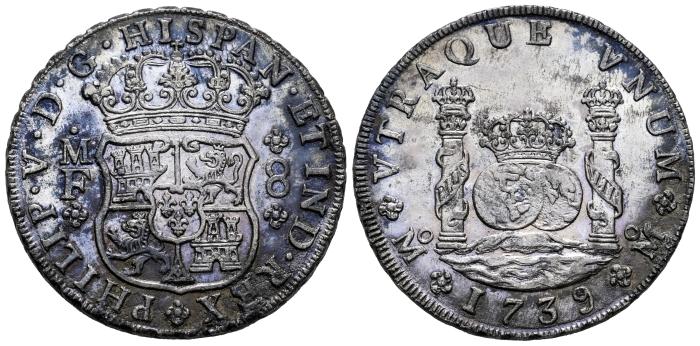
Reijgersdaal - AU Details
Shipwreck coins. Philip V (1700-1746). 8 reales. 1739. Mexico. MF. (Cal-1453). . Nice patina with a strong bluish tone. Minimal traces of seawater corrosion and virtually no signs of wear. A very nice example.
Recovered from the “Reijgersdaal” shipwreck, sunk in 1747 off the coast of South Africa.
Slabbed by NGC as AU Details, Saltwater Damage, with the special “Shipwreck Blue Label” label.
The Reijgersdaal, a Dutch East India Company vessel, sank in 1747 between Robben and Dassen Islands while carrying eight chests containing nearly 30,000 silver coins, mostly Mexican pillar dollars in near-mint condition.
A storm snapped the anchor line and drove the ship onto the rocks, killing most of the crew and allowing only a single incomplete chest to be recovered.
The site was deemed too dangerous for further salvage, and it was not until 1979 that modern recovery began, yielding thousands of coins, including a small but significant group of Guatemalan and Upper Peru cobs—extremely rare in shipwreck contexts. Est...1200,00.
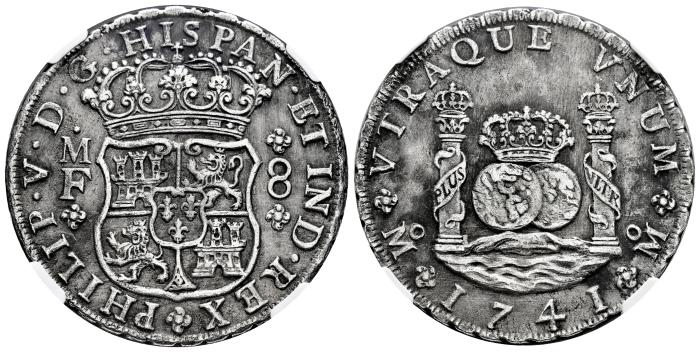
Reijgersdaal - AU Details
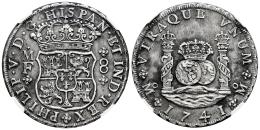
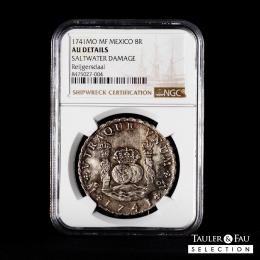
Shipwreck coins. Philip V (1700-1746). 8 reales. 1741. Mexico. MF. (Cal-1458). . Minor marine corrosion and showing a light tone.
Recovered from the wreck of the "Reijgersdaal", sunk in 1747 off the coast of South Africa.
Slabbed by NGC as AU Details, Saltwater Damage.
The Reijgersdaal, a Dutch East India Company vessel, sank in 1747 between Robben and Dassen Islands while carrying eight chests containing nearly 30,000 silver coins, mostly Mexican pillar dollars in near-mint condition.
A storm snapped the anchor line and drove the ship onto the rocks, killing most of the crew and allowing only a single incomplete chest to be recovered.
The site was deemed too dangerous for further salvage, and it was not until 1979 that modern recovery began, yielding thousands of coins, including a small but significant group of Guatemalan and Upper Peru cobs—extremely rare in shipwreck contexts. Est...1000,00.
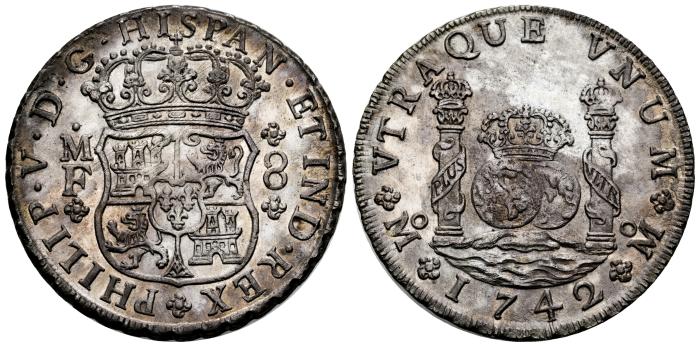
Reijgersdaal - AU Details
Shipwreck coins. Philip V (1700-1746). 8 reales. 1742. Mexico. MF. (Cal-1461). . 26,71 g. Minimal adjustment lines on obverse. Irregular patina with underlaying luster. Attractive specimen with a very bold strike. Slight marine corrosion on the peripheries.
Recovered from the Reijgersdaal, sunk in 1747 off the coast of South Africa.
Slabbed by NGC as AU Details, Saltwater Damage. "Shipwreck Blue Label" Special label.
The Reijgersdaal, a Dutch East India Company vessel, sank in 1747 between Robben and Dassen Islands while carrying eight chests containing nearly 30,000 silver coins, mostly Mexican pillar dollars in near-mint condition.
A storm snapped the anchor line and drove the ship onto the rocks, killing most of the crew and allowing only a single incomplete chest to be recovered.
The site was deemed too dangerous for further salvage, and it was not until 1979 that modern recovery began, yielding thousands of coins, including a small but significant group of Guatemalan and Upper Peru cobs—extremely rare in shipwreck contexts. Est...1500,00.
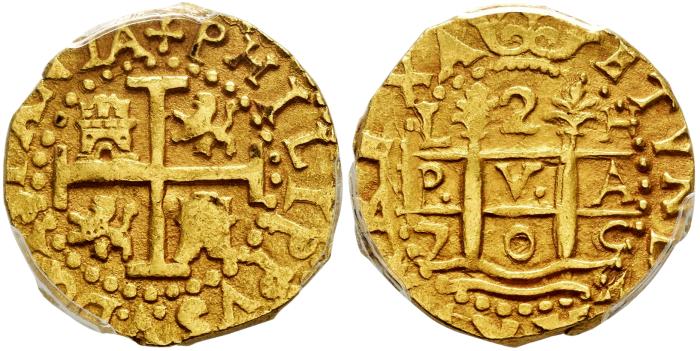
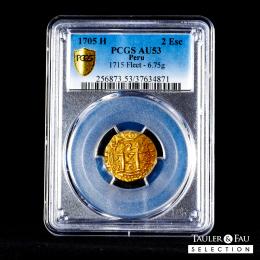
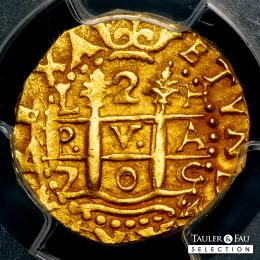
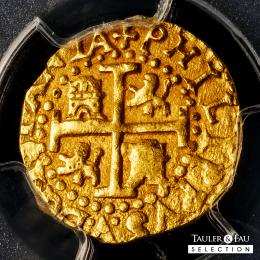
1715 Fleet - AU 53 Top Pop!!
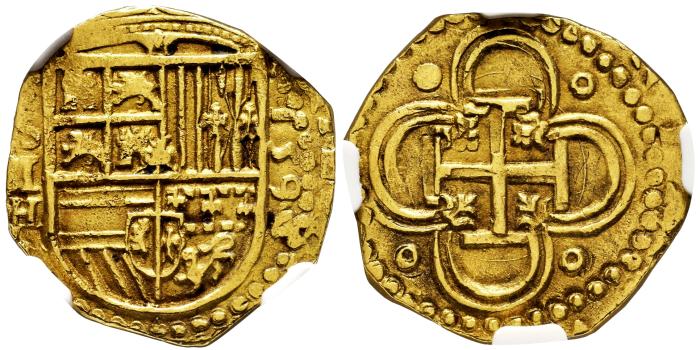
Shipwreck coins. Philip V (1700-1746). 2 escudos. 1705. Lima. H. (Cal-1822). (Tauler-244). . 6,75 g. Uniformly struck, with all key elements clearly visible and full legends throughout. Attractive orange toning enhances its visual eye appeal. Very rare, especially in this level of preservation.
Recovered from the 1715 Spanish Fleet, wrecked off the east coast of Florida.
Encapsulated by PCGS as AU 53 (Top Pop), the finest example recorded in the PCGS census.
The 1715 Fleet, composed of the galleons of Nueva España and Tierra Firme and laden with a vast shipment of gold, silver, jewelry, and high-value goods, sailed from Havana bound for Spain in July of that year.
On July 30–31, a hurricane drove the convoy onto the east coast of Florida, where eleven ships were lost, over 1,000 lives perished, and more than 14 million pesos—plus an even greater amount in contraband—were swallowed by the sea.
Although Spanish salvage crews recovered nearly half of the registered treasure, in 1716 the coastal storehouse was raided by British freebooters under Henry Jennings, who carried off some 350,000 pesos.
The remainder of the treasure lay buried beneath the sand for more than two centuries, until the 1950s, when researcher Kip Wagner identified the first traces of the wrecks, leading to the creation of the famed Real Eight Company, later joined by figures such as Mel Fisher.
Since then, Florida’s “Treasure Coast” has yielded hundreds of thousands of silver cobs, an exceptional quantity of gold onzas, as well as jewelry, porcelains, and liturgical objects.
Today, the 1715 Fleet is recognized as the largest known source of New World gold cobs and one of the most iconic assemblages in colonial numismatics, its finds originating from multiple wrecksites whose precise identification remains an active subject of research. Est...6000,00.
X
Confirm your maximum bid
Conecting
 English
 Español





 12
12
 5
5