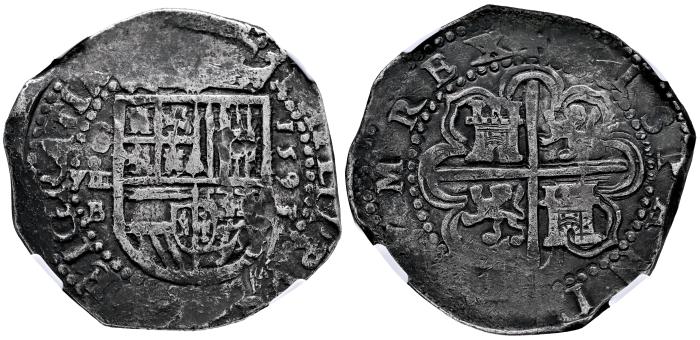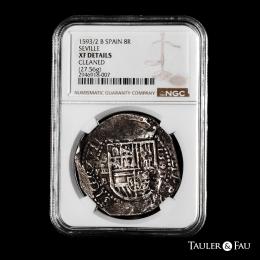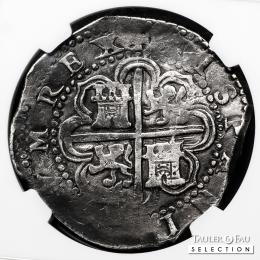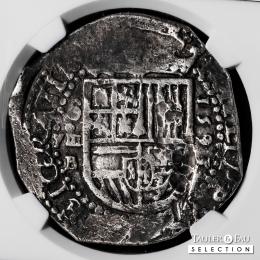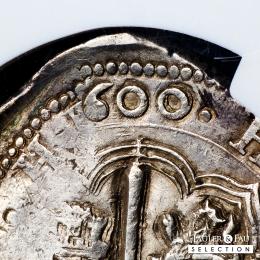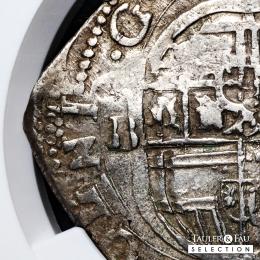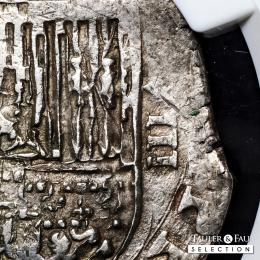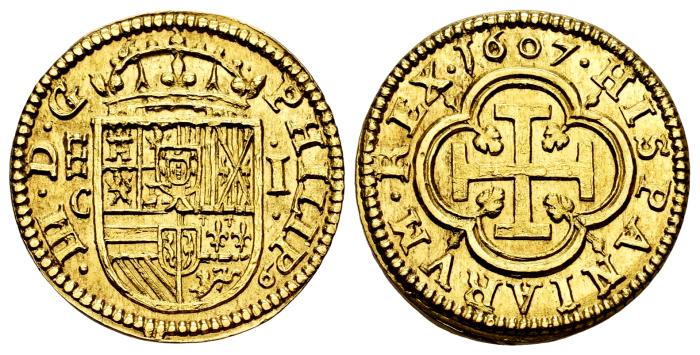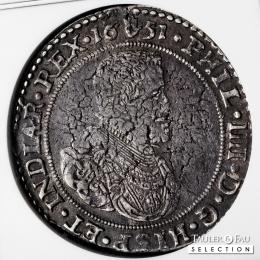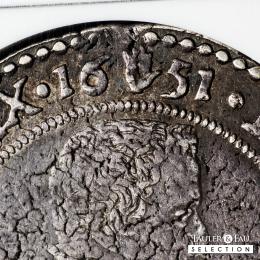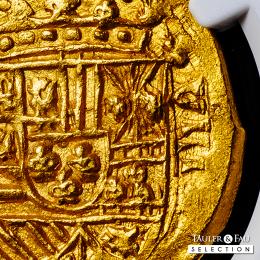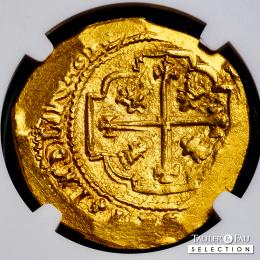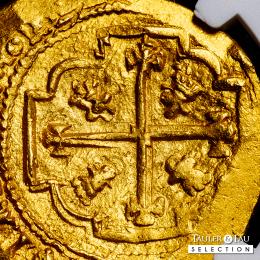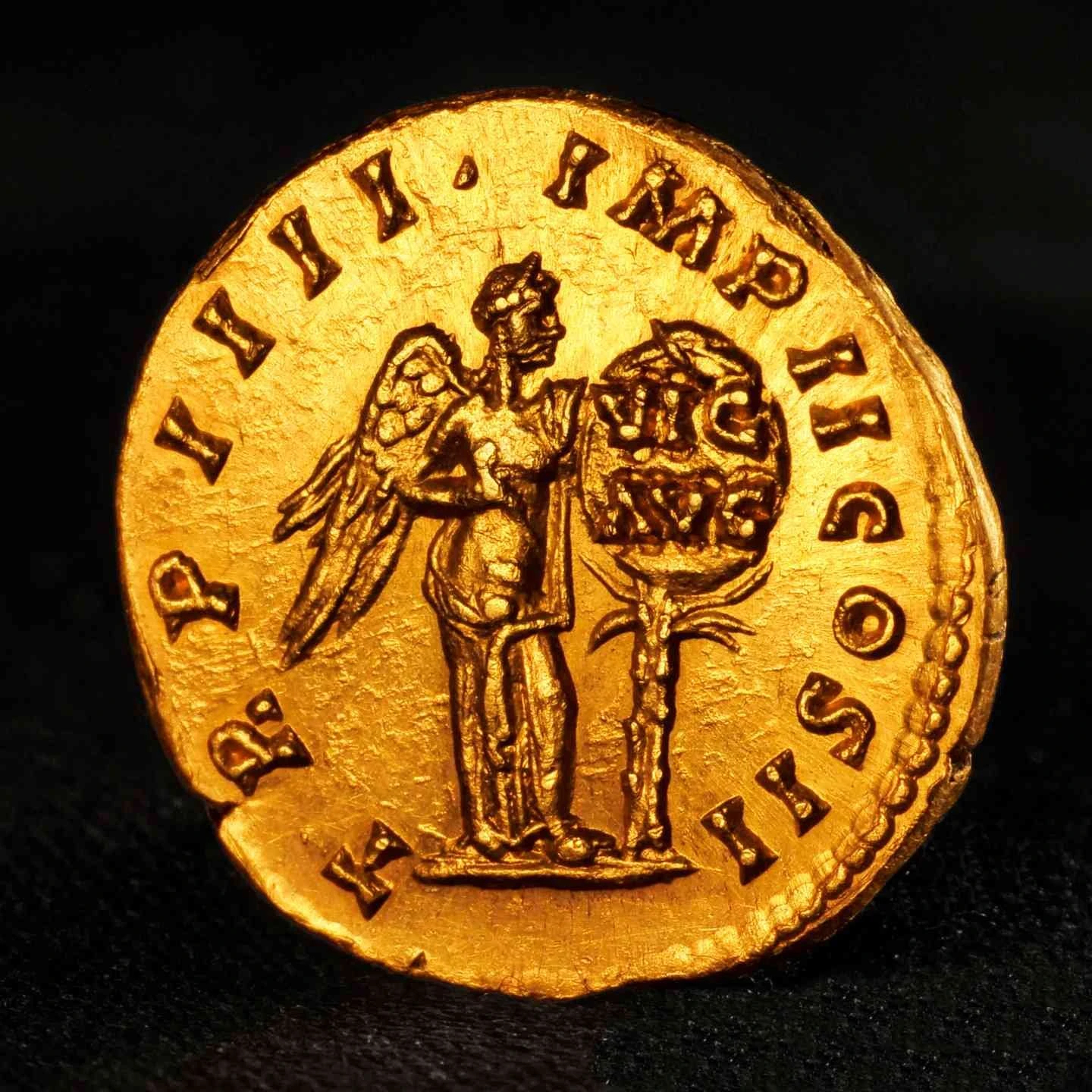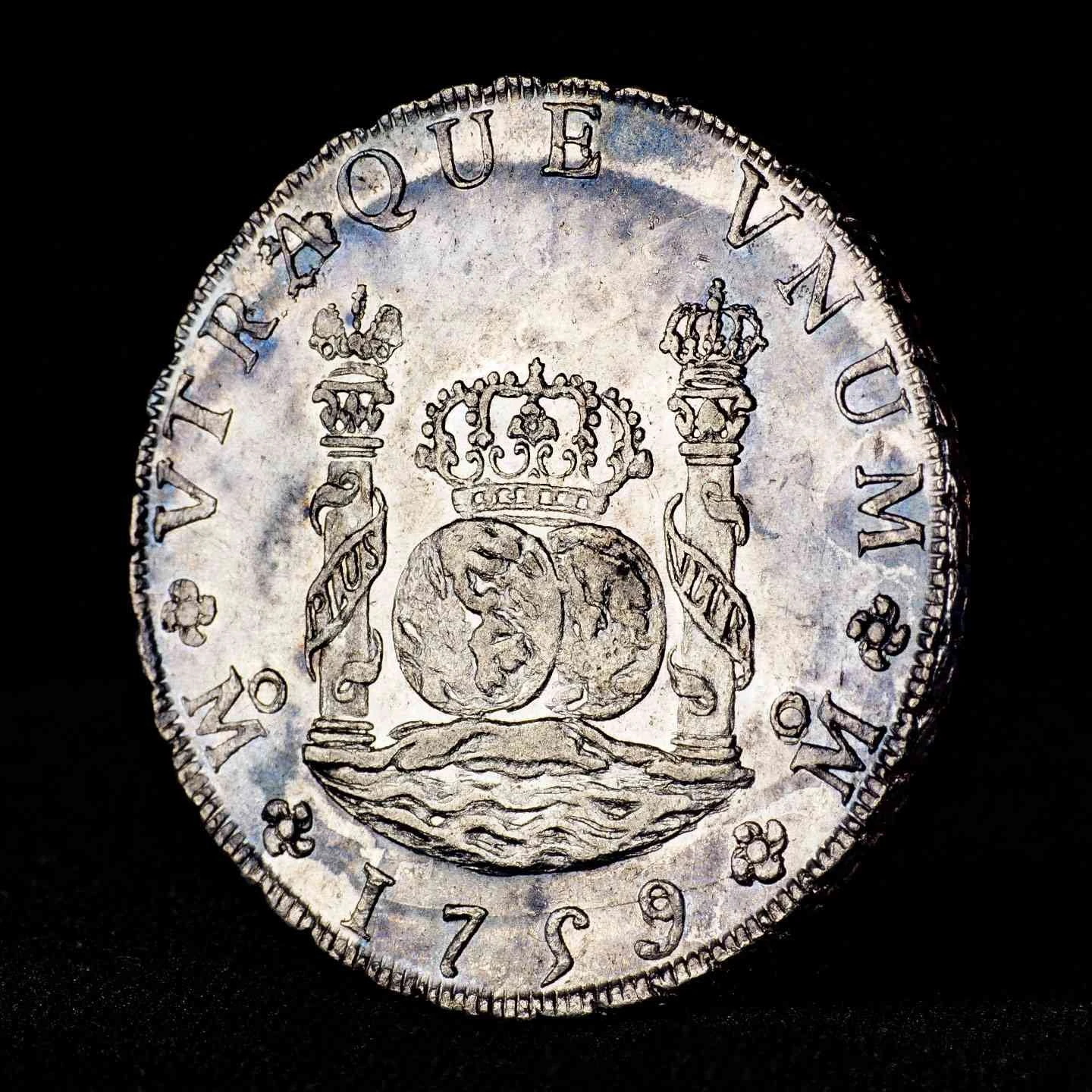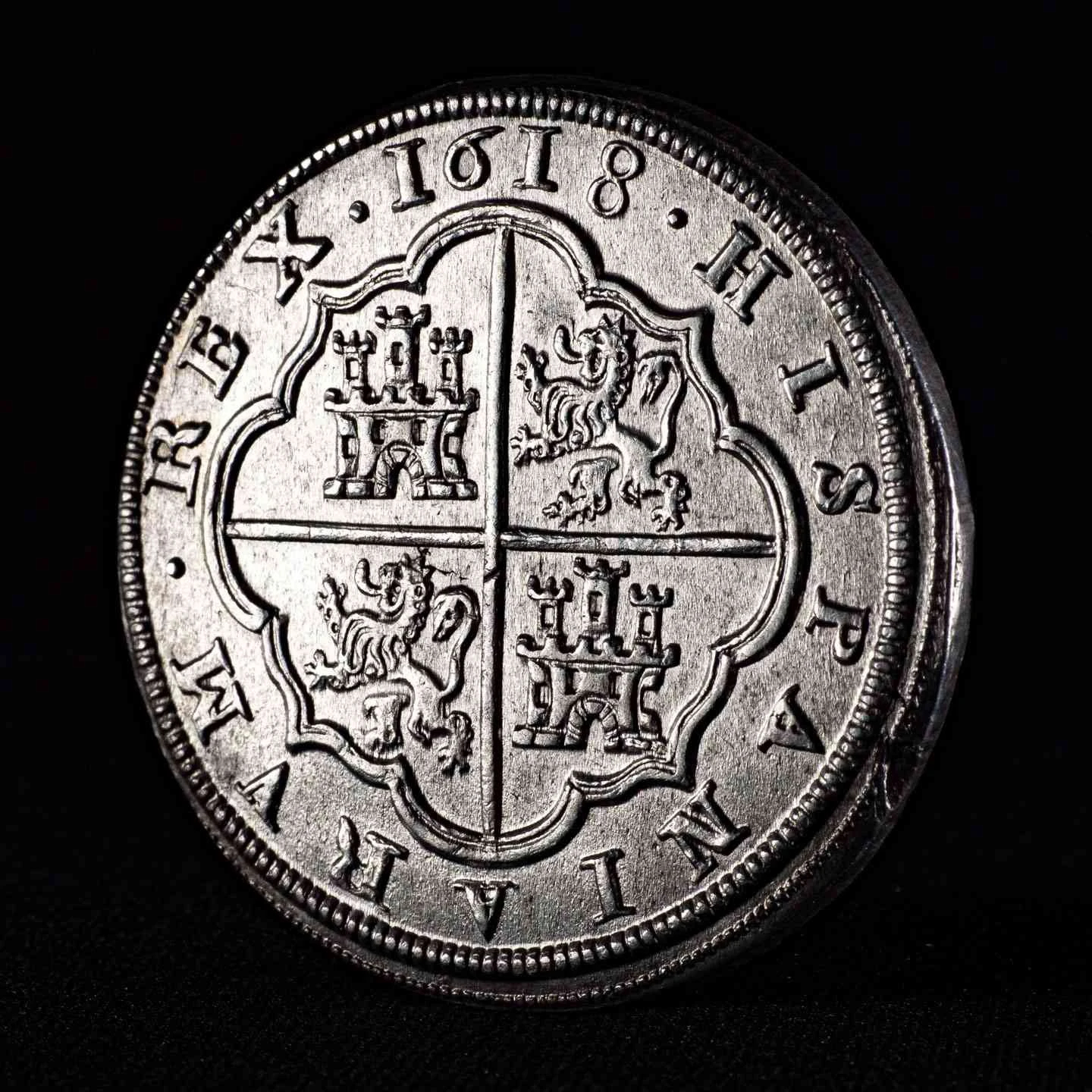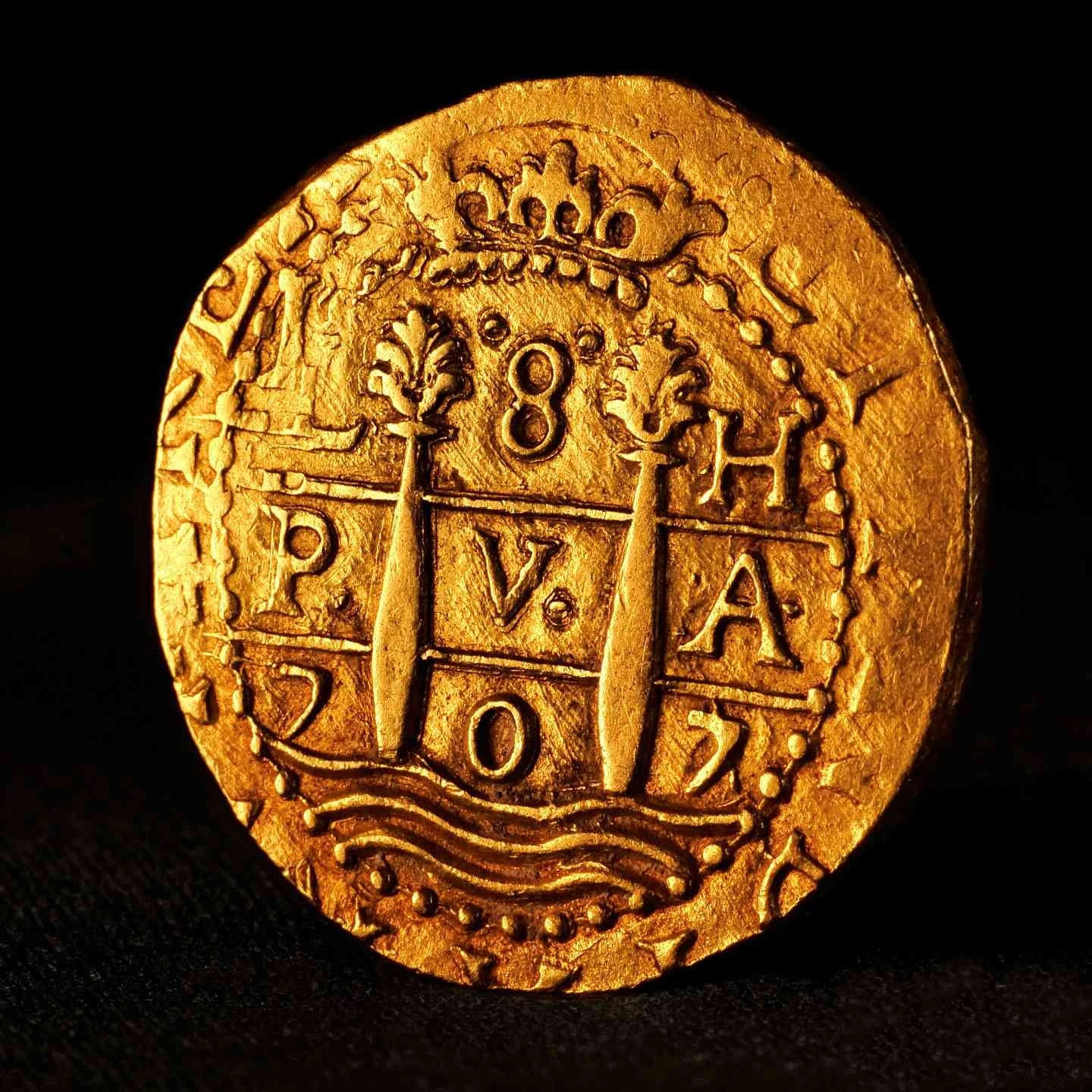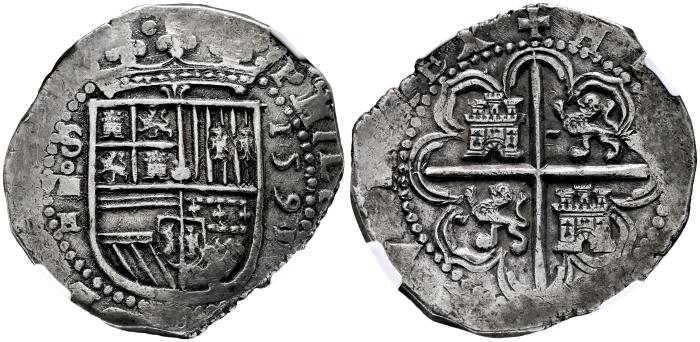
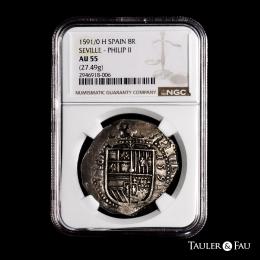
NGC - AU 55
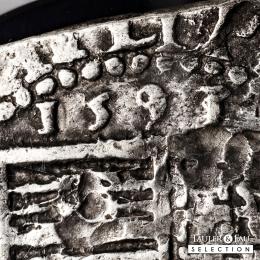
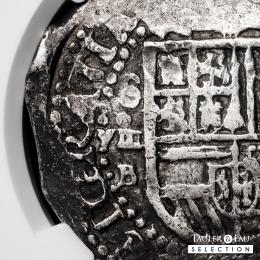
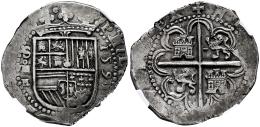
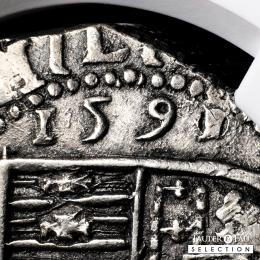
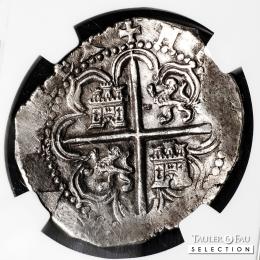
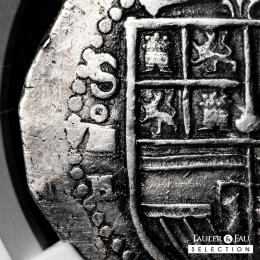
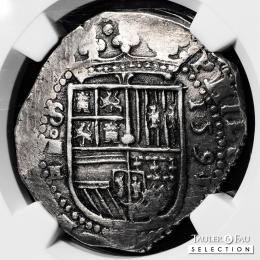
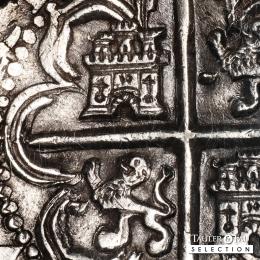
Philip II (1556-1598). 8 reales. 1591/0. Sevilla. H. (Cal-732). (Jarabo-Sanahuja-A584). . 27,49 g. Full date, showing a clearly re-engraved final digit. Boldly struck with all diagnostic elements fully visible. Soft cabinet patina. Rare in this state of preservation. Slabbed by NGC as AU 55. Only 1 finer specimen in the NGC census. Est...700,00.
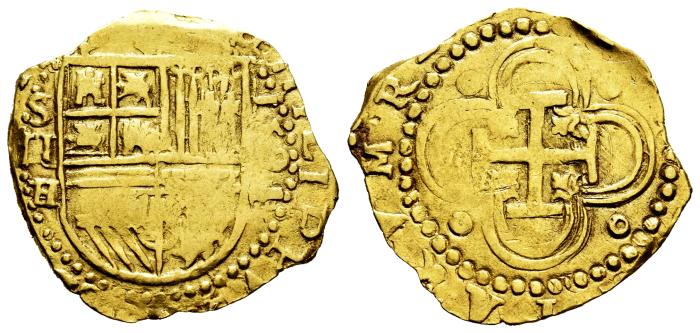
H/square d
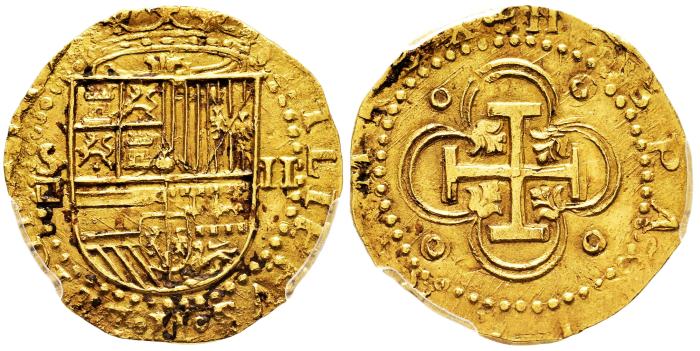
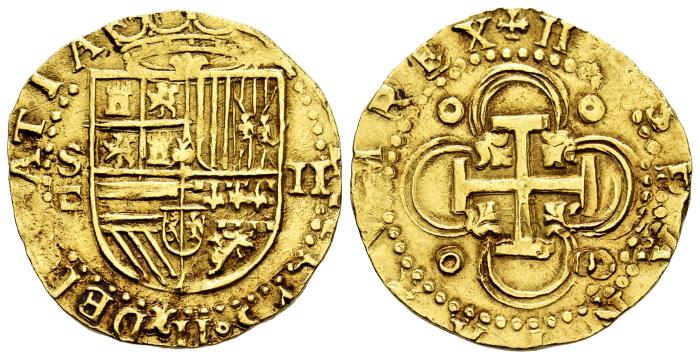
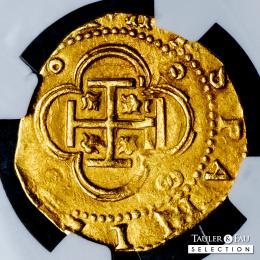
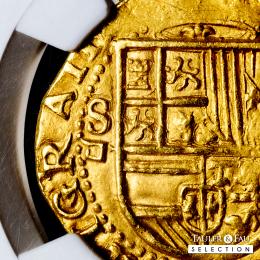
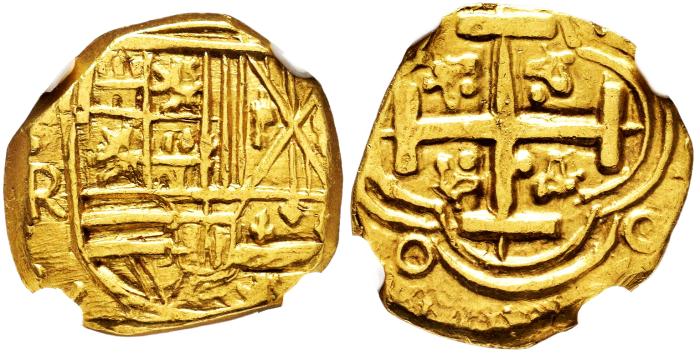
Philip II (1556-1598). 2 escudos. 1591/0. Sevilla. H/square d. (Cal-838). (Tauler-43a). . 6,67 g. Four-digit date to the right of the shield, vertically arranged. S/II/H to the left. Assayer H (Hernando de Ballesteros) rectified over “square d” (Melchor Damian). Part of the king’s name visible in the legend. Very rare. XF/Almost XF. Est...4500,00.
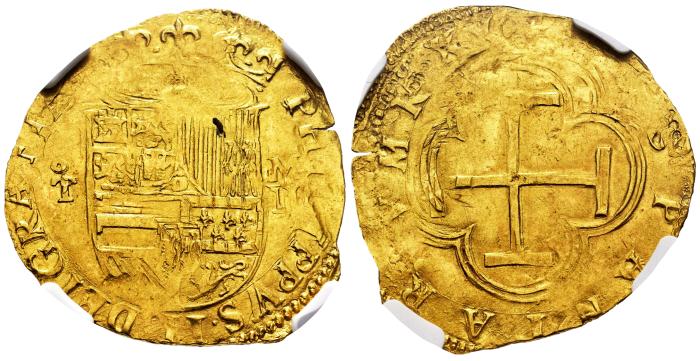
Superb Toledo - MS 61
Philip II (1556-1598). 2 escudos. ND (1566-1576). Toledo. M. (Cal-858). (Tauler-56). . 6,69 g. Mintmark oT to the left of the shield and M/II to the right.
Large flan with nearly complete legends, with the king’s name and numeral visible. Original luster. Very rare, even more in this condition.
Slabbed by NGC as MS 61. Est...6000,00.
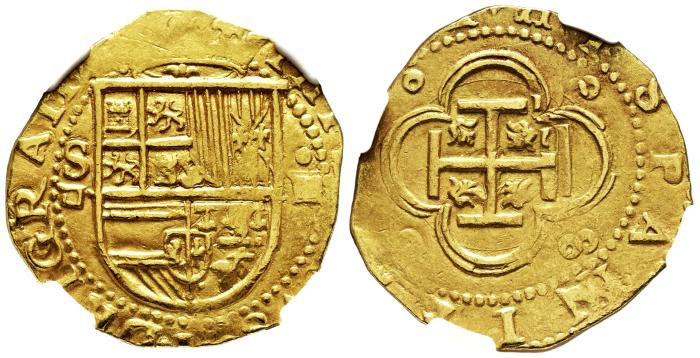
NGC - MS 63
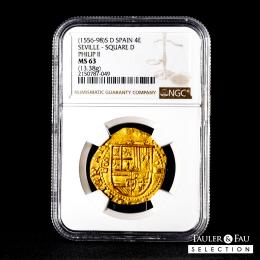
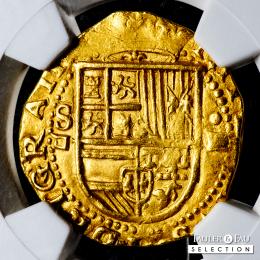
Philip II (1556-1598). 4 escudos. ND (1566-1587). Sevilla. (Cal-887). (Tauler-11). . 13,38 g. Shield between S/square d and denomination IIII.
Nearly full legends. Slight double strike on the reverse. Attractive color. Very rare in this condition.
Slabbed by NGC as MS 63, with only four finer examples according to the NGC census. Est...10000,00.
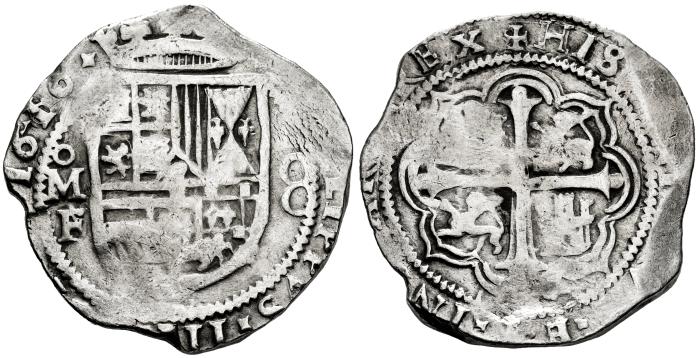
Rare rectified
Philip III (1598-1621). 8 reales. 1610/1609. Mexico. F/A. (Cal-892 var). . 26,89 g. Very clear rectified 1 over 0 and assayer F over A.
The last digit of the date is somewhat diffuse and lightly tooled, probably 0 over 9. Part of the king’s name and numeral visible. Very rare. VF. Est...3000,00.
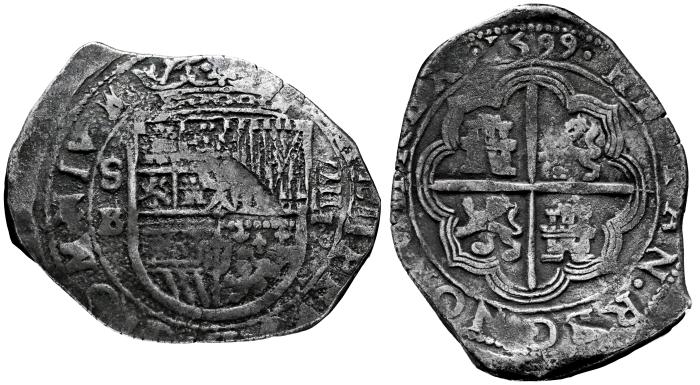
Jarabo-Sanahuja - Plate coin
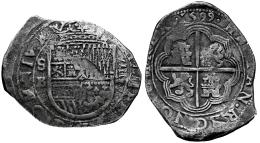
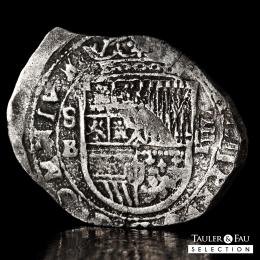
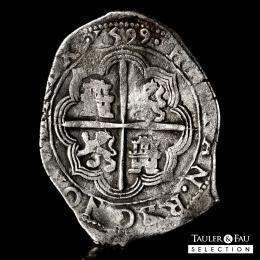
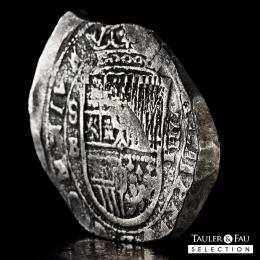
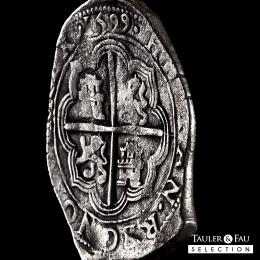
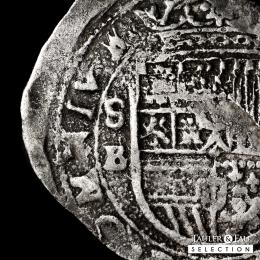
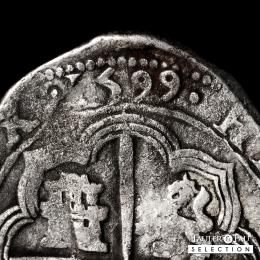
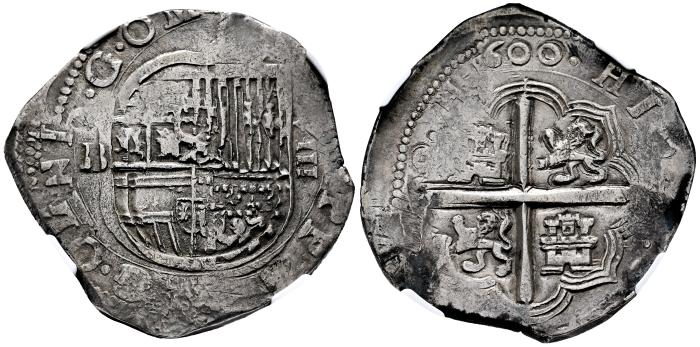
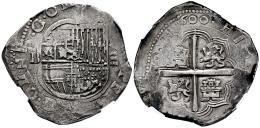
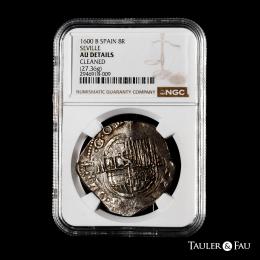
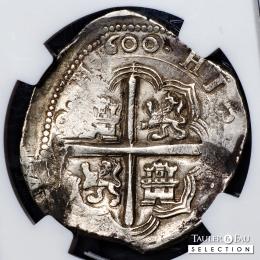
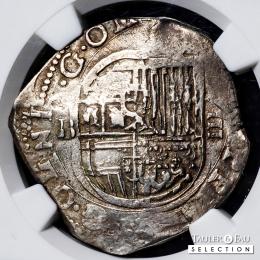
Philip III (1598-1621). 8 reales. 1599. Sevilla. B. (Cal-953). (Jarabo-Sanahuja-B345, Plate coin). . 27,42 g. OMNIVM type. Full 4-digit date and full data visible. Circular frames on obverse and reverse. Light stress marks and soft tone. Rare. Ex Áureo & Calicó (26/05/2010), lot 265. Choice VF. Est...800,00.
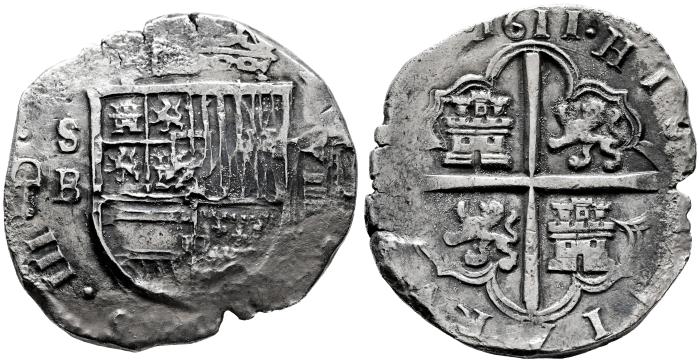
Philip III (1598-1621). 8 reales. 1611. Sevilla. B. (Cal-963). (Jarabo-Sanahuja-B360). . 25,81 g. Full date, mintmark, denomination, and assayer perfectly visible, as well as the king’s ordinal III in the legend. Some saltwater corrosion. Rare.
Privately purchased from Mike Dunigan in November 1994.
Ex José Octavio Busto Collection, retaining the collector’s label. Choice VF. Est...600,00.
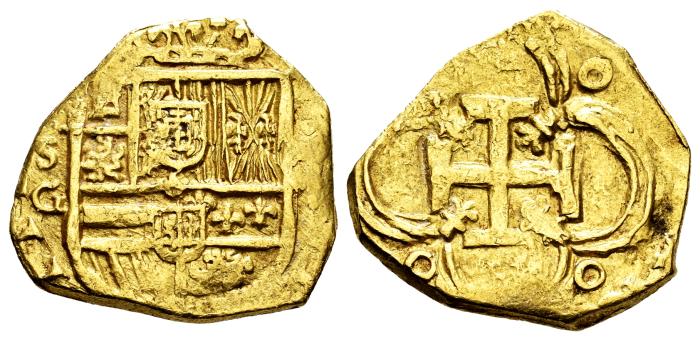
Philip III (1598-1621). 2 escudos. (1617-1621). Sevilla. G. (Cal-Tipo 197). . 6,75 g. Date not visible, otherwise the king’s ordinal III is clearly discernible in the legend. Mintmark and assayer to the left; denomination II horizontal and flanked by dots to the right of the shield. Nice color. Rare. XF. Est...2000,00.
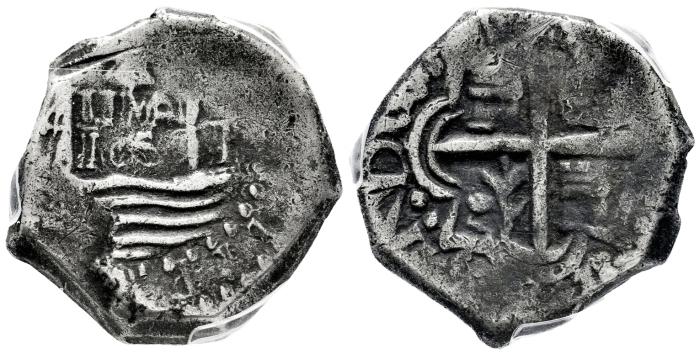
Star of Lima - F 15 Top Pop!!
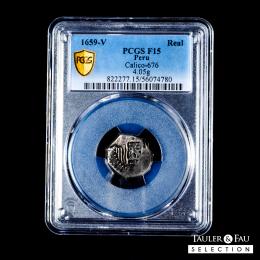
Philip IV (1621-1665). 1 real. 1659. Lima. V. (Cal-676). . 4,05 g. “Star of Lima”. Mintmark ★ over LIMA, V partially visible to the left, full denomination I to the right, and full date at center with slight weakness on the last digit. First year of this unauthorized issue, struck only in 1659 and 1660. Very rare.
Slabbed by PCGS as F 15 (Top Pop), the finest known in the PCGS census. Est...1000,00.
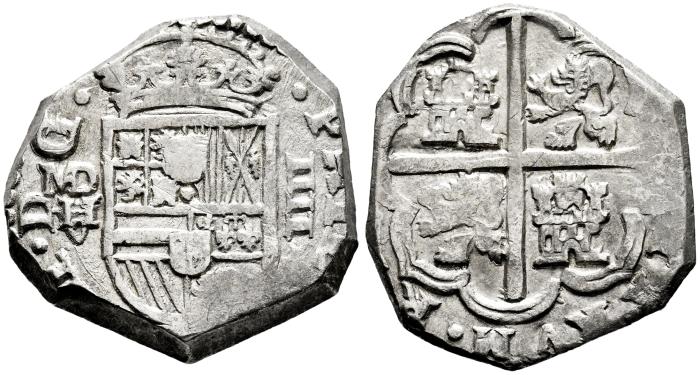
Extremely rare assayer!!
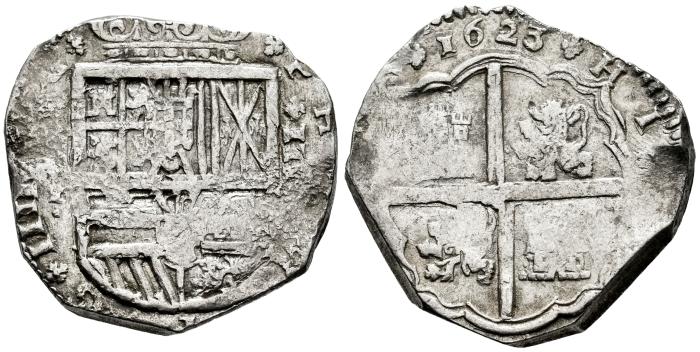
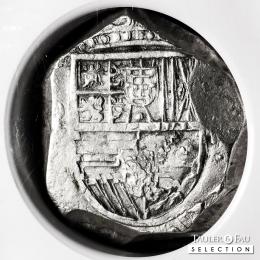
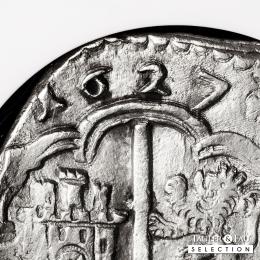
Philip IV (1621-1665). 4 reales. (1627). Madrid. H/V. (Cal-Unlisted assayer). (Jarabo-Sanahuja-C103, ulisted rectified assayer). . 13,68 g. Date not visible. Horizontal MD mintmark and very clear assayer correction V over H. Strong strike, with details very well defined.
Jarabo-Sanahuja state that they have not seen any 4 reales specimen with assayer H, nor do they indicate the possible existence of such a clear assayer correction as seen on this specimen. Extremely rare. Choice VF. Est...1200,00.
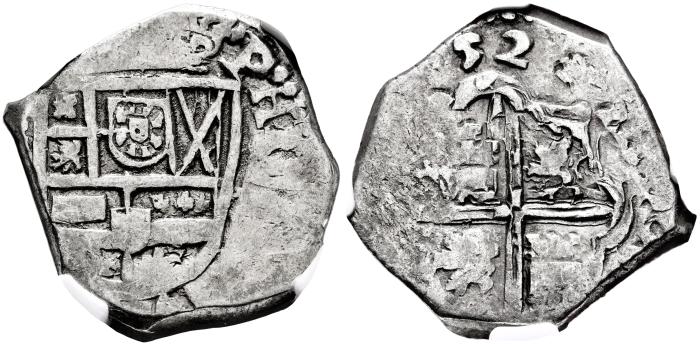
NGC - AU 50
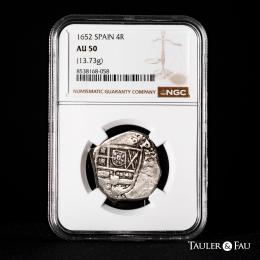
Philip IV (1621-1665). 4 reales. 1652. Toledo. (Y). (Cal-1223). (Jarabo-Sanahuja-C756). . 13,73 g. Mintmark and assayer not visible, but the last two digits of the date are very clear. Part of the king’s name visible on the obverse, and the reverse legend begins at 1 o’clock. Very rare.
Slabbed by NGC as AU 50.
The Toledo mint ceased striking silver and gold coinage in 1641, in the context of declining mining output in Spanish America. However, the pragmatic sanction of 1 October 1650 ordered the reopening of the old Castilian mints —Burgos, Cuenca, Granada, Toledo, and Valladolid— in order to melt down and recoin the “Perulera” silver resulting from the Great Potosí Scandal. In accordance with this decree, the Toledo mint resumed activity on 11 December 1650, which explains the existence of specimens dated 1651.
Although the specific reason for the striking of this 1652 4 reales remains unknown, and only very few specimens are known, it is documented that other mints, such as the Royal Mint of Segovia, continued to recoin “Perulera” reales until early 1653. It is therefore highly likely that this specimen represents a late issue connected with the aftermath of the Potosí Scandal. Est...800,00.
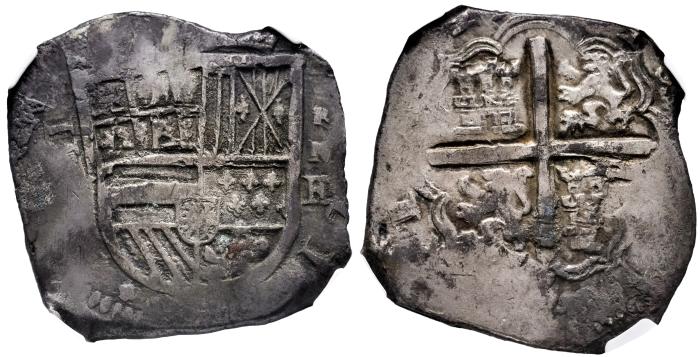
Cartagena - AU Details
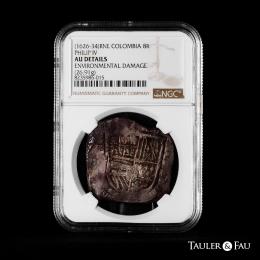
Philip IV (1621-1665). 8 reales. ¿1629?. Cartagena de Indias. E. (Cal-1234 similar). (Restrepo-M45-12 similar). . 26,91 g. Bases of the last digits of the date visible; a 2 and a 9 can be discerned. Denomination VIII vertically arranged to the left of the shield, and very clear R/N/E to the right of the shield.
Double strike on the obverse and careless manufacture, as usual for this issue. Toned. Very rare.
Slabbed by NGC as AU Details, Environmental Damage. Est...3000,00.
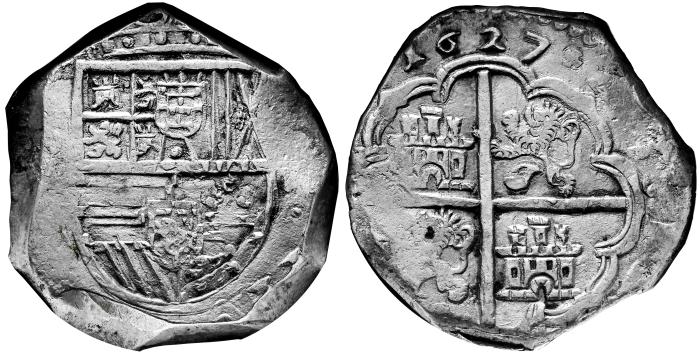
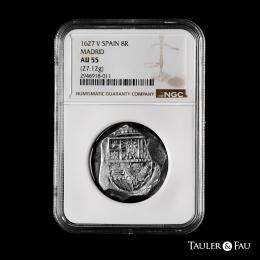
NGC - AU 55 Top Pop!!
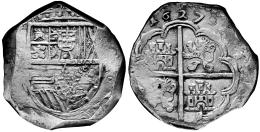
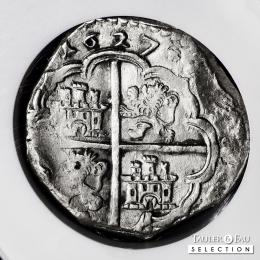
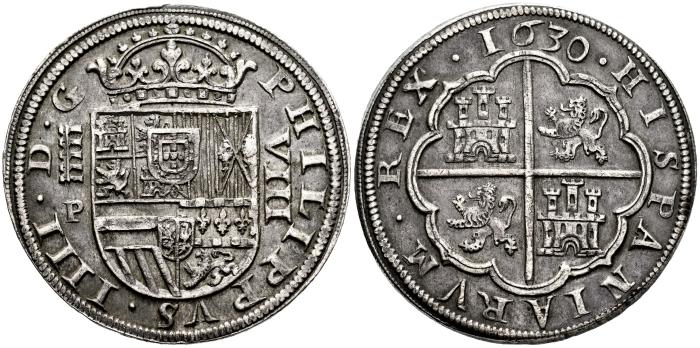
Philip IV (1621-1665). 8 reales. 1627. Madrid. (V). (Cal-1252). (Jarabo-Sanahuja-C36). . 27,12 g. Full 4-digit date, partially visible mintmark, and assayer not visible. Strongly struck on a thick, well-weighted flan. Very rare, especially with such a clear date and in this grade.
Slabbed by NGC as AU 55 (Top Pop), the finest graded specimen in the NGC census. Est...1000,00.
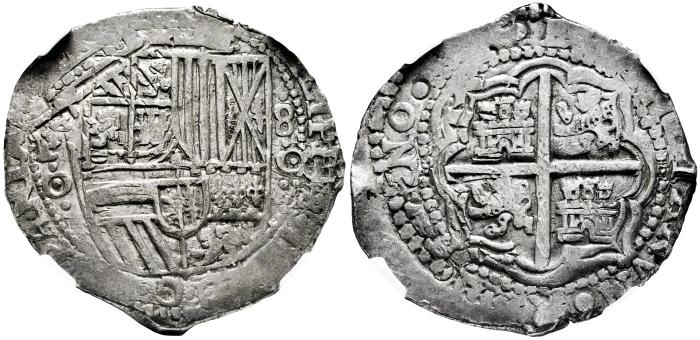
NGC - AU 55 Top Pop!!
Philip IV (1621-1665). 8 reales. 1651. Potosi. ʘ-ʘ. (Cal-1489). . 26,65 g. Base of the last digit of the date visible, although not stated on the slab label. Mintmark, denomination, and double assayer visible on the obverse. Very complete and without the crown-type countermark, usually seen on this issue. Light double strike. Rare.
Slabbed by NGC as AU 55 (Top Pop), the finest known in the NGC census. Est...1000,00.
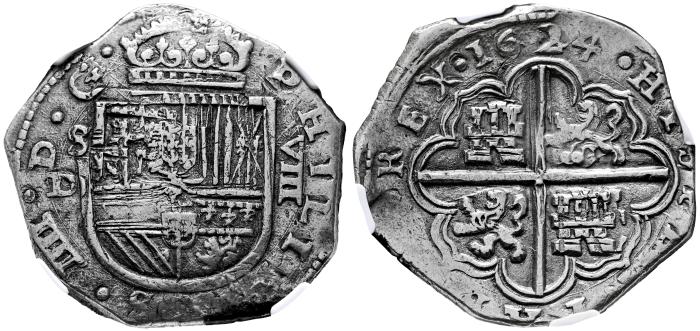
NGC - AU 53 Top Pop!!
Philip IV (1621-1665). 8 reales. 1624. Sevilla. D. (Cal-1634). (Jarabo-Sanahuja-C476). . 27,32 g. Complete 4-digit date. Very sharp strike with all details visible and legends nearly complete. Slight double strike on the shield. Soft patina. Attractive and very rare in this condition.
Slabbed by NGC as AU 53 (Top Pop), the finest known in the NGC census. Est...900,00.
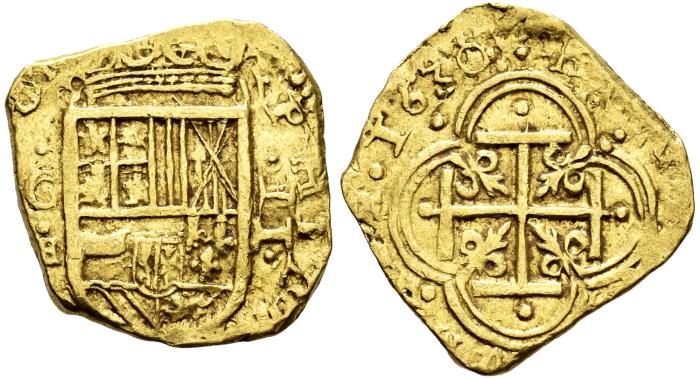
2 escudos Cartagena!!
Philip IV (1621-1665). 2 escudos. 1630. Cartagena de Indias. E. (Cal-Tipo 377, unlisted date). (Restrepo-M52.31). . 6,80 g. Full four-digit date. Part of the king’s name visible. Crown and shield also complete, with •C•E to the left and •II• (in vertical reading) to the right. Inner and outer dots in the frame around the cross. Very rare, even more so with the full date. Almost XF/XF. Est...6000,00.
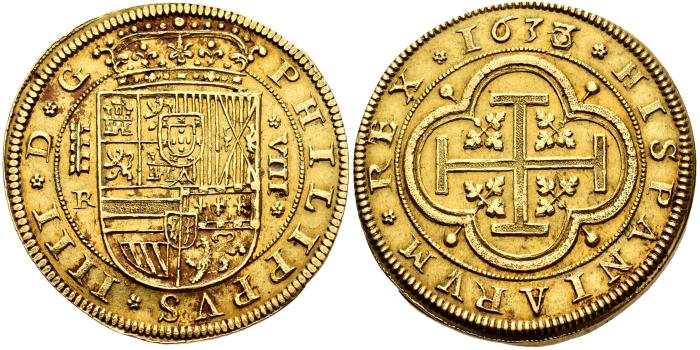
Extremely rare Segovia!!
Philip IV (1621-1665). 8 escudos. 1638/7/6. Segovia. R (Rafael Salván de Aulina). (Cal-1941). (Cal onza-51). (Gutiérrez Delgado-F4.Sg.1637/6). . 26,95 g. Three-arched aqueduct arranged vertically above the assayer, to the left; to the right, denomination VIII arranged vertically and flanked by rosettes. Very clear double overdate on the reverse.
Magnificent specimen, with intense color, enhanced in some areas by light orange toning and underlying original luster. Virtually immaculate surfaces and perfectly defined reliefs.
Light spots in the upper area of the obverse and on the lower part of the shield, as well as a slight deposit between the denomination. Extremely rare, we have traced only four other specimens.
An exceptional testimony to the history of the Royal Mint of Segovia and Spanish numismatics. In its early years, one of the mint’s main challenges was attracting metal for coinage: despite its advanced technology, its location in the heart of Castile, far from Seville — the principal port of entry — significantly limited its activity. To remedy this, minting licenses for large denominations were promoted — 50 reales, 8 and 100 escudos — allowing metals to be brought in without inquiry into their provenance. The Council of Finance itself, aware of their possibly irregular origin, thus prioritized increasing the circulating medium and securing the collection of seigniorage and minting duties.
However, the situation did not improve significantly and worsened in 1636 with the departure of the engraver Diego de Astor to Madrid. According to the officials of the Ingenio, his replacement, who was of advanced age, was unable to perform the work properly, forcing the reuse and correction of the rollers in 1636 and 1637. This is attested by all known specimens from these years, which show an overdate on the final digit.
There is a similar precedent for this 1638 piece in the 50 reales of 1618. Diego de Astor spent long periods in Madrid as engraver on other commissions and usually left rollers prepared in advance, but he did not do so for the 50 reales of 1618. For this reason, the 8 on these cincuentines was re-engraved by using the 7, creating a peculiar Gothic-style eight very similar to that seen on this specimen.
An exceptional testament to the history of the Real Ingenio of Segovia and to Spanish numismatics. In its early years, one of the mint’s main challenges was securing metal for coinage: despite its advanced technology, its location in the heart of Castile, far from Seville—the main port of entry—significantly limited its operations. To address this, minting licenses for large denominations —50 reales, 8 escudos, and 100 escudos— were promoted, allowing the inflow of metal without inquiry into its provenance. The Royal Treasury Council, aware of the potentially irregular origins of such bullion, thus prioritized increasing the money supply and ensuring the collection of seigniorage and minting duties.
However, the situation did not improve significantly and worsened in 1636 with the departure of the engraver Diego de Astor to Madrid. According to the officials of the mint, his elderly replacement was unable to perform the work properly, which forced the reuse and rectification of the roller dies in 1636 and 1637. This is evidenced by all known specimens from these years, which display an overdate on the final digit.
A comparable precedent for this 1638 piece exists in the cincuentines of 1618. Diego de Astor often spent long periods in Madrid working on other engraving commissions and usually left prepared rollers behind; however, he did not do so for the 50 reales of 1618. As a result, the “8” on those cincuentines was re-engraved over a “7,” producing a distinctive Gothic-style figure closely resembling that of the present specimen.
Although this piece has occasionally been attributed by various experts and catalogues to 1633/2 or 1637/6, such interpretations seem unconvincing in our opinion. While 8 escudos were indeed struck in 1633, it seems unlikely that, with Diego de Astor present at the mint, it would have been necessary to re-engrave the rollers—let alone in such a crude manner. Moreover, at least six examples of 1637/6 are known, all with clearly defined overdates, making it equally implausible that this awkward reworking represents merely a 7 over 6.
This magnificent 8 escudos of 1638, the fifth known specimen and previously unpublished, stands as the most remarkable example of this circumstance: it displays a triple overdate —8 over 7 over 6— clearly visible and somewhat crudely executed. It is the only known triple overdate within the series of 8 escudos struck at the Real Ingenio of Segovia under Philip IV. Almost MS. Est...60000,00.
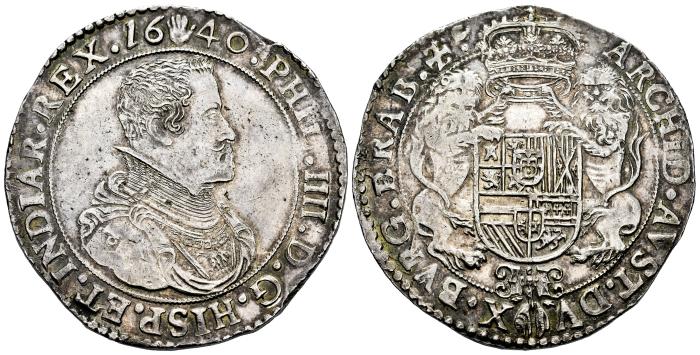
Superb - MS 62 Top Pop!!
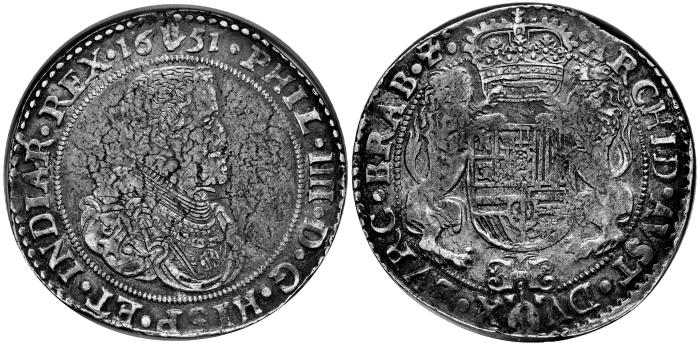
Philip IV (1621-1665). 1 ducaton. 1640. Antwerpen. (Tauler-2901). (Vti-1230). (Vanhoudt-642.AN). . 32,52 g. Superb specimen with full original luster. Soft and attractive tone. Extremely rare in this grade.
Slabbed by NGC as MS 62 (Top Pop), the finest graded specimen in the NGC and PCGS censuses. Est...3000,00.
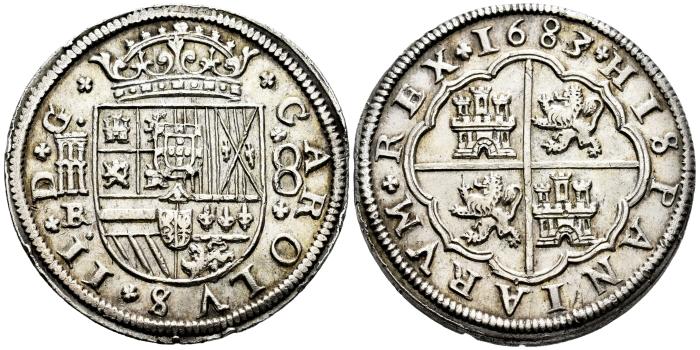
Charles II (1665-1700). 8 reales. 1683/2. Segovia. BR. (Cal-765). (Jarabo-Sanahuja-F19, no indica sobrefecha). . 27,56 g. Two-arched, two-tier aqueduct. Dots flanking the mintmark and assayer; crosses flanking the denomination. With Portugal escutcheon. Slight rail-end planchet and clear overdate. Light toning with traces of original luster. Small edge knocks. Rare.
Ex Áureo 9 (28/06/1990), lot 751;
Ex Plus Ultra Collection, Soler y Llach (27/10/2021), lot 1439. XF. Est...3000,00.
Very clear date - AU Details
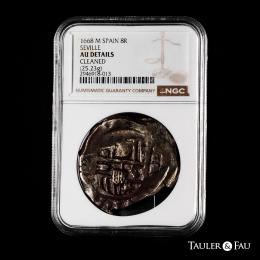
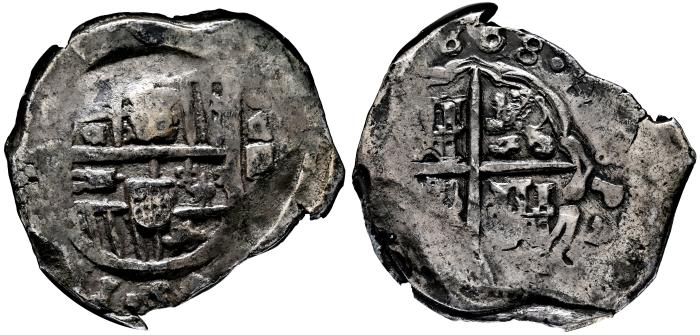
Charles II (1665-1700). 8 reales. 1668. Sevilla. (M). (Cal-778). (Jarabo-Sanahuja-F65). . 25,23 g. Very clear and nearly complete date. Mintmark and assayer not visible. In the legend, the end of the king’s name and his ordinal can be seen. Patina. Very rare.
Slabbed by NGC as AU Details, Cleaned. Est...1500,00.
Extremely rare
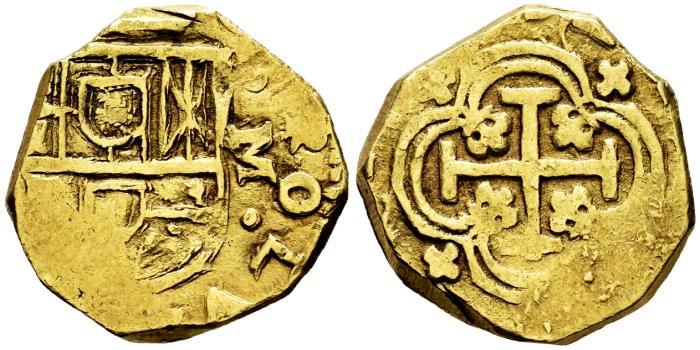
Charles II (1665-1700). 1 escudo. 1692/1. Sevilla. M. (Cal-No cita). (Tauler-106). . 3,38 g. Assayer M horizontal to the right of the shield. The bases of the last two digits of the date are discernible. Much of the king’s name, “CAROLVS”, is visible.
Extremely rare, we know of only one other specimen from the same die, auctioned in Tauler&Fau Selection (25/06/2024), lot 235; the present coin would be the second known. Choice VF. Est...3000,00.
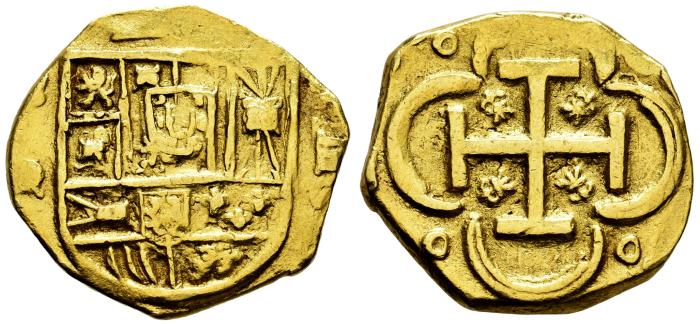
Charles II (1665-1700). 4 escudos. Sevilla. R. (Cal-Tipo 369). (Tauler-53a, smilar). . 13,35 g. S/R to the left, denomination IIII to the right, vertically arranged. Date not visible. Complete cross with fleurs-de-lis instead of the usual small squares in the angles, and roundels in the lobes. Nice color. Very rare. XF. Est...4000,00.
Unique - MS 62 Top Pop!!
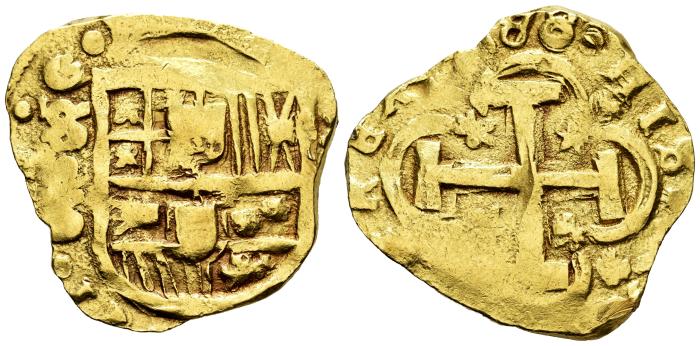
Charles II (1665-1700). 8 escudos. 1680/78. Sevilla. S. (Cal-1020). (Cal onza-161, Plate coin). (Tauler-161, Plate coin). . 26,82 g.
Clear overdate. The king’s ordinal visible. Lovely color with traces of luster. Crude strike, as usual, but very complete for the type. Unique known.
Slabbed by NGC as MS 62 “Oro Macuquino Plate” (Top Pop), the finest and only known in the NGC census. Est...30000,00.
Denomination “IIIV”
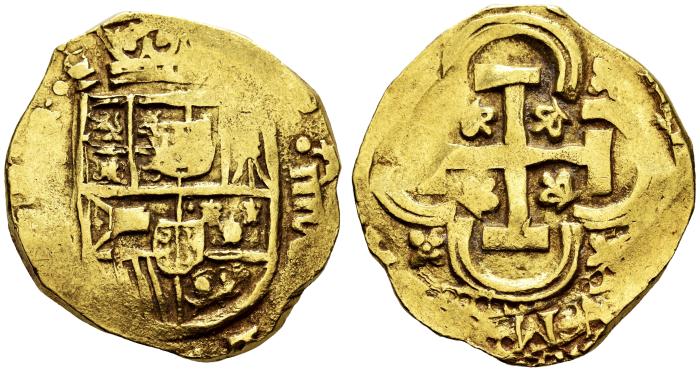
Charles II (1665-1700). 8 escudos. (1688). Sevilla. (M). (Cal-1038). (Cal onza-171a). (Tauler-177a). . 26,79 g. Denomination “IIIV”. This particular arrangement of the denomination allows the piece to be attributed to the date 1688, as it is the only known issue with this characteristic. Part of the king’s name visible. Very rare, few specimens known. Choice VF. Est...7000,00.
A wonderful piece
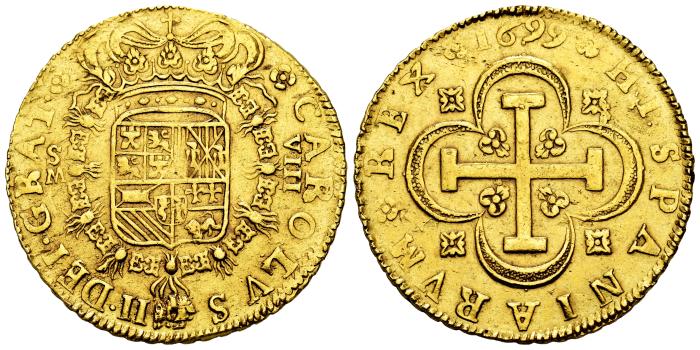
Charles II (1665-1700). 8 escudos. 1699. Sevilla. M. (Cal-1060). (Cal onza-201). . 26,94 g. Variety with “GRAT” in the obverse legend. Without the Portugal escutcheon. No defects, and with perfect edge milling. Attractive color and traces of luster. A wonderful piece of extraordinary eye appeal, rarely to be encountered again on the market in this quality. Very rare, especially in this grade. AU. Est...20000,00.
Ex Sedwick 2015
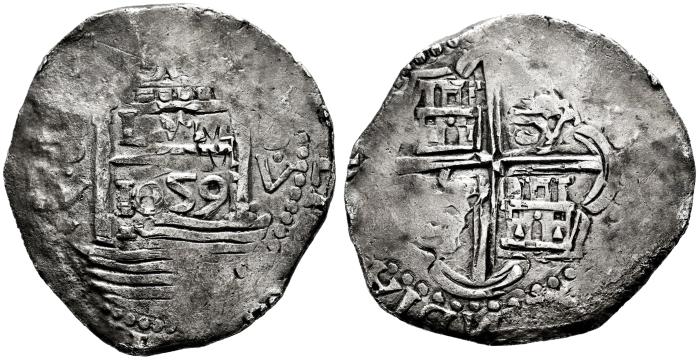
Shipwreck coins. Philip IV (1621-1665). 8 reales. 1659. Lima. V. (Cal-1247). . 24,01 g. “Star of Lima”. Mintmark L★M at center, with full date below and 8/V - 8/V at sides. Well-struck at the center, with weak areas at the peripheries. Nearly complete pillars-and-waves and virtually complete cross, with the castles especially well detailed. Virtually no saltwater corrosion, visible only next to the left pillar. Very rare.
It could be attributed to the Jupiter shipwreck; however, based on the die type, it does not correspond to the Lima Star types documented from that wreck, and this die has never been reported among the finds recovered from the wreck. Sedwick stated in his description: “Probably from the unidentified ca. 1671 shipwreck in the port of Seville, based on the corrosion pattern and toning.”
Ex Daniel F. Sedwick 18 (29/10/2015), lot 560. Est...6000,00.
Consolacion - NGC
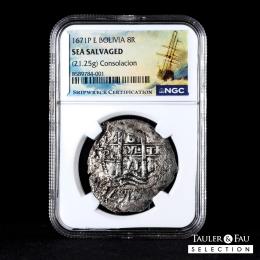
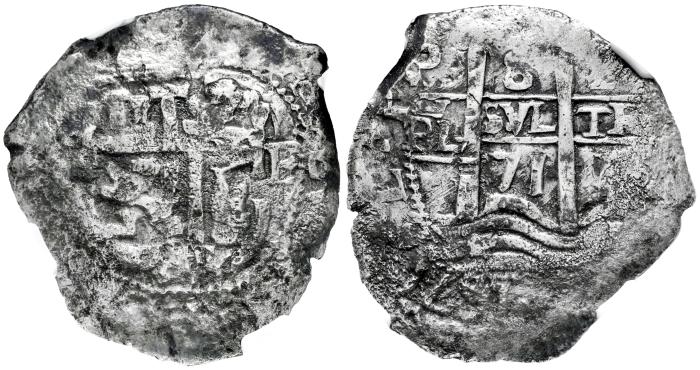
Shipwreck coins. Charles II (1665-1700). 8 reales. 1671. Potosi. E. (Cal-702). . 21,25 g. Double date, one of them partial, and double assayer. Saltwater damage. Recovered from the wreck of Nuestra Señora de la Consolacion, sunk in 1681 off Santa Clara Island, Ecuador.
Slabbed by NGC as Sea Salvaged. Special "Shipwreck Blue Label".
The Consolacion, a galleon assigned to the 1681 South Seas Fleet, was delayed departing Lima and ended up sailing alone until it reached the Gulf of Guayaquil, where it encountered English pirates under Bartholomew Sharpe.
To prevent capture, the crew deliberately grounded the ship on a reef off Santa Clara Island and set it ablaze, dying as they attempted to escape. Unable to reach the treasure, the pirates killed the surviving Spaniards and failed in their attempts to recover the cargo, which consisted mainly of Potosí silver cobs, along with gold and silver ingots.
The wreck remained untouched until the 1990s, when thousands of coins—many in low grade—were recovered and first auctioned as finds from the “Isla de Muerto.”
Subsequent research confirmed the ship’s true identity, and later discoveries were encapsulated by ANACS for the market. The site still holds promise, as the ship’s manifest listed 146,000 pesos in silver coinage, plus an even larger amount in contraband. Est...500,00.
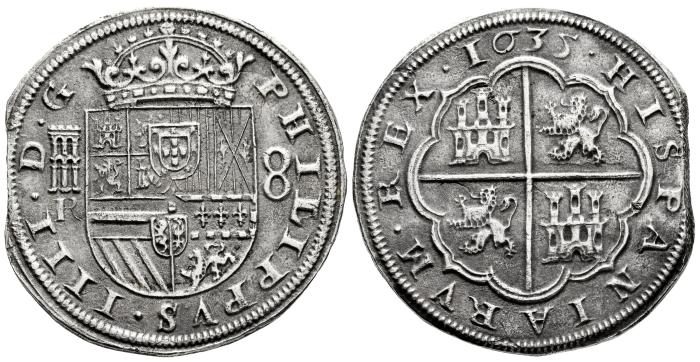
H.M.S. Association - AU Details
Shipwreck coins. Philip IV (1621-1665). 8 reales. 1635. Segovia. R. (Cal-1606). (Jarabo-Sanahuja-C365). . Wonderful specimen. Very superficial saltwater corrosion, with all details complete and well struck, as well as a pleasant soft toning. Slight rail-end flaw. Very rare.
Recovered from the wreck of the “H.M.S. Association”, sunk in 1707 off the Isles of Scilly, southwest of England.
Slabbed br NGC as AU Details, Saltwater damage. Special "Shipwreck Blue Label".
Includes photo-certificate of authenticity ASS/TH/7344.
A similar specimen struck in Segovia, but of an earlier date, was auctioned by Daniel F. Sedwick on 04/05/2022 and hammered $7,500; another specimen of the same date and mint was auctioned by Tauler&Fau on 11/12/2025 and hammered €4,800.
The HMS Association sank in 1707 off the Scilly Isles in one of the worst naval disasters in British history. The fleet, returning from the Mediterranean, was caught in a storm, and faulty navigation drove the ships straight onto the reefs.
The vessel went down with a lot of men, including Admiral Sir Cloudesley Shovell, whose personal treasure -ten chests- was believed to be on board. The wreck was located in 1967, triggering years of intensive salvage activity.
Between 1969 and the early 1970s, thousands of coins entered the market at auction, mainly British gold and silver issues, along with numerous Spanish and Spanish-American pieces, notably 8 reales from various mints, including a rare 1676 Royal.
Recovery was especially challenging due to the massive boulders that pinned sections of the wreck to the seabed. Est...4000,00.
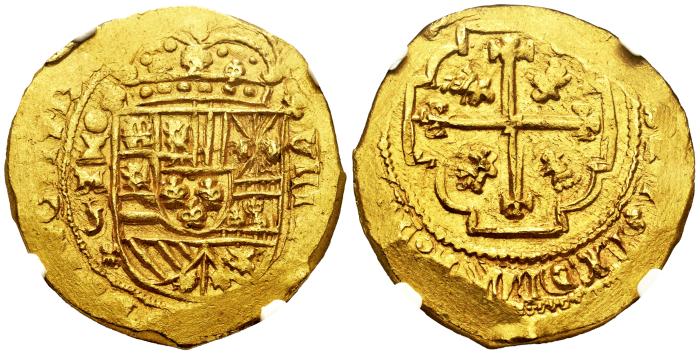
Ex Schulman - Ex 1715 Fleet - MS 63
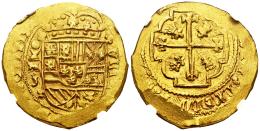
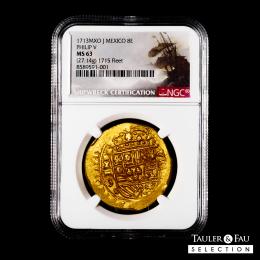
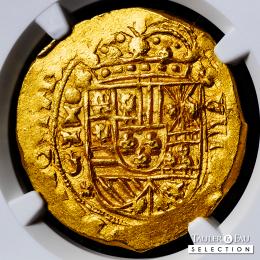
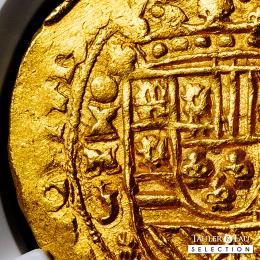
Shipwreck coins. Philip V (1700-1746). 8 escudos. 1713. Mexico. J. (Cal-2211). (Tauler-390). (Km-57.1). . 27,14 g.
Magnificent specimen with a bold strike and slight weakness at the peripheries. Deep yellow color and original luster accentuate its splendid eye appeal.
All visible data, with full shield and cross. Mintmark oXM and assayer bold strike to the left, and value VIII vertically to the right.
We are confident it will attract the interest of numerous collectors of this period. Superb specimen with a desirable pedigree. Very rare in this high grade.
From the wreck of the 1715 Spanish Fleet, sunk off the east coast of Florida.
Slabbed by NGC as MS 63. Special “1715 Fleet Shipwreck Label”.
Ex Schulman “Spanish Galleon Treasure” (27-29/11/1972), lot 286. Special auction of the 1715 Fleet.
The 1715 Fleet, composed of the galleons of Nueva España and Tierra Firme and laden with a vast shipment of gold, silver, jewelry, and high-value goods, sailed from Havana bound for Spain in July of that year. On July 30–31, a hurricane drove the convoy onto the east coast of Florida, where eleven ships were lost, over 1,000 lives perished, and more than 14 million pesos-plus an even greater amount in contraband-were swallowed by the sea.
Although Spanish salvage crews recovered nearly half of the registered treasure, in 1716 the coastal storehouse was raided by British freebooters under Henry Jennings, who carried off some 350,000 pesos.
The remainder of the treasure lay buried beneath the sand for more than two centuries, until the 1950s, when researcher Kip Wagner identified the first traces of the wrecks, leading to the creation of the famed Real Eight Company, later joined by figures such as Mel Fisher.
Since then, Florida's "Treasure Coast" has yielded hundreds of thousands of silver cobs, an exceptional quantity of gold onzas, as well as jewelry, porcelains, and liturgical objects.
Today, the 1715 Fleet is recognized as the largest known source of New World gold cobs and one of the most iconic assemblages in colonial numismatics, its finds originating from multiple wrecksites whose precise identification remains an active subject of research. Est...35000,00.
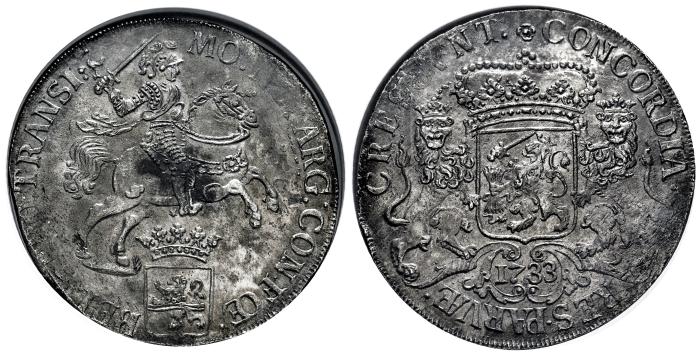
Vliegenthart - UNC Details
Shipwreck coins. Netherlands. Ducat. 1733. Overijssel. West Friesland. (Km-80). (Dav-1829). . Recovered from the "Vliegenthart" shipwreck, sunk in 1735 off Zeeland, Netherlands. Sharply struck, with well-defined reliefs and only light traces of marine oxidation. Attractive tone with original luster.
Slabbed by NGC as UNC Details, Saltwater Damage. Special “Shipwreck Blue Label”.
The Vliegenthart, was a Dutch East India Company vessel lost in 1735 off Zeeland, shortly after departing for the East Indies. A northeast gale, combined with a spring tide and pilot error, drove the ship onto a sandbank behind her sister ship, the Anna Catharina. Both vessels were lost with all hands.
Contemporary salvage attempts failed, but a secret chart later enabled the wreck to be located in 1981. From 1983 onwards, divers recovered important monetary consignments intended for the East India trade, including chests of Mexican silver and Dutch gold coinage, as well as smaller boxes of large Dutch silver coins known as ducatoons, which had been exported illegally. Among the most significant finds were thousands of Mexican cobs, chiefly 8 reales, many bearing clear dates from the early 1730s and preserved in excellent condition. Est...900,00.
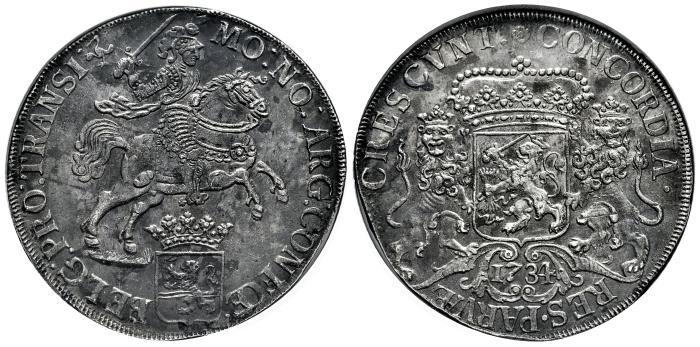
Vliegenthart - AU Details
Shipwreck coins. Netherlands. Ducat. 1734. Overijssel. West Friesland. (Km-80). (Dav-1829). . Recovered from the “Vliegenthart” shipwreck, sunk in 1735 off Zeeland, Netherlands. Strong strike and very well-detailed reliefs. Almost no saltwater corrosion. Attractive toning and original luster. Slabbed by NGC as AU Details, Saltwater Damage. Special “Shipwreck Blue Label”.
The Vliegenthart, was a Dutch East India Company vessel lost in 1735 off Zeeland, shortly after departing for the East Indies. A northeast gale, combined with a spring tide and pilot error, drove the ship onto a sandbank behind her sister ship, the Anna Catharina. Both vessels were lost with all hands.
Contemporary salvage attempts failed, but a secret chart later enabled the wreck to be located in 1981. From 1983 onwards, divers recovered important monetary consignments intended for the East India trade, including chests of Mexican silver and Dutch gold coinage, as well as smaller boxes of large Dutch silver coins known as ducatoons, which had been exported illegally. Among the most significant finds were thousands of Mexican cobs, chiefly 8 reales, many bearing clear dates from the early 1730s and preserved in excellent condition. Est...700,00.
Rooswijk - UNC Details
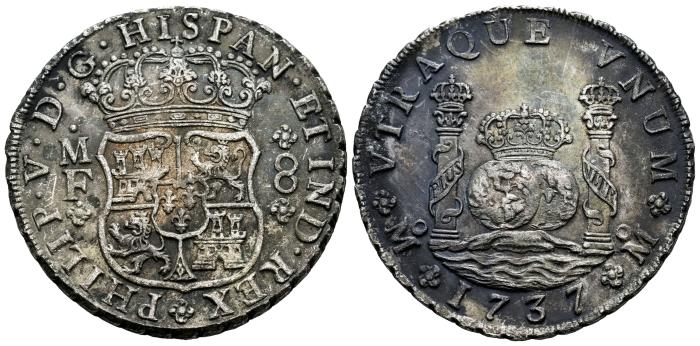
Shipwreck coins. Philip V (1700-1746). 8 reales. 1737. Mexico. MF. (Cal-1446). . Fantastic specimen with a very sharp strike and all details well defined. Attractive toning with different hues. Very superficial saltwater corrosion.
Recovered from the “Rooswijk” shipwreck, sunk in 1739 off the southeast coast of England.
Slabbed by NGC as UNC Details, Saltwater Damage. Special “Shipwreck Blue Label”. Includes photo-certificate of authenticity R/TH/423, issued and signed by Terry Hiron on behalf of the salvors.
The Rooswijk, a Dutch East Indiaman, sank in 1739 on the treacherous Goodwin Sands off southeast England, going down with her entire crew and 30 treasure chests. The wreck remained buried under shifting sandbanks until 2004, when changing tides exposed it and allowed the recovery of two complete chests and hundreds of silver ingots. Salvage operations continued in 2005 under official supervision. Since then, the market has seen hundreds of Mexican silver cobs from the 1720s–1730s, several transitional klippes dated 1733–1734, and numerous pillar dollars, along with a handful of pieces from other mints. Est...1500,00.
Hollandia - AU Details
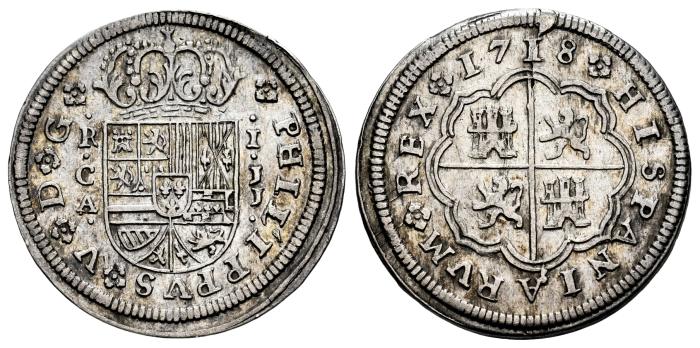
Shipwreck coins. Philip V (1700-1746). 1 real. 1718. Cuenca. JJ. (Cal-350). . Traces of luster and nice tone with light golden hues.
Recovered from the wreck of the “Hollandia”, a Dutch East India Company ship that sank on its maiden voyage on 13 July 1743 at Gunner Rock, west of Annet, in the Isles of Scilly.
Cuenca reales are very rarely encountered among the coins recovered from this wreck. Since the official monetary cargo recorded by the VOC for the Hollandia consisted of silver from the major American mints, the presence of a peninsular Cuenca issue is exceptional.
The numismatic evidence strongly suggests that this is an extremely rare example of “passenger money”: a legal-tender coin privately carried aboard by an officer, merchant, or crew member for personal use.
Slabbed by NGC as AU Details, Cleaned. Special “Shipwreck Blue Label”. Includes certificate HOL/TH/435 issued by the salvors Terry Hiron & Jim Heslin.
The Hollandia, a Dutch East Indiaman, sank on July 13, 1743 after being blown off course and striking Gunner Rock, descending to about 110 feet of depth near the Scilly Isles with no survivors. The wreck was located in 1971 by a team led by Rex Cowan, who in the following years recovered more than 35,000 silver coins, part of the roughly 130,000 guilders recorded as its monetary cargo. Most of the coins were Mexican pillar dollars, accompanied by a number of silver cobs -including the rare transitional klippes of 1733–1734- and a few Guatemalan cobs, found in mixed condition. Est...800,00.
Hollandia
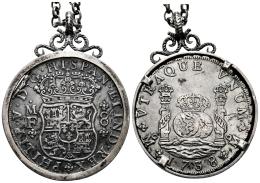
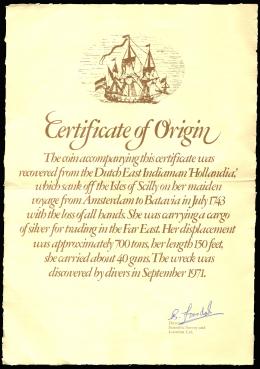
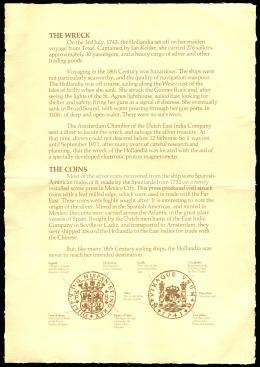
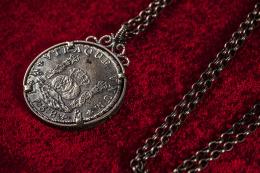
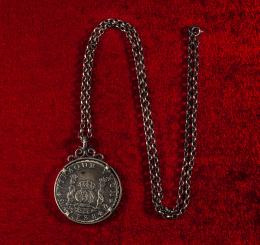
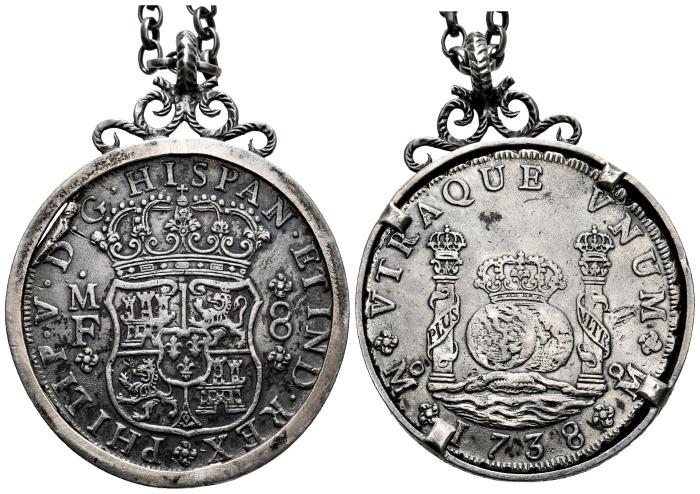
Shipwreck coins. Philip V (1700-1746). 8 reales. 1738. Mexico. MF. (Cal-1456). . Recovered from Hollandia, sunk in 1743 off the Isles of Scilly, southwest of England. Presented as a pendant and accompanied by a certificate of authenticity from Scientific Survey Ltd.
The Hollandia, a Dutch East Indiaman, sank on July 13, 1743 after being blown off course and striking Gunner Rock, descending to about 110 feet of depth near the Scilly Isles with no survivors. The wreck was located in 1971 by a team led by Rex Cowan, who in the following years recovered more than 35,000 silver coins, part of the roughly 130,000 guilders recorded as its monetary cargo.
Most of the coins were Mexican pillar dollars, accompanied by a number of silver cobs —including the rare transitional klippes of 1733–1734— and a few Guatemalan cobs, found in mixed condition. Choice VF. Est...750,00.
X
Confirm your maximum bid
Conecting
 English
 Español




 33
33
 12
12