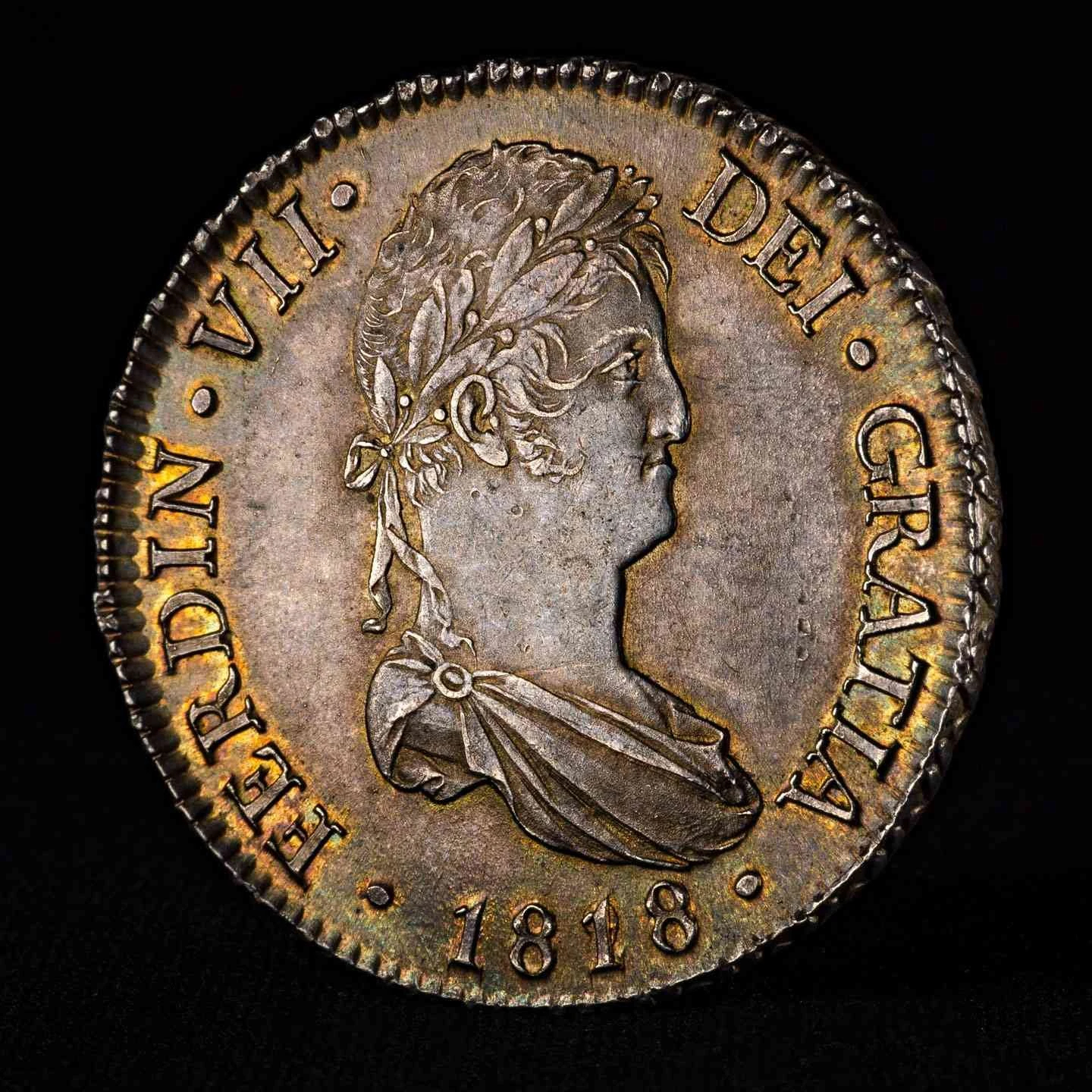
La Luz - NGC
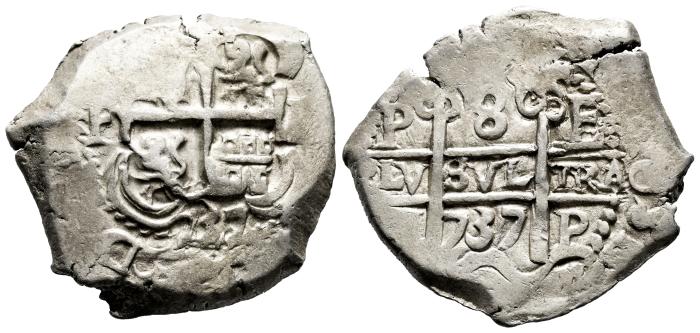
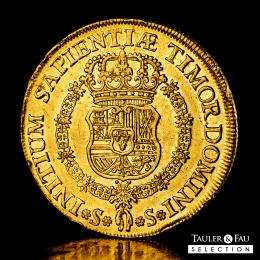
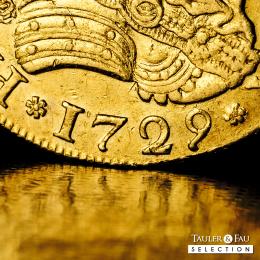
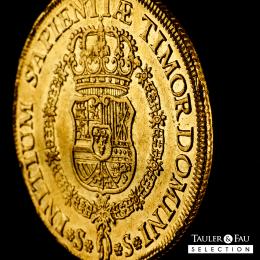
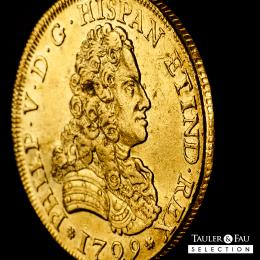
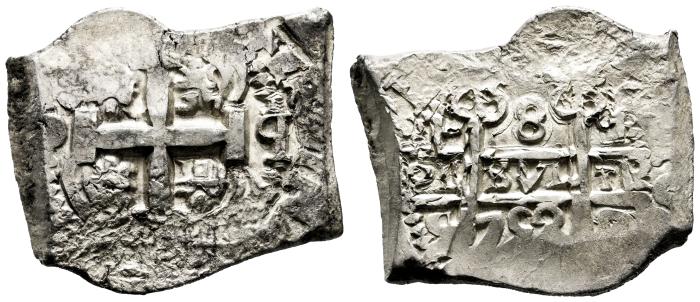
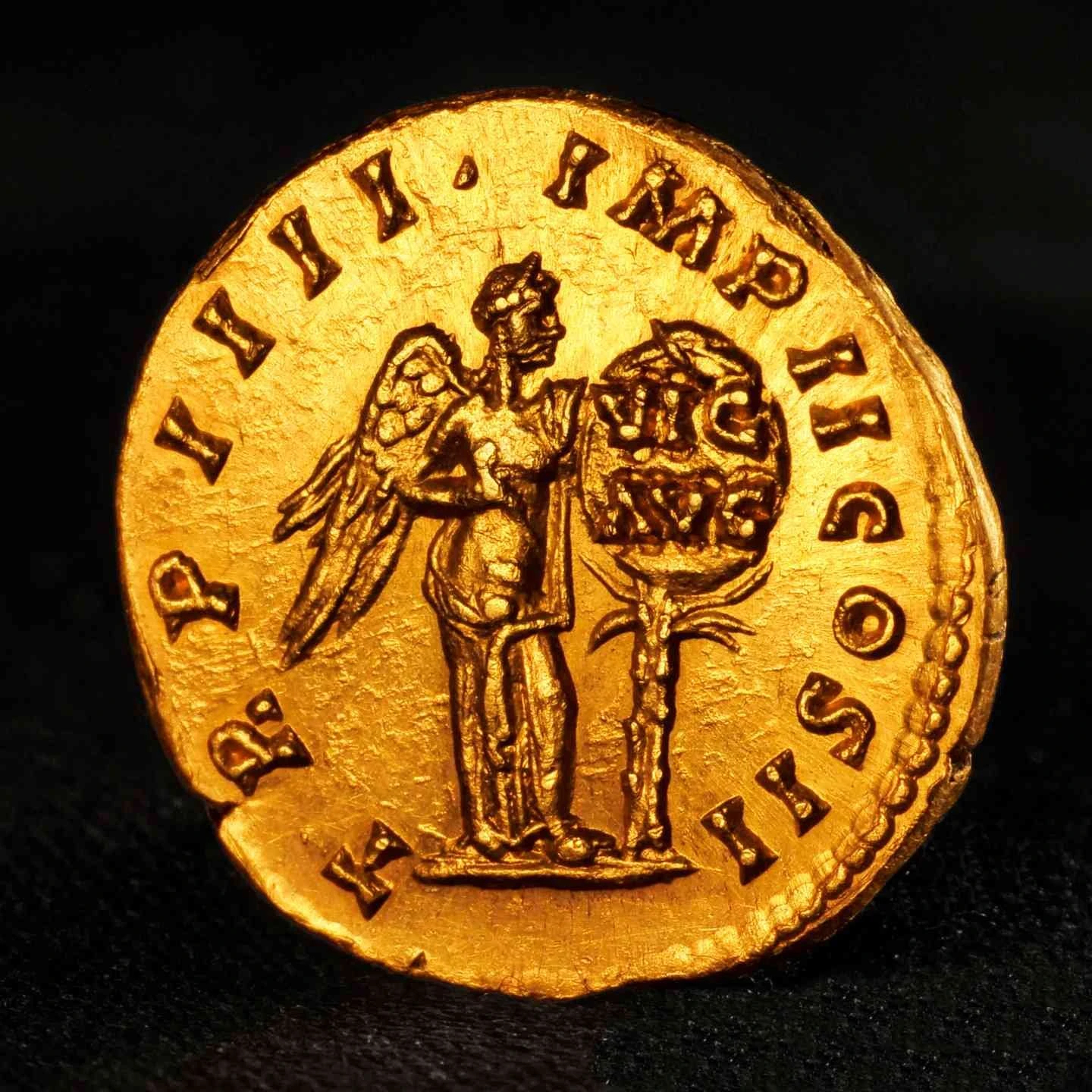
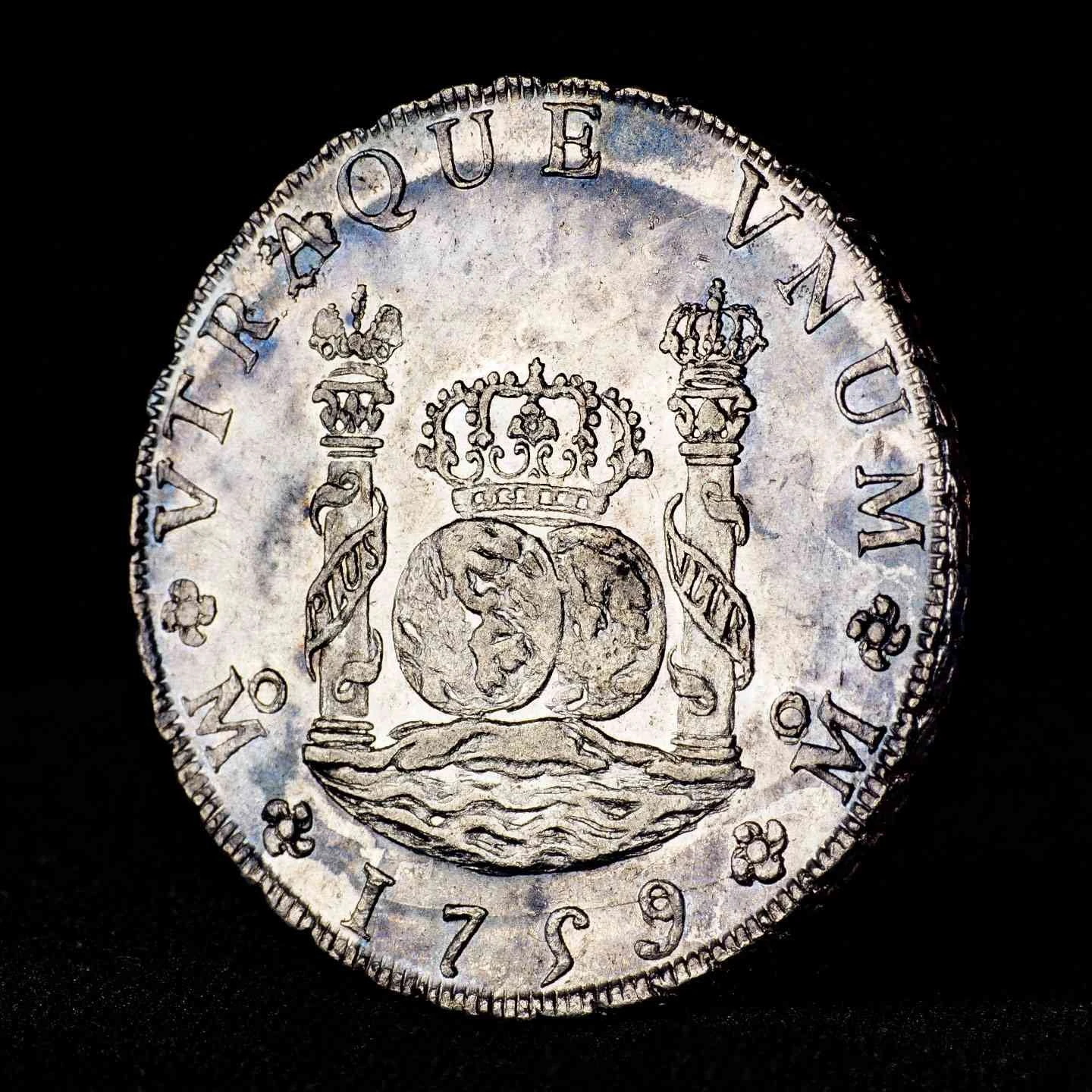
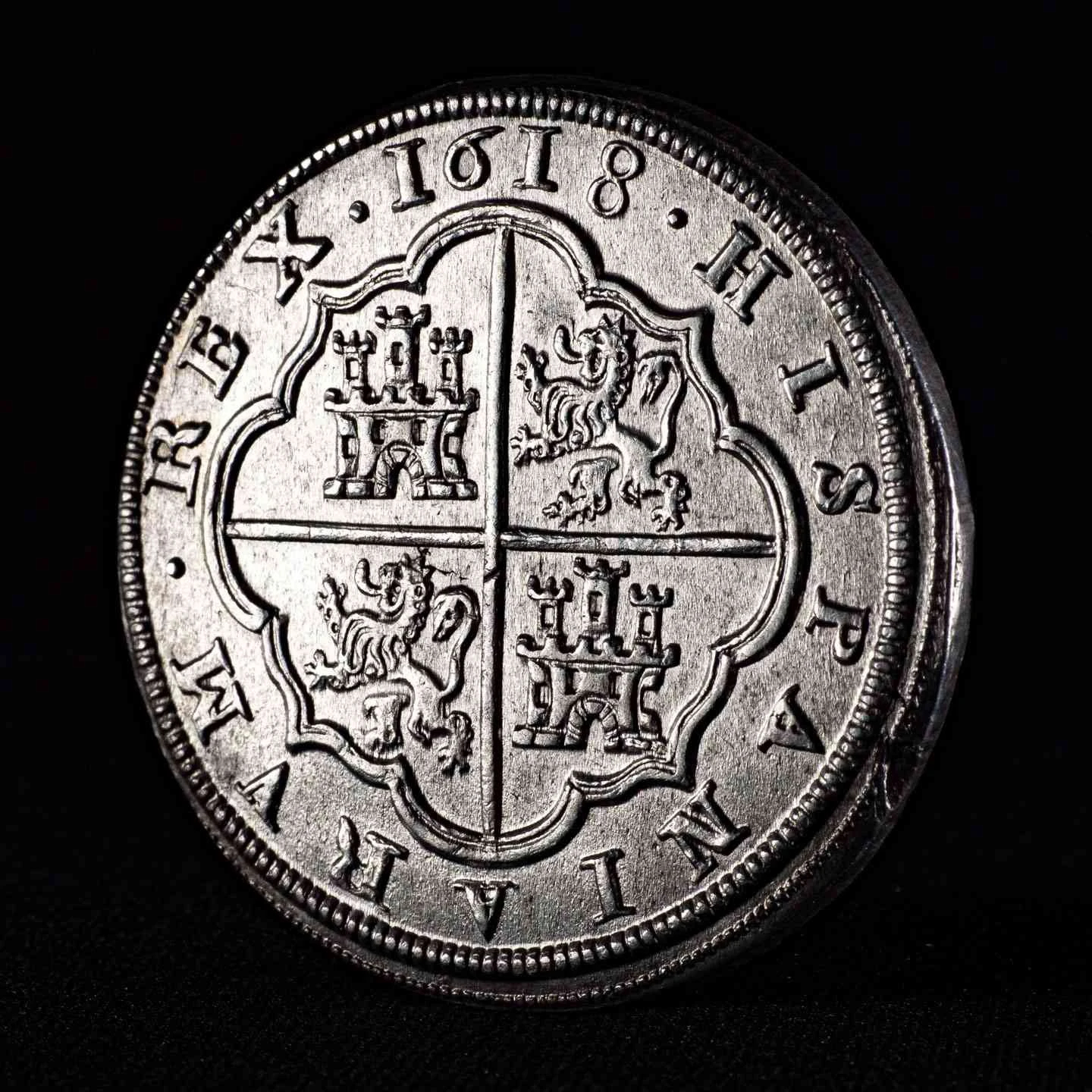
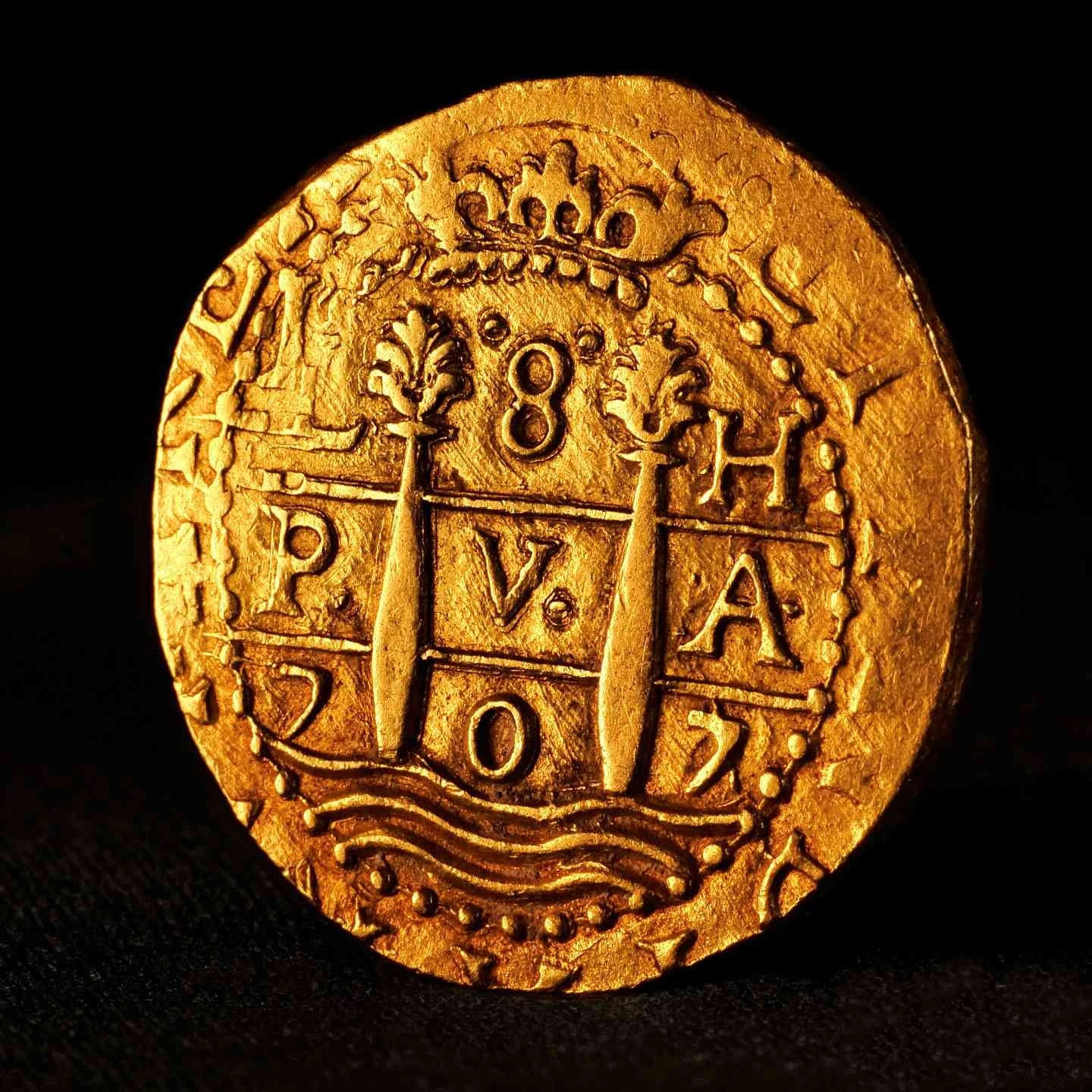
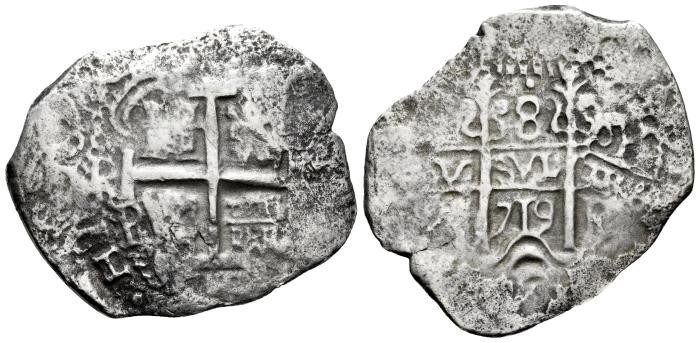
Shipwreck coins. Philip V (1700-1746). 8 reales. 1719. Potosi. Y. (Cal-1555). . 14,56 g. Saltwater corrosion and light double strike on the right pillar.
Recovered from the “La Luz” shipwreck, sunk in 1752 off Montevideo, Uruguay.
Slabbed by NGC as Sea Salvaged. Special “Shipwreck Blue Label”.
The Nuestra Señora de la Luz, a Portuguese vessel leased by Spain, sank in 1752 off Montevideo while carrying a major shipment of gold and coinage bound for the Peninsula. Although over 90% of the treasure was recovered shortly after the wreck, the powder hold-where roughly 200,000 pesos of contraband had been hidden-remained undiscovered until 1992.
That year, divers recovered thousands of Santiago-mint milled 8 escudos, along with 95 gold cobs (mostly Lima) and a few silver cobs from Potosí. The escudos were found in pristine condition, while the silver cobs showed typical degrees of corrosion. Est...900,00.
La Luz - MS 62
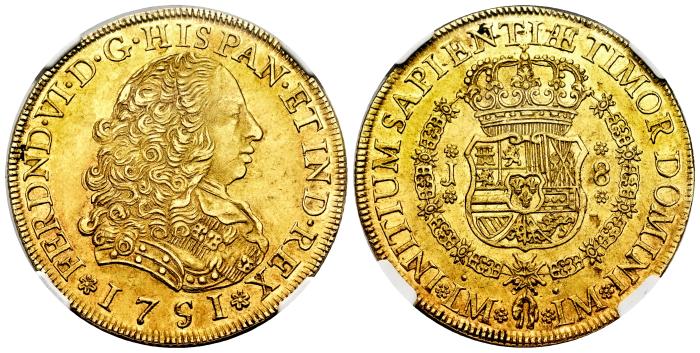
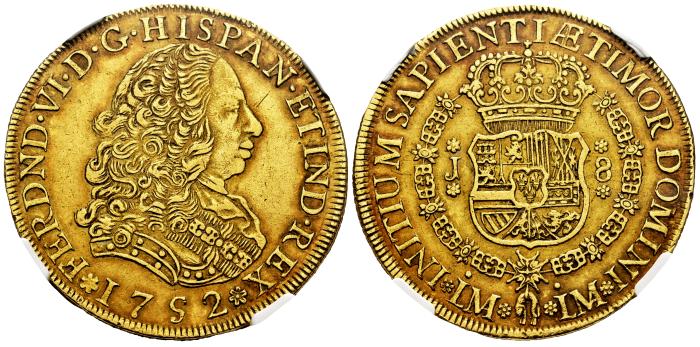
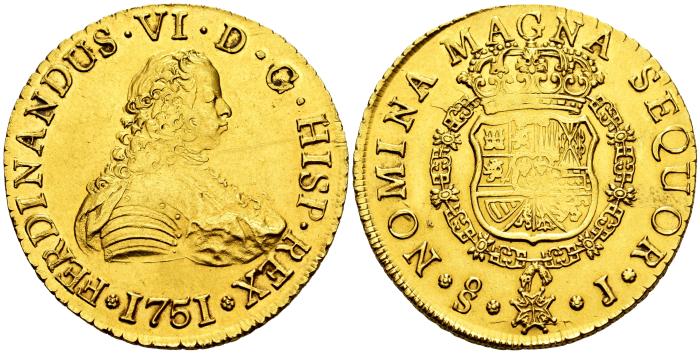
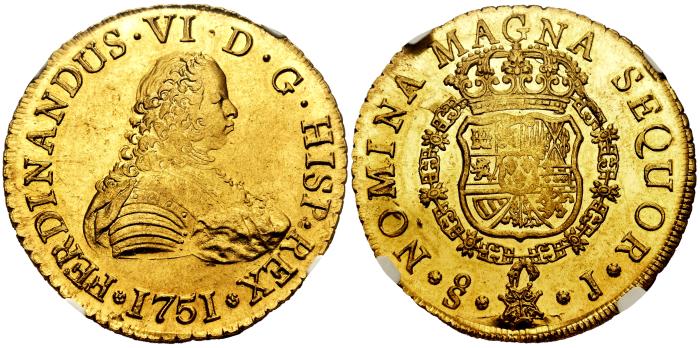
Shipwreck coins. Fernandus VI (1746-1759). 8 escudos. 1751. Santiago. J. (Cal-824). (Cal onza-644). . Superb specimen, only a slight weakness in the shield, better struck than most specimens. Full luster and lovely color. Rare. Recovered from "La Luz", sunk in 1752 off Montevideo, Uruguay.
Slabbed by NGC as MS 62.
Special label "Shipwreck Blue Label".
The Nuestra Señora de la Luz, a Portuguese vessel leased by Spain, sank in 1752 off Montevideo while carrying a major shipment of gold and coinage bound for the Peninsula. Although over 90% of the treasure was recovered shortly after the wreck, the powder hold-where roughly 200,000 pesos of contraband had been hidden-remained undiscovered until 1992.
That year, divers recovered thousands of Santiago-mint milled 8 escudos, along with 95 gold cobs (mostly Lima) and 353 silver cobs from Potosí. The escudos were found in pristine condition, while the silver cobs showed typical degrees of corrosion. Est...9000,00.
Auguste - AU Details
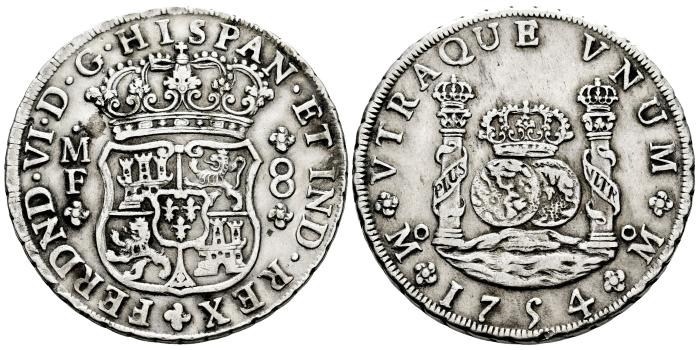
Shipwreck coins. Fernandus VI (1746-1759). 8 reales. 1754. Mexico. MF. (Cal-485). . Virtually unaffected by saltwater, with all details complete and well defined. Rare in this grade.
Recovered the wreck of “La Auguste”, sunk in 1761 off Nova Scotia, Canada.
Slabbed by NGC as AU Details, Cleaned.
Special “Shipwreck Blue Label”.
Includes photo-certificate of authenticity TH/LA/104, issued and signed by Terry Hiron & Jim Heslin on 29/11/2025.
The Auguste was carrying French officers, colonial administrators and aristocrats from Quebec back to France after the loss of Canada in the context of the Seven Years’ War. On 15 November 1761, amid severe weather and after having suffered fire damage, the vessel struck a sandbar and subsequently sank in Aspy Bay, off Cape Breton Island, Nova Scotia.
Of the 121 people on board, only seven survived, while a significant assemblage of personal effects and coinage remained lost beneath the sea. Its modern recovery has yielded more than a thousand coins of various origins, together with numerous historical artefacts, making the wreck an important source for the study of 18th-century Atlantic monetary circulation. Est...1500,00.
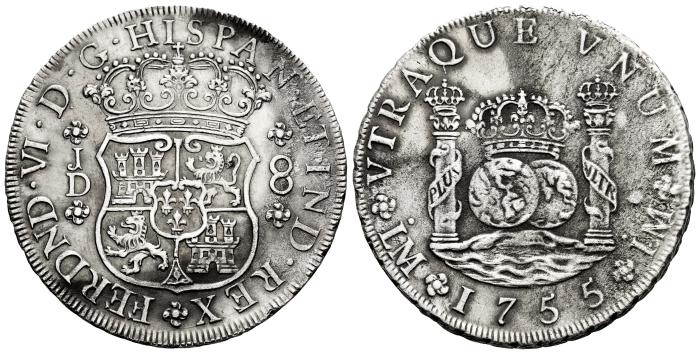
Auguste - NGC
Shipwreck coins. Fernandus VI (1746-1759). 8 reales. 1755. Lima. JD. (Cal-459). . Light traces of luster and virtually unaffected by saltwater, with all details complete and well defined. A rarely encountered Lima Mint issue from this shipwreck.
Recoverd from the “La Auguste” shipwreck, sunk in 1761 off Nova Scotia, Canada.
Slabbed by NGC as Sea Salvaged.
Special “Shipwreck Blue Label”.
Includes certificate of authenticity issued by Offshore Diving and Salvage Ltd.
The Auguste was carrying French officers, colonial administrators and aristocrats from Quebec back to France after the loss of Canada in the context of the Seven Years’ War. On 15 November 1761, amid severe weather and after having suffered fire damage, the vessel struck a sandbar and subsequently sank in Aspy Bay, off Cape Breton Island, Nova Scotia.
Of the 121 people on board, only seven survived, while a significant assemblage of personal effects and coinage remained lost beneath the sea. Its modern recovery has yielded more than a thousand coins of various origins, together with numerous historical artefacts, making the wreck an important source for the study of 18th-century Atlantic monetary circulation. Est...1800,00.
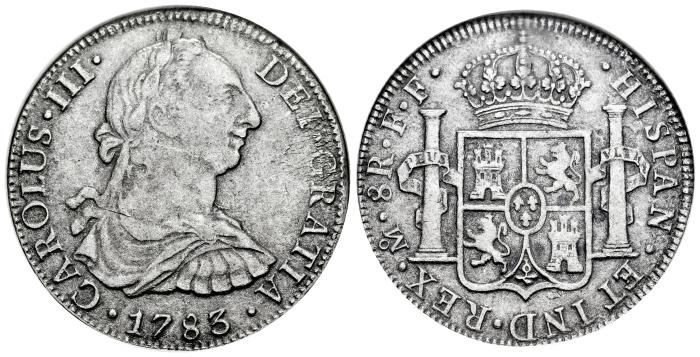
El Cazador - NGC
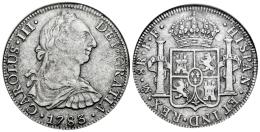
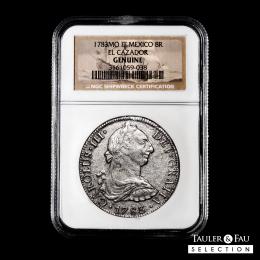
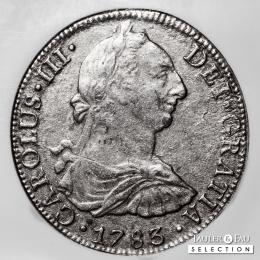
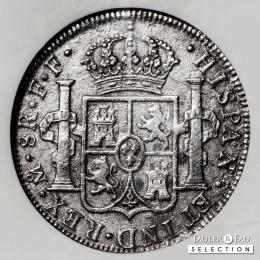
Shipwreck coins. Charles III (1759-1788). 8 reales. 1783. Mexico. FF. (Cal-1124). . Recovered from the "El Cazador" shipwreck, sunk in 1784 in the Gulf of Mexico.
Slabbed by NGC as Genuine.
Special label "Shipwreck Certification".
In 1784, the Spanish frigate El Cazador set sail from Veracruz bound for New Orleans, carrying a large shipment of silver coins to alleviate the cash shortage in Spanish Louisiana. The region was facing an economic crisis that affected trade and administration, making the arrival of this cargo crucial. However, on January 11 of that year,
El Cazador departed and never reached its destination. It is believed to have sunk in the Gulf of Mexico, possibly due to a storm or a navigation error, resulting in the loss of its valuable cargo. This disaster worsened Louisiana's economic instability and weakened Spain's control over the territory. As a consequence, Spain eventually returned the region to France in 1803, and shortly after, Napoleon sold it to the United States in the famous Louisiana Purchase.
Centuries later, in 1993, a fishing boat discovered a treasure trove of coins at the bottom of the Gulf of Mexico, finally confirming the story of El Cazador and its tragic fate. Est...400,00.
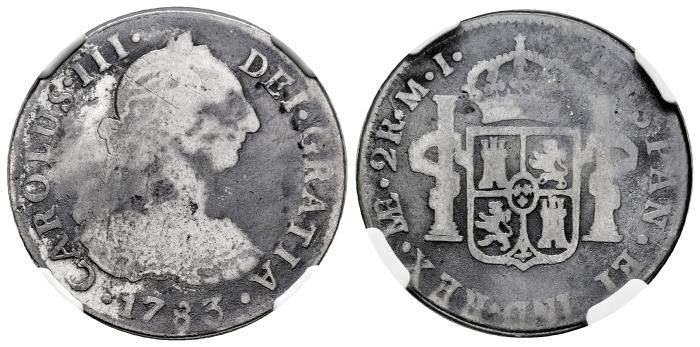
SS Central America - NGC
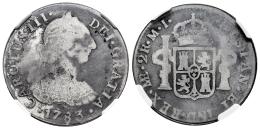
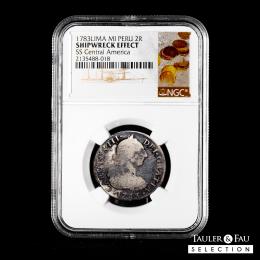
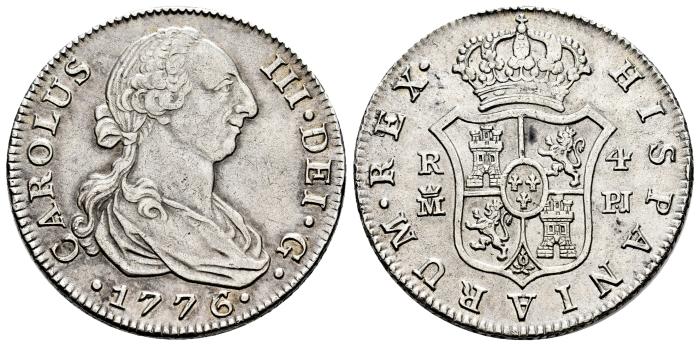
Shipwreck coins. Karl III. 2 reales. 1783. Lima. MI. (Cal-598). . Recovered from the S.S. Central America shipwreck, sunk in 1857 off North Carolina. This is the second Peruvian coin offered to the market from this shipwreck. Very rare.
Slabbed by NGC as Shipwreck Effect, “SS Central America Shipwreck” label.
The mail steamer S.S. Central America was lost on 12 September 1857 after being caught in a hurricane, with the tragic loss of more than 400 lives and an extraordinary cargo of gold from the Californian economic circuit. On board were more than three tons of precious metal, in the form of coins, ingots and other valuables, the loss of which also had significant financial repercussions in the United States.
The wreck remained undisturbed until 1986, when it was located by Tommy Thompson and the Columbus-America Discovery Group at a depth of approximately 8,500 feet. Following prolonged legal proceedings, the salvors were awarded the greater part of the recovered treasure, while most of the remainder was assigned to the insurance companies that had settled claims after the sinking.
Owing to the scale and quality of its recoveries, the Central America has become one of the most celebrated wrecks in modern numismatics, particularly for its remarkable assemblage of United States gold coinage and ingots, subsequently studied, certified and marketed on the international numismatic market. Est...700,00.
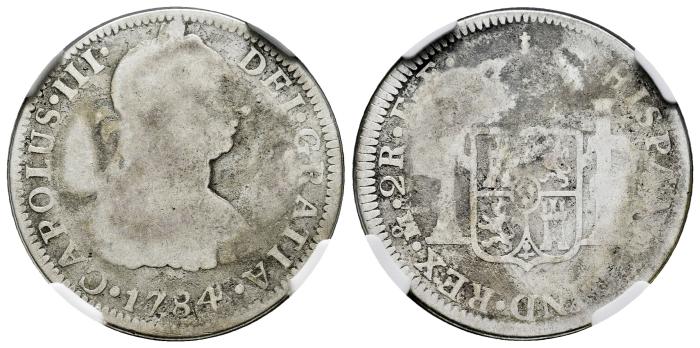
SS Central America - NGC
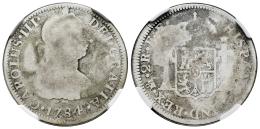
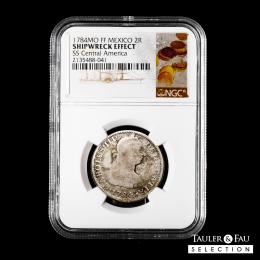
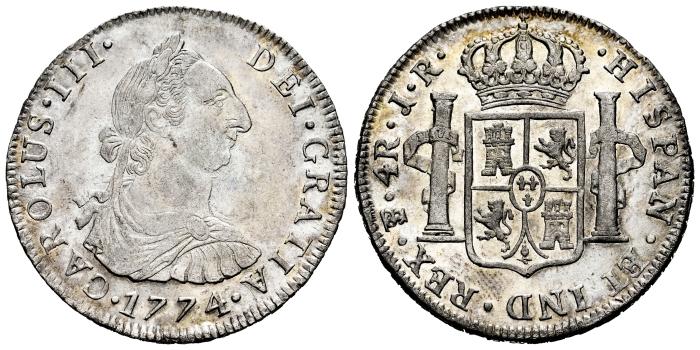
Shipwreck coins. Charles III (1759-1788). 2 reales. 1784. Mexico. FF. (Cal-676). . Recovered from the S.S. Central America shipwreck, sunk in 1857 off North Carolina. We have not found any other Mexico Mint specimens from this shipwreck. Very rare.
Slabbed by NGC as Shipwreck Effect, “SS Central America Shipwreck” label.
The mail steamer S.S. Central America was lost on 12 September 1857 after being caught in a hurricane, with the tragic loss of more than 400 lives and an extraordinary cargo of gold from the Californian economic circuit. On board were more than three tons of precious metal, in the form of coins, ingots and other valuables, the loss of which also had significant financial repercussions in the United States.
The wreck remained undisturbed until 1986, when it was located by Tommy Thompson and the Columbus-America Discovery Group at a depth of approximately 8,500 feet. Following prolonged legal proceedings, the salvors were awarded the greater part of the recovered treasure, while most of the remainder was assigned to the insurance companies that had settled claims after the sinking.
Owing to the scale and quality of its recoveries, the Central America has become one of the most celebrated wrecks in modern numismatics, particularly for its remarkable assemblage of United States gold coinage and ingots, subsequently studied, certified and marketed on the international numismatic market. Est...700,00.
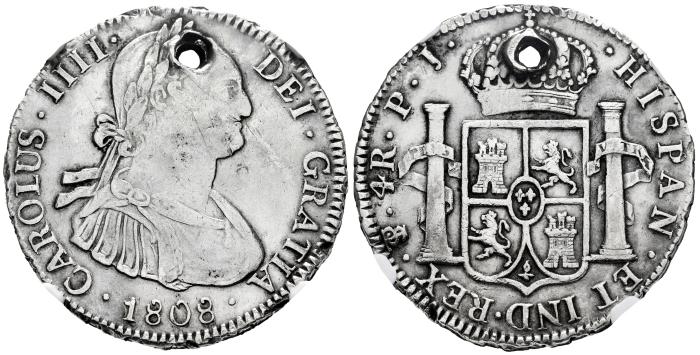
SS Central America - NGC
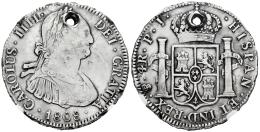
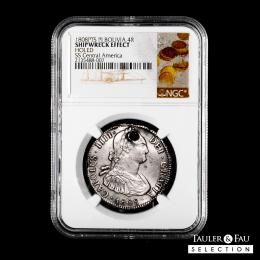
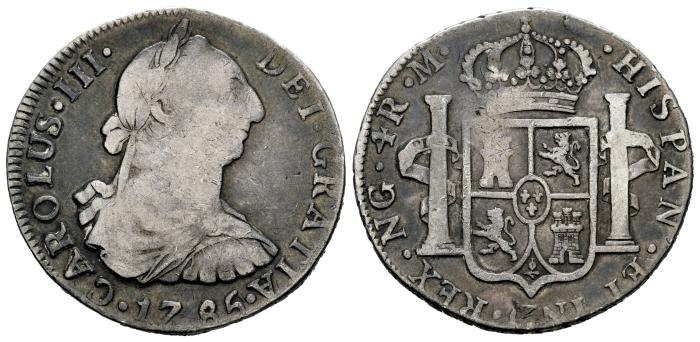
Shipwreck coins. Charles IV (1322-1328). 4 reales. 1808. Potosi. PJ. (Cal-1014). . Recovered from the S.S. Central America shipwreck, sunk in 1857 off North Carolina. We have not found any other Bolivian silver specimens from this shipwreck. Holed. Very rare.
Slabbed by NGC as Shipwreck Effect, “SS Central America Shipwreck” label.
The mail steamer S.S. Central America was lost on 12 September 1857 after being caught in a hurricane, with the tragic loss of more than 400 lives and an extraordinary cargo of gold from the Californian economic circuit. On board were more than three tons of precious metal, in the form of coins, ingots and other valuables, the loss of which also had significant financial repercussions in the United States.
The wreck remained undisturbed until 1986, when it was located by Tommy Thompson and the Columbus-America Discovery Group at a depth of approximately 8,500 feet. Following prolonged legal proceedings, the salvors were awarded the greater part of the recovered treasure, while most of the remainder was assigned to the insurance companies that had settled claims after the sinking.
Owing to the scale and quality of its recoveries, the Central America has become one of the most celebrated wrecks in modern numismatics, particularly for its remarkable assemblage of United States gold coinage and ingots, subsequently studied, certified and marketed on the international numismatic market. Est...800,00.
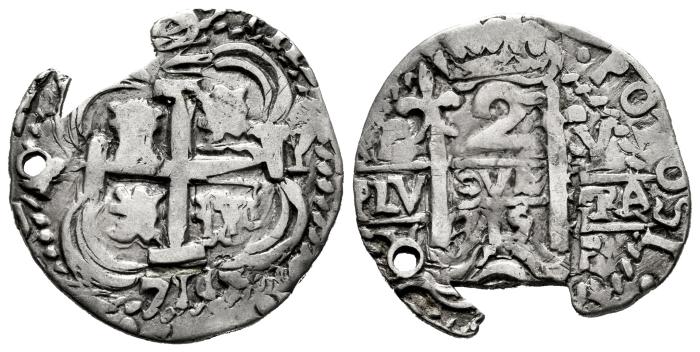
“Royal” type (Galano)
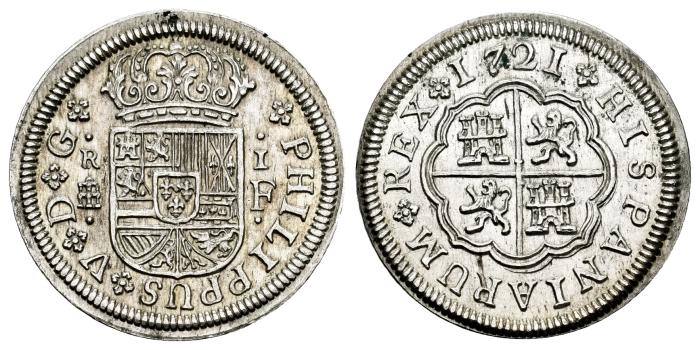
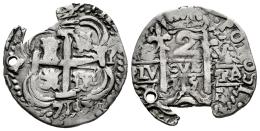
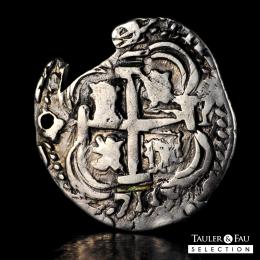
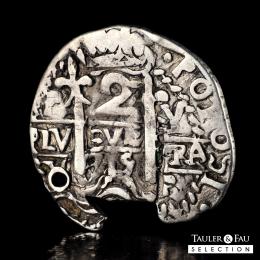
Philip V (1700-1746). 2 reales. 1715. Potosi. Y. (Cal-843). . 5,76 g. “Royal” type (Galano). Double date and triple assayer, one of them partial. Slight double strike and soft tone. Striking flan defect. Holed.
Extremely rare, only two other specimens are known: one from the Paul Karon Collection, auctioned by Ponterio in 1990, and the other auctioned by Daniel Frank Sedwick in 2020. Choice F/Almost VF. Est...2000,00.
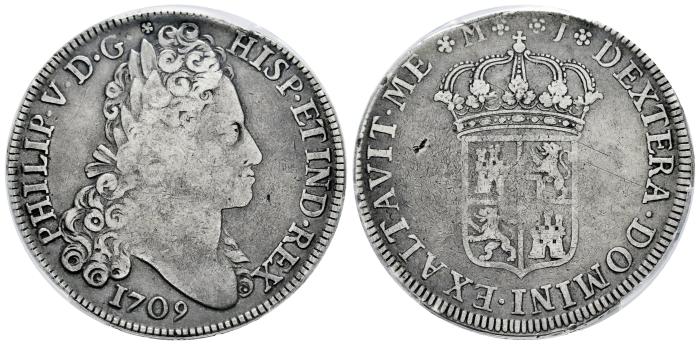
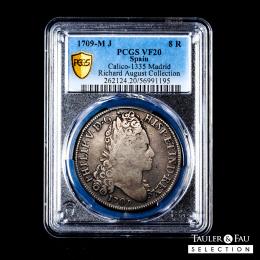
Ex Richard August - VF 20
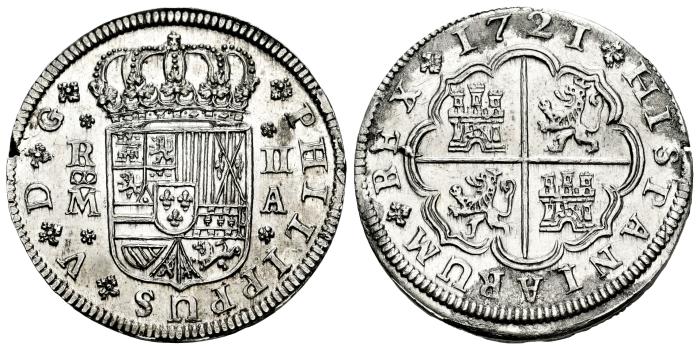
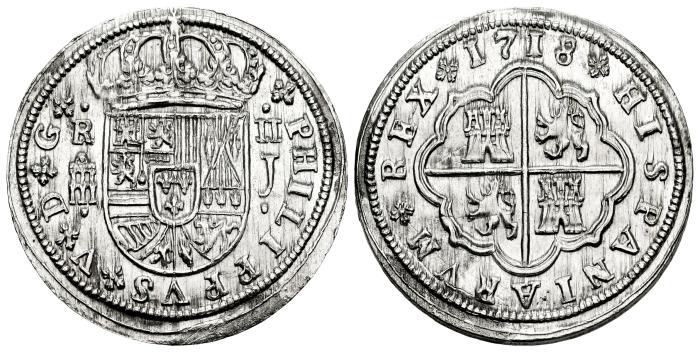
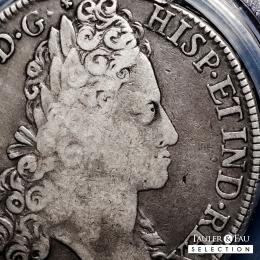
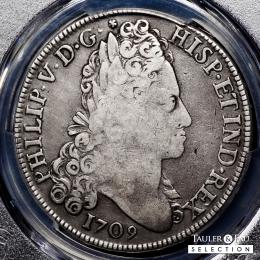
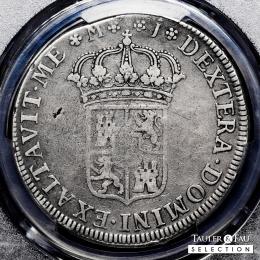
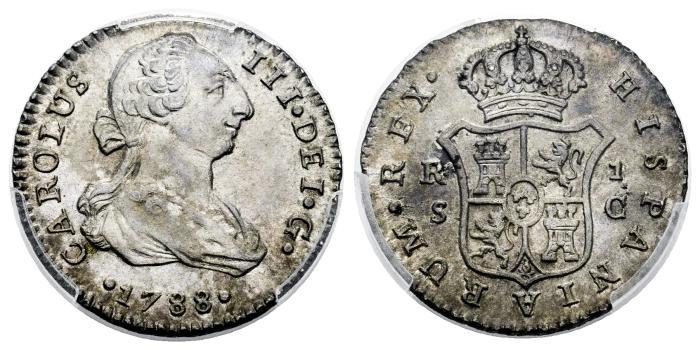
Philip V (1700-1746). 8 reales. 1709. Madrid. J. (Cal-1335). (Km-281). . Only peninsular-mint 8 reales with the king’s bust. Without denomination. Medal alignment. Weak strike at the centers, as usual for this issue. Minor marks on the reverse. Soft toning. Very rare.
Slabbed by PCGS as VF 20. Only one specimen graded higher according to the PCGS census.
Ex Richard August Collection. Est...2000,00.
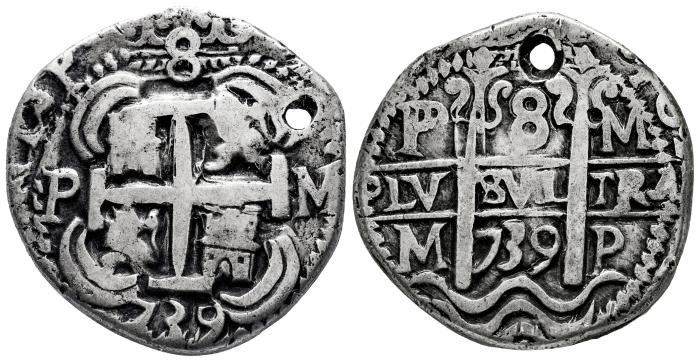
“Royal” type (Galano) - XF Details
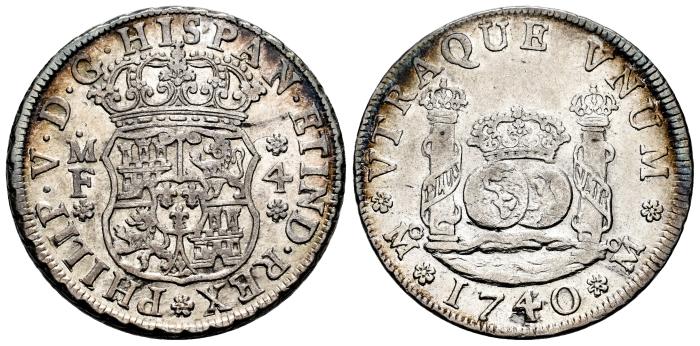
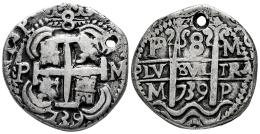
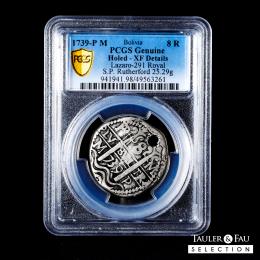
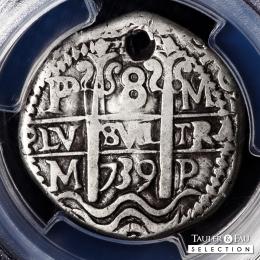
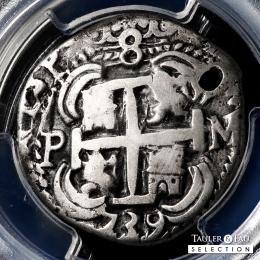
Philip V (1700-1746). 8 reales. 1739. Potosi. M. (Cal-1509). (Lazaro-291). . 25,29 g. “Royal” type (Galano). Struck with dies already standardized for the regular circulation cob issue, with the characteristic lobed ornamentation on the cross side, standardized from 1737, and on a smaller-diameter, thicker flan, typical of the Galanos of this period. Holed. Soft toning, more pronounced around the reliefs. Very rare.
Slabbed by PCGS as XF Details, Holed. The finest graded specimen in the PCGS census.
Ex S. P. Rutherford; ex Daniel F. Sedwick (21/10/2010), lot 490
Corresponds to Lázaro variety 291. Although Lázaro assigns an R2 rarity rating to the varieties of this date, we have not traced more than seven specimens in total, including the three cataloged by him, suggesting that the date is rarer than reported.
Wonderful specimen, with all design elements clearly visible. It retains part of the POT(OSI) legend on the reverse and the ending HISP on the obverse, an uncommon feature on Galanos of this date. Pierced at the top with respect to the pillars side, as seen on most known examples. Est...4000,00.
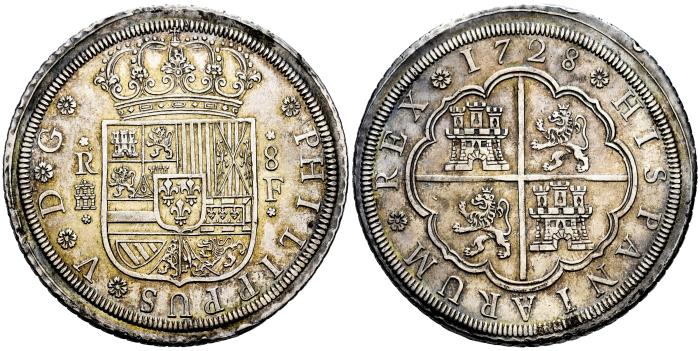
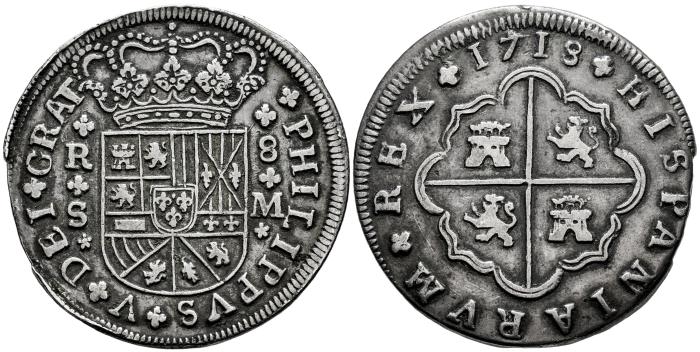
Philip V (1700-1746). 8 reales. 1728. Segovia. F. (Cal-1597). . 26,66 g. Aqueduct with two rows of two arches. Large flan. Light toning with slight underlying traces of original luster. Small edge nicks and minimal oxidation on the reverse beading. Very scarce in this grade. Ex Cayón (28/04/2015), lot 592. Almost XF. Est...3000,00.
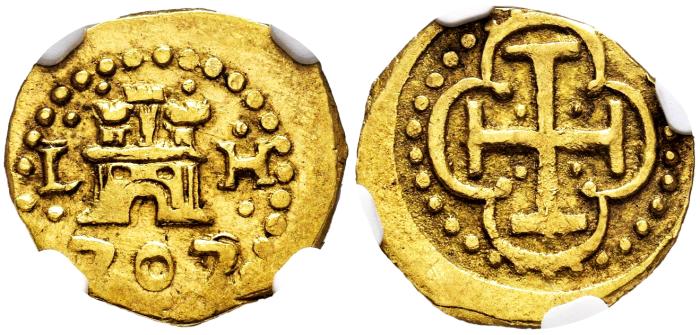
Lima - AU 58 Top Pop!!
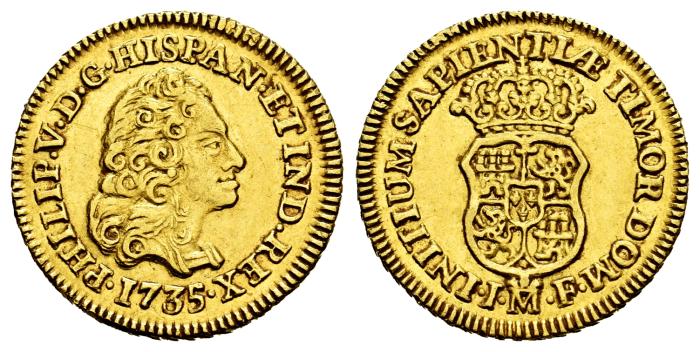
Philip V (1700-1746). 1 escudo. 1707/5. Lima. H. (Cal-1660, unlisted overdate). (Tauler-120a). . 3,37 g. Magnificent specimen with original luster. The obverse is complete, though off-center, with all elements very well detailed. The overdate is clear and logical, as 1706 does not exist. Large area of flat metal outside the design.
Reverse better centered, with full cross within a nearly complete outer beaded border and also with blank metal beyond the design, proving beyond any doubt that these coins had no legends. Very rare, especially in this grade.
Slabbed by NGC as AU 58 (Top Pop), the finest graded specimen in the NGC and PCGS censuses. Est...12000,00.
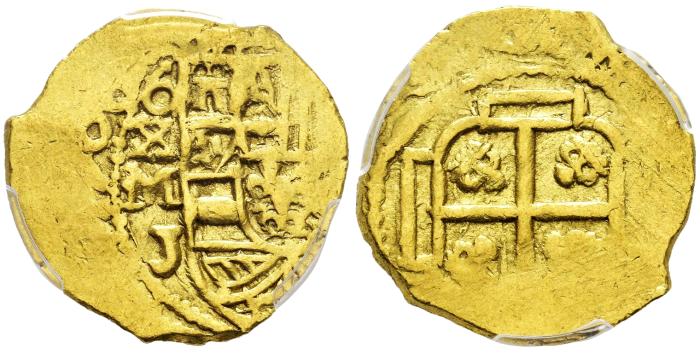
Mexico - AU 53 Top Pop!!
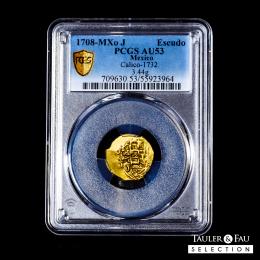
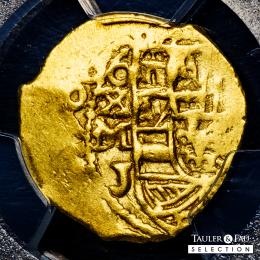
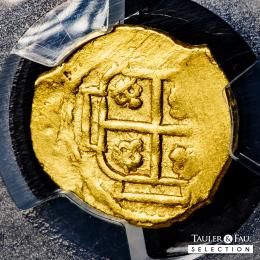
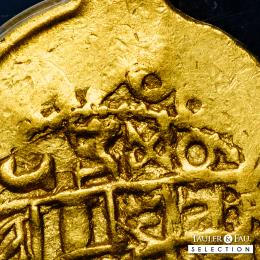
Philip V (1700-1746). 1 escudo. 1708. Mexico. J. (Cal-1732). . 3,44 g. Full date discernible at the bases of the numerals, highly coveted from this series often encountered lacking missing dates altogether. This is the only example of this date that we have traced in the last 20 years.
Mintmark oXM and assayer clearly struck to the left of the shield. Extremely rare.
Slabbed by PCGS as AU 53 (Top Pop), the finest known in the PCGS and NGC censuses. Est...5000,00.
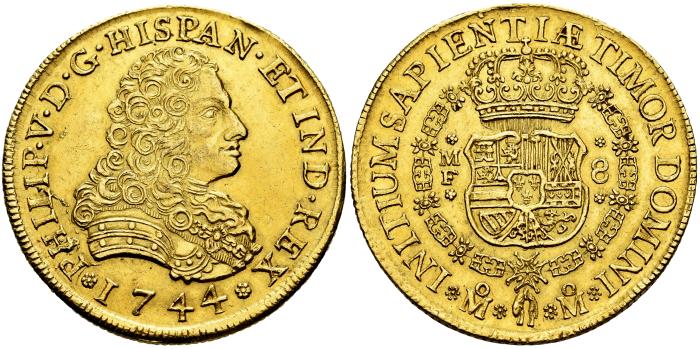
Very good strike
Philip V (1700-1746). 8 escudos. 1744. Mexico. MF. (Cal-2249). (Cal onza-442). . 27,11 g. Lightly cleaned on the obverse and small edge knock. Traces of luster, especially on the reverse. Very good strike, with all details perfectly visible. Rare, especially in this grade. XF/AU. Est...8000,00.
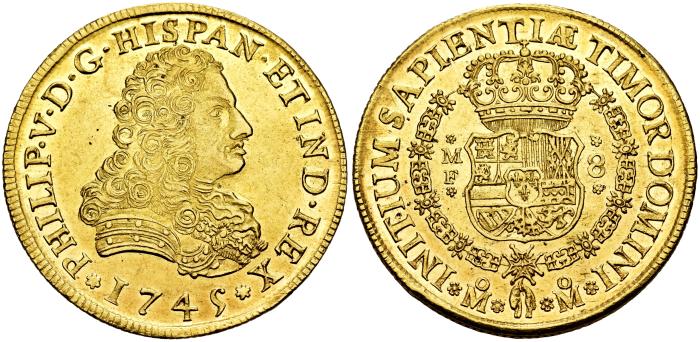
Superb Mexico
Philip V (1700-1746). 8 escudos. 1745. Mexico. MF. (Cal-2250). (Cal onza-443). . 26,98 g. Magnificent specimen with full luster and extraordinary eye appeal. Virtually pristine surfaces, with only tiny surface hairlines on the obverse, which do not detract from the coin’s excellent visual impact. Outstanding reverse.
Very rare and highly desirable in this lofty state of preservation; undoubtedly destined to attract considerable interest. Almost MS/Mint state. Est...15000,00.
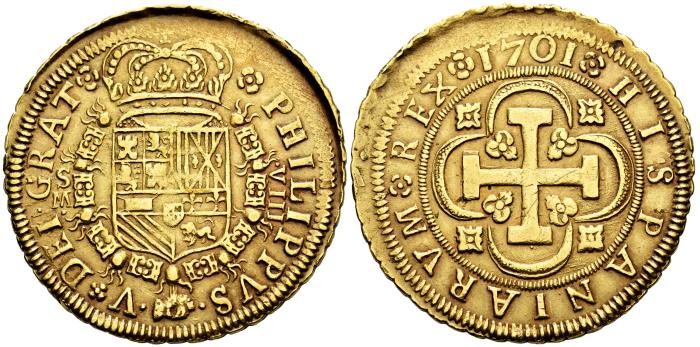
“Cross” type - Habsburg shield
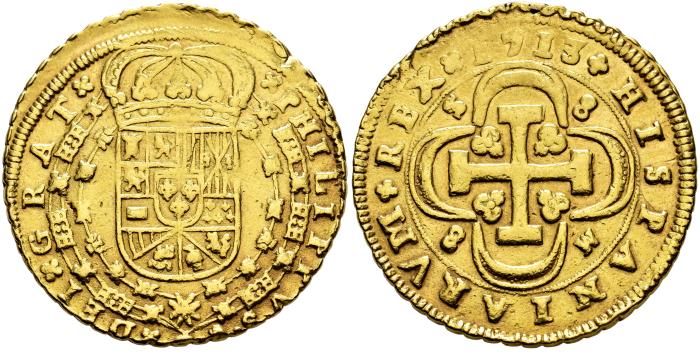
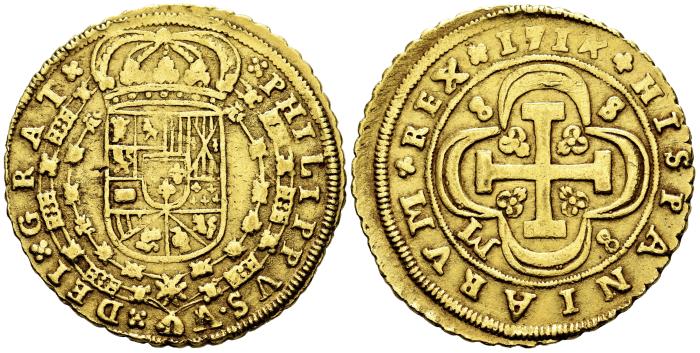
Philip V (1700-1746). 8 escudos. 1701. Sevilla. M. (Cal-2266). (Cal onza-462). . 26,75 g. “Cross” type. Habsburg shield. Mintmark, denomination, and assayer on the obverse. This first onza of Philip V is similar to the last issues of Charles II and still lacks the Bourbon escutcheon.
Slight striking weakness on the edge, not affecting the design. Beautiful color. Very rare, especially with such attractive eye appeal. Almost XF. Est...10000,00.
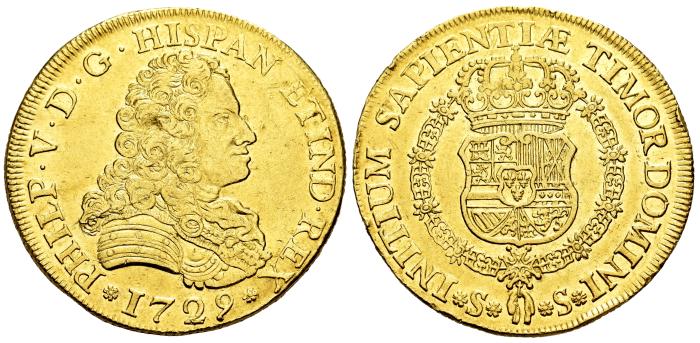
First year bust type
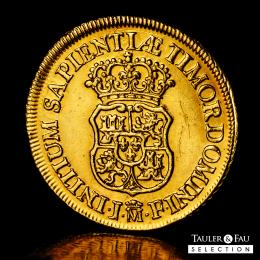
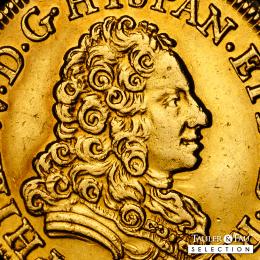
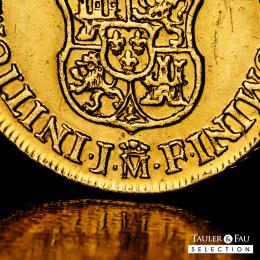
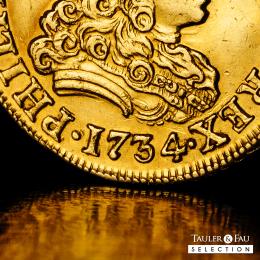
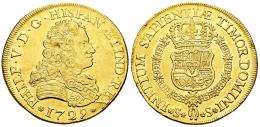
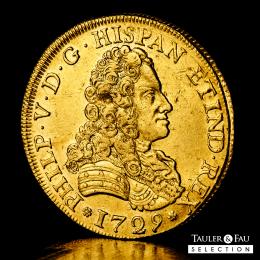
Philip V (1700-1746). 8 escudos. 1729. Sevilla. (Cal-2303). (Cal onza-526). . 26,80 g. First year of the bust type. King’s name PHILP. Without denomination neither assayer. Edge knocks, small marks, and minor flaw in the hair. Traces of luster. Rare.
Ex Áureo&Calicó (29/11/2012), lot 1284. Choice VF/Almost XF. Est...6000,00.
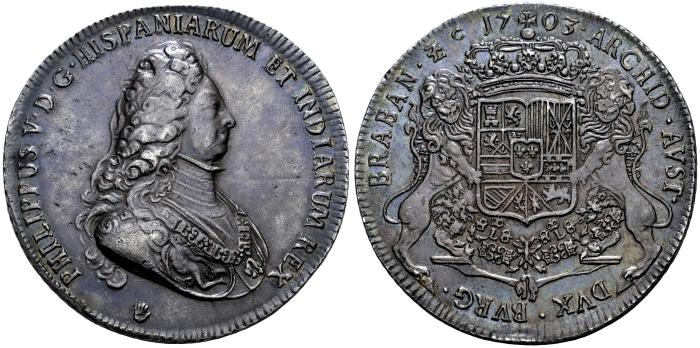
Excellent eye appeal
Philip V (1700-1746). 1 ducaton. 1703. Antwerpen. (Tauler-3560). (Vti-85). (Vanhoudt-735.AN). . 32,54 g. Second type. Minor edge knock and some marks. Beautiful cabinet toning with underlying luster and light mauve and bluish hues. Excellent eye appeal. Rare in this outstanding grade. AU/Almost MS. Est...2000,00.
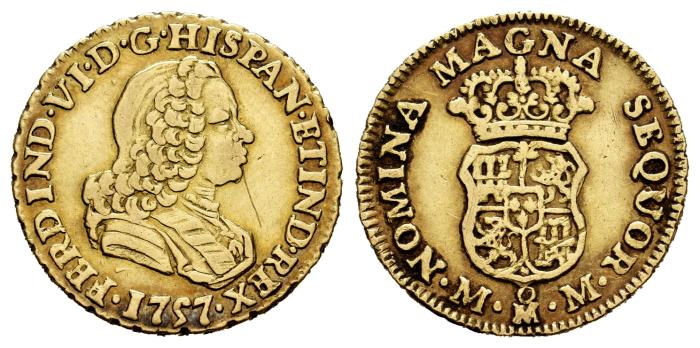
Extremely rare Mexico
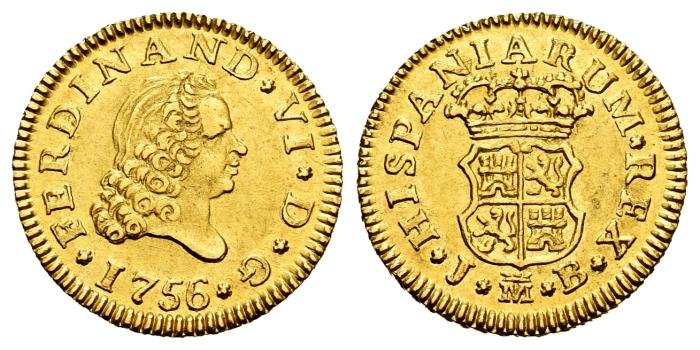
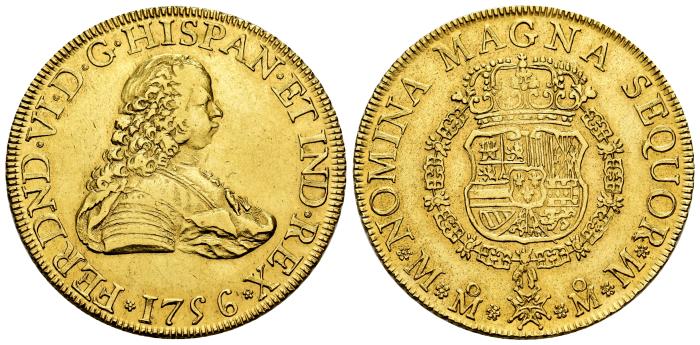
Ferdinand VI (1746-1759). 1 escudo. 1757. Mexico. MM. (Cal-618). . 3,32 g. Third bust type, armored. Without denomination. Minor scratch in front of the bust. Light toning. Few specimens known.
A coin that should attract the attention of both the specialist in Mexican coinage and the collector of the most coveted world types. Almost XF. Est...2000,00.
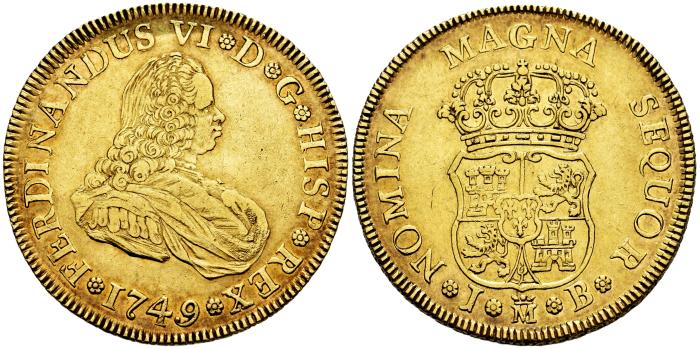
Rare 4 escudos Madrid!!
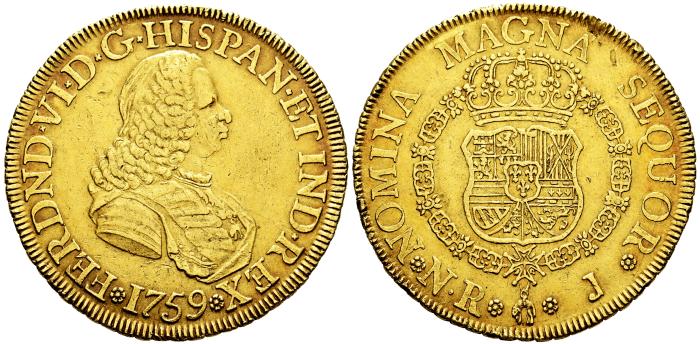
Ferdinand VI (1746-1759). 4 escudos. 1749. Madrid. JB. (Cal-702). . 13,39 g. Somewhat weak strike. Attractive color and traces of original luster. Light marks. Very rare, especially in this grade.
José Tramullas y Ferrer was an assayer at the mint, active in Madrid between 1744 and 1759. He had previously been appointed assayer in Barcelona in 1735, and was later transferred to Madrid and Seville.
In 1759 he attained the post of Chief Assayer and Marker of the Kingdom.
He was also the author of the work Guía y desengaño de artífices, plateros y marcadores en oro y plata. His will, dated 12/03/1750, is preserved, and his death is recorded in 1764. Almost XF. Est...8000,00.
X
Confirm your maximum bid
Conecting
 English
 Español




 13
13
 6
6