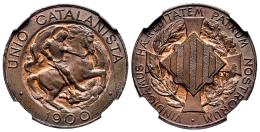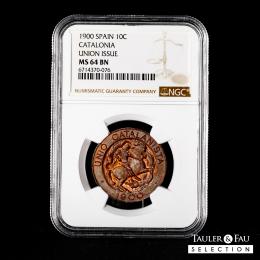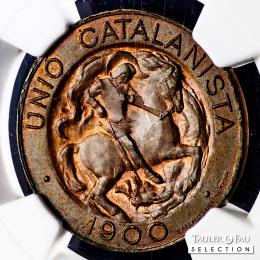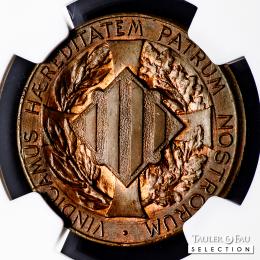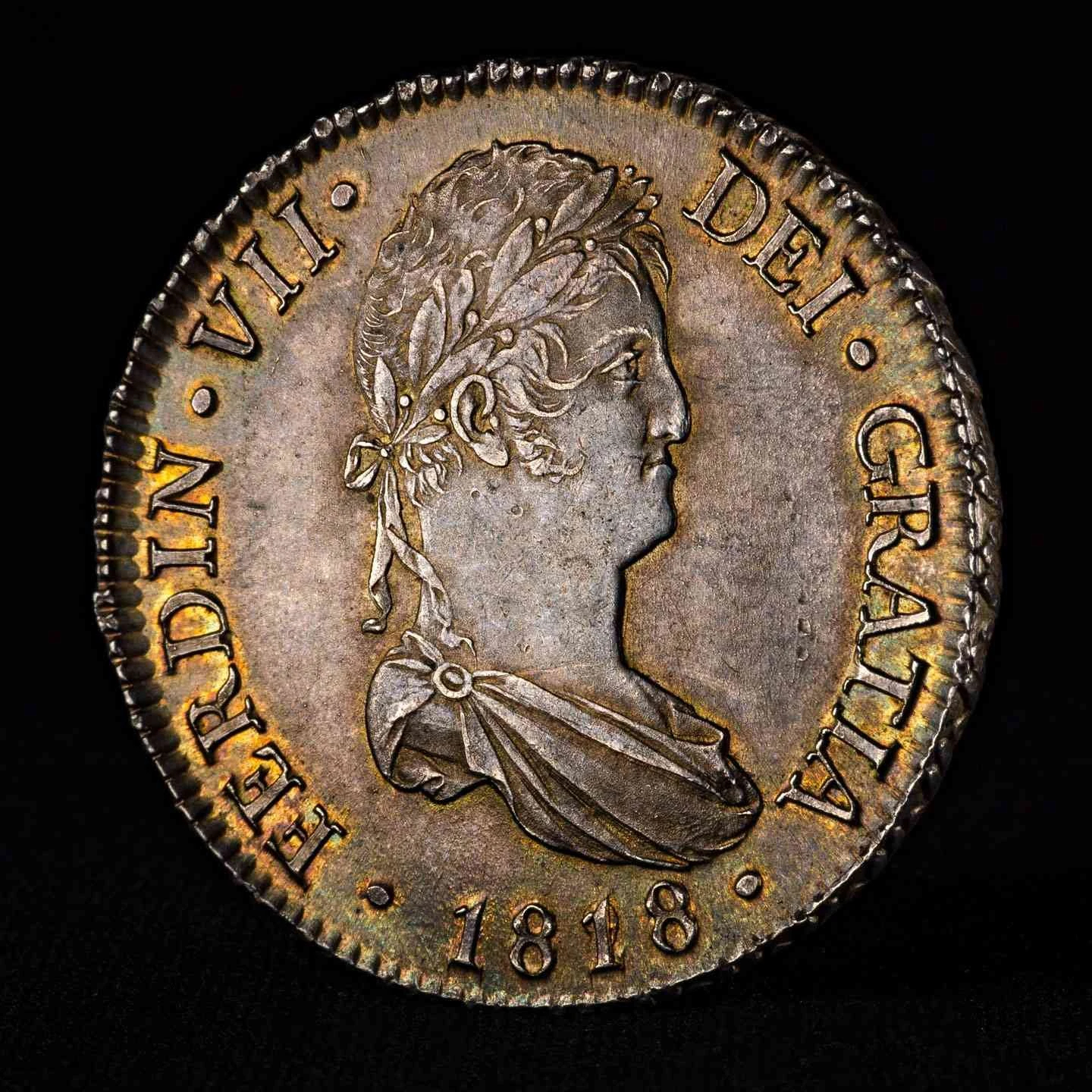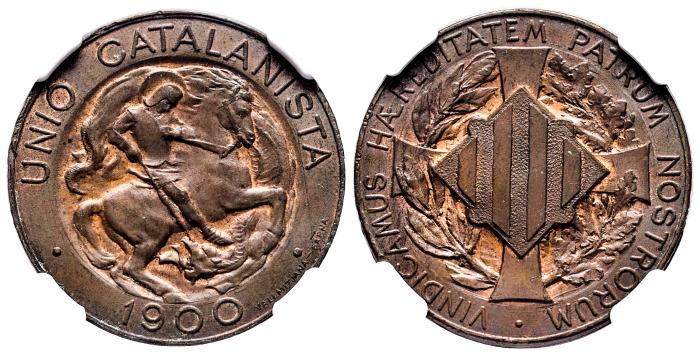
NGC - MS 64 BN Top Pop!!
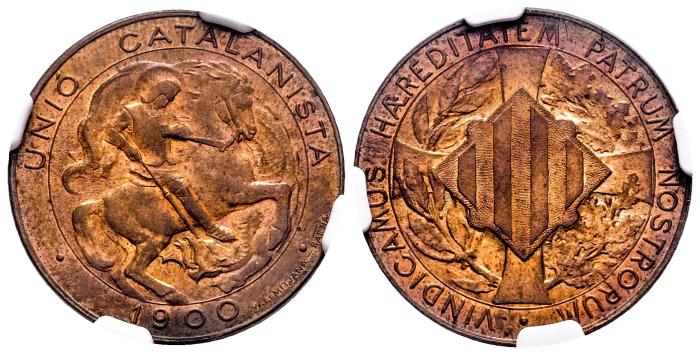
Centenary of the Peseta (1868-1931). Alfonso XIII (1886-1931). 10 centimos. 1900. Unión Catalanista. (Cal-133). . Lovely color and traces of luster. Very nice and rare in this condition. Slabbed by NGC as MS 64 BN (Top Pop), the finest known in the NGC census, tied with another one. Est...400,00.
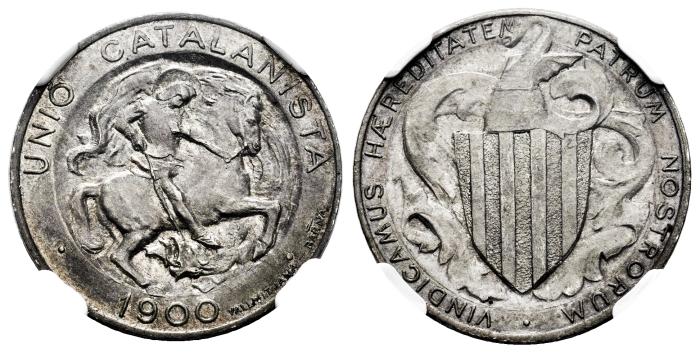
NGC - MS 63
Centenary of the Peseta (1868-1931). Alfonso XIII (1886-1931). 1 peseta. 1900. Unión Catalanista. (Cal-134). . Superb specimen and rare in this condition. Traces of luster, lightly toned and very attractive. Slabbed by NGC as MS 63. Only 2 finer specimens in the NGC census. Ex Áureo&Calicó Selección (12/03/2009), lot 470. Est...600,00.
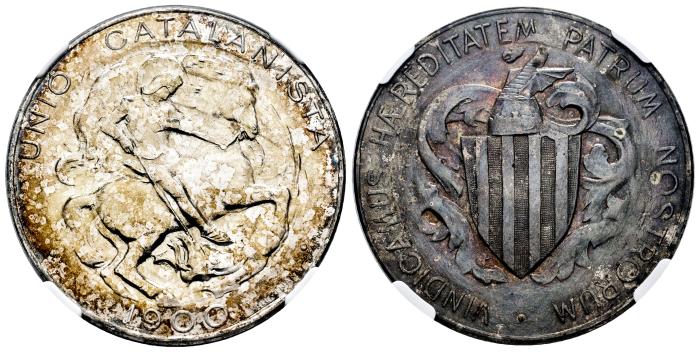
NGC - MS 63 Top Pop!!
Centenary of the Peseta (1868-1931). Alfonso XIII (1886-1931). 5 pesetas. 1900. Unión Catalanista. (Cal-135). . Light toning on the obverse with original luster, and a lovely old cabinet tone with some iridescent hues on the reverse. Very attractive and rare in this grade. Slabbed by NGC as MS 63 (Top Pop), the finest known in the NGC census. Est...2500,00.
Magnificent piece
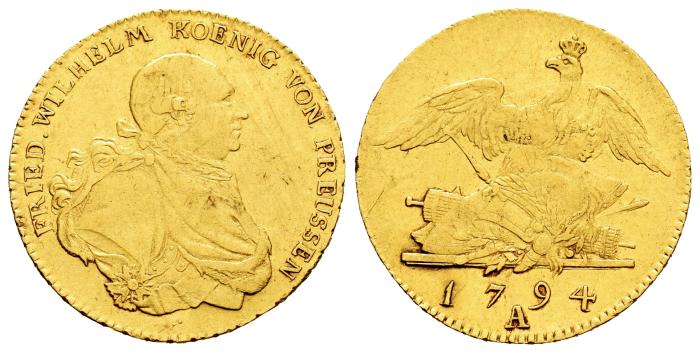
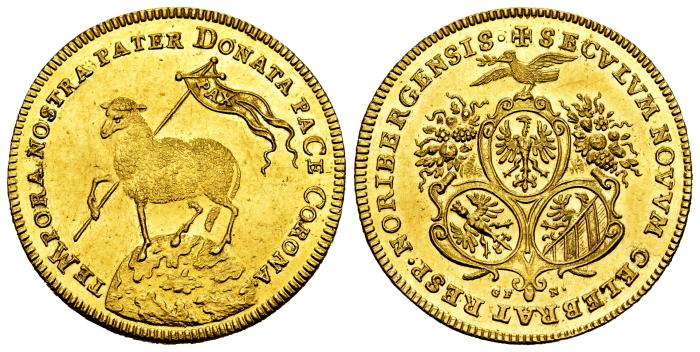
Germany. 2 ducats. 1700. Nuremberg. GFN (George Friedrich Nürnberger). (Erlanger-985). (Kellner-51). (Km-259). Anv.: + SECVLVM NOVVM CELEBRAT RESP.NORINBERGENSIS. Dove with spread wings standing left above three shields of arms; below, in tiny letters, GF-N. Rev.: TEMPORA NOSTRA PATER DONATA PACE CORONA Pascal lamb, with banner inscribed PAX over his right shoulder, standing left on big globe. . 6,97 g. Full luster. Tiny marks in the fields. Rare in this grade. This is one of the most popular German gold issues, the “Agnus Dei” type, and is especially sought after by collectors, though it rarely appears on the market in such excellent condition. Mint state. Est...6000,00.
Excellent eye appeal
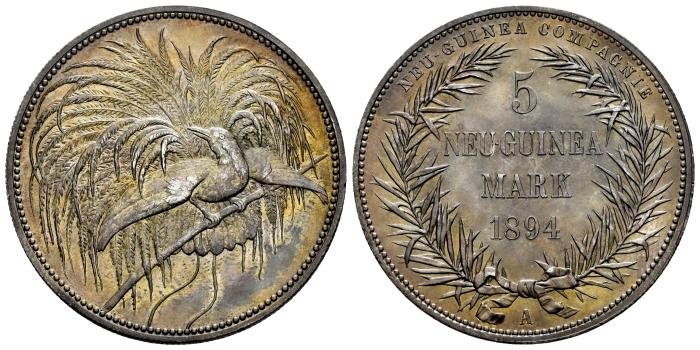
German New Guinea. Wilhelm II. 5 mark. 1894. Berlin. A. (Km-7). (Jaeger-707). . 27,67 g. Extraordinarily popular issue within German colonial coinage, with virtually pristine surfaces. Grayish cabinet toning with golden and bluish hues that enhances its excellent eye appeal. Underlying original luster. Rarely encountered in this quality and certain to attract strong interest from advanced collectors. Almost MS/Mint state. Est...5000,00.
NGC - Genuine
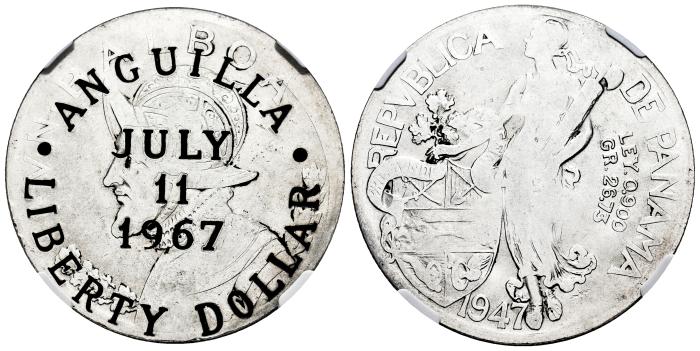
Anguillla. 1 “Liberty” dollar, 11 July 1967, countermark on a Panama 1 balboa of 1947. (KM-X7.1). Rare. Complete countermark legend, very boldly struck though slightly off-center.
Slabbed by NGC as Genuine.
Interesting type created by Scott Newhall, editor of the San Francisco Chronicle, to support Anguilla’s secession from the British Commonwealth. Of the 11,600 silver dollar-sized coins countermarked, only a few thousand were actually sold to collectors, and many of those were melted in subsequent years. Est...600,00.
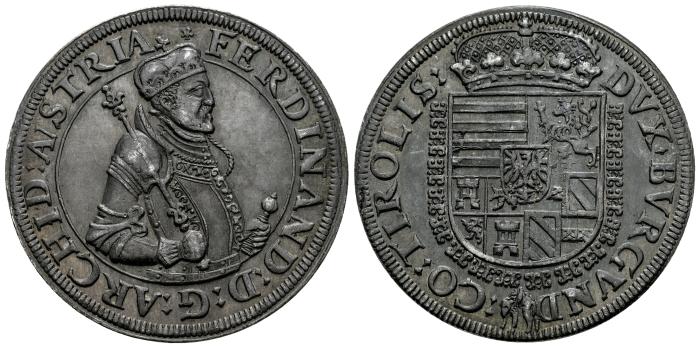
Austria. Ferdinand I. 2 ducats. ND. Nuremberg. (Moser-Tursky 267). (Km-259). (Fr-1882). Anv.: FERDINAND D G ARCHID AVSTRIA. Rev.: DVX BVRGVND CO TIROLIS. . 28,12 g. Variety with obverse legend ending in AUSTRIA. Excellent specimen with beautiful cabinet toning and virtually no signs of wear on the high points of the relief. Almost MS. Est...1200,00.
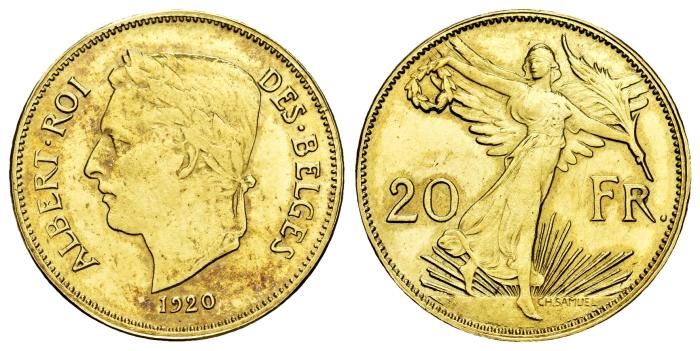
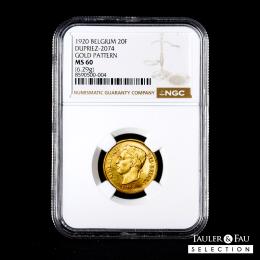
NGC - MS 60 Top pop!!
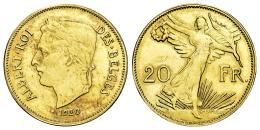
Belgium. Albert I. 20 francs. 1920. Gold Essai - Pattern. (Dupriez-2074). . 6,29 g. Essai de Samuel. Plain edge. Original luster. Extremely rare; we have only found specimens in silver, bronze, and nickel, but no gold specimen auctioned in the last 20 years.
Slabbed by NGC as MS 60 (Top Pop), the finest graded specimen in the NGC and PCGS censuses. Est...2000,00.
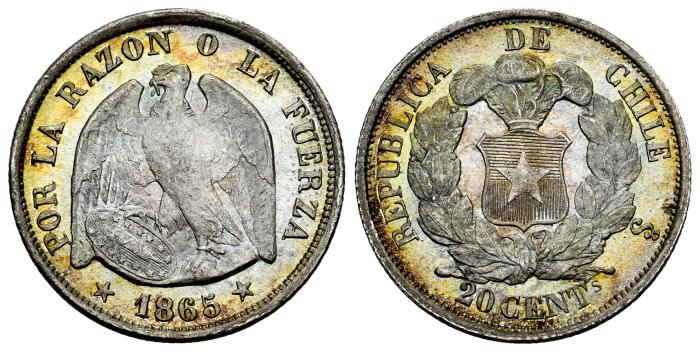
"Pechugon" - MS 66 Top Pop!!
Chile. 20 centavos "Pechugon". 1865. Santiago. (Km-135). . Superb specimen with pristine surfaces and all details sharply defined, even on the devices most prone to wear, such as the condor’s breast or the reverse wreath.
Full original luster with intense iridescent toning that enhances its excellent eye appeal. Extremely rare in this grade.
Slabbed by NGC as MS 66 (Top Pop), the finest known in the NGC and PCGS censuses. Est...2000,00.
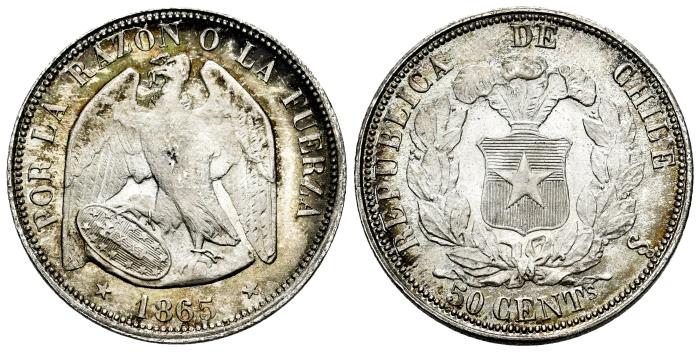
"Pechugon" - MS 65
Chile. 50 centavos "Pechugon". 1865. Santiago. (Km-134). . Magnificent specimen with all details sharply defined, even on the devices most prone to wear, such as the condor’s breast or the reverse wreath.
The surfaces display deep gray toning with some darker and slightly iridescent hues. Full underlying original luster enhances its eye appeal. Extremely rare in this grade.
Slabbed by NGC as MS 65. Only 1 finer specimen in the NGC and PCGS censuses. Est...3000,00.
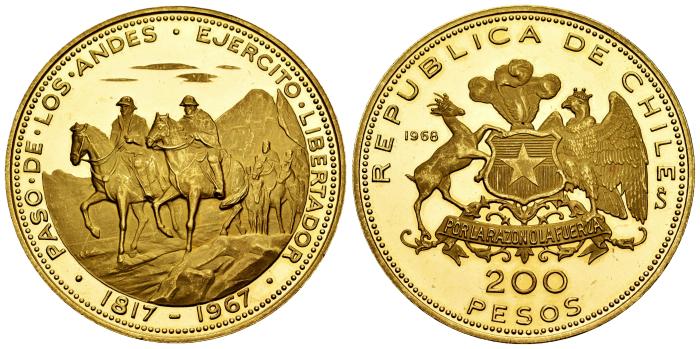
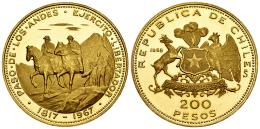
Chile. 200 pesos. 1968. Santiago. (Km-186). (Fried-58). . 40,17 g. Commemorative issue for the 150th anniversary of San Martín’s crossing of the Andes, which eventually led to the liberation of Chile from Spanish rule. Mintage: 965 pieces.
This popular and uncommon type features a well-defined strike, with deeply reflective fields that produce excellent contrast and visual appeal. Tiny marks.
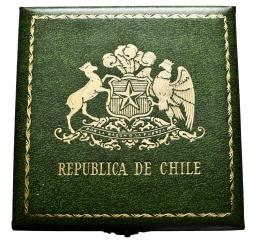
Includes official case of the Republic of Chile. Rare. PROOF. Est...4500,00.
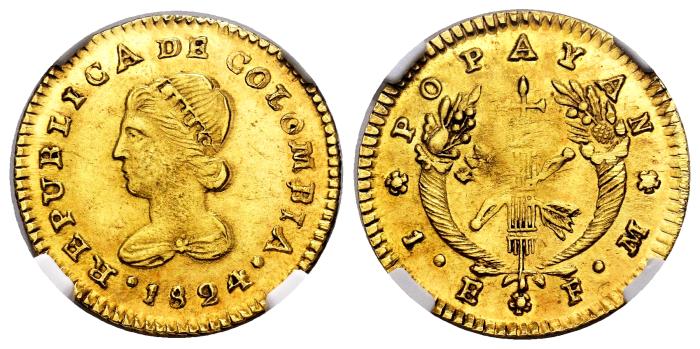
NGC - MS 64 Top Pop!!
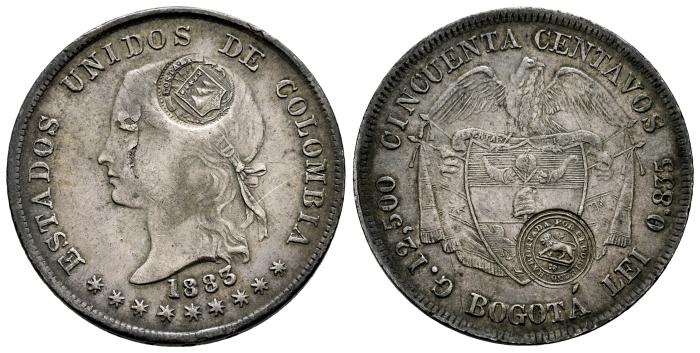
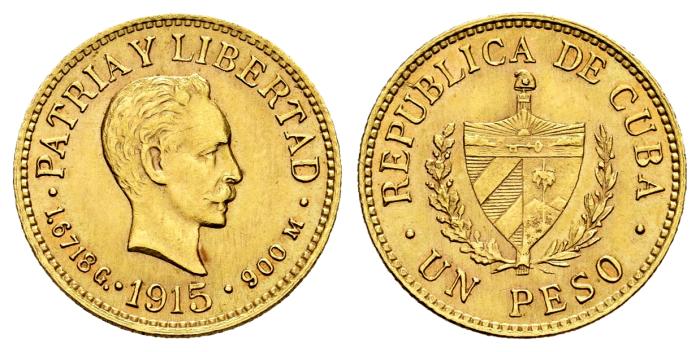
Colombia. 1 escudo. 1824. Popayan. FM. (Km-81.2). (Restrepo-162-3). . Bold strike with original luster, rarely seen on this type, with much more detail visible than usual on Liberty’s head, as well as on the rest of the design elements. Very rare in this grade. Slabbed by NGC as MS 64 (Top Pop), the finest graded specimen in the NGC and PCGS censuses. Est...4000,00.
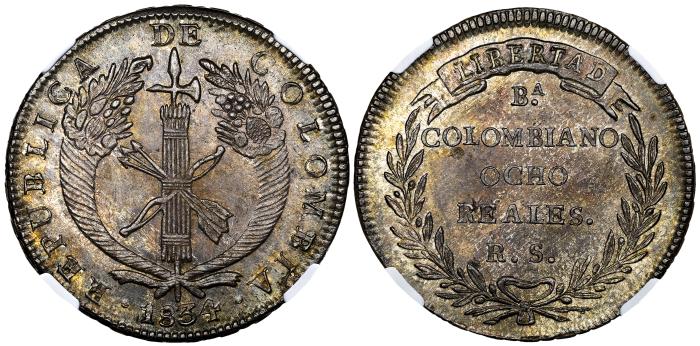
Superb - MS 65 Top Pop!!
Colombia. 8 reales. 1834. Bogotá. RS. (Km-89). (Restrepo-158-1). . Superb specimen, exceptionally attractive for this issue, with all design elements fully defined, pristine surfaces, and wonderful cabinet toning with subtle iridescent highlights and full underlying luster.
A unique opportunity for the specialist seeking elite pieces from this early period of independence.
Slabbed by NGC as MS 65 (Top Pop), the finest graded specimen in the NGC and PCGS censuses. Est...18000,00.
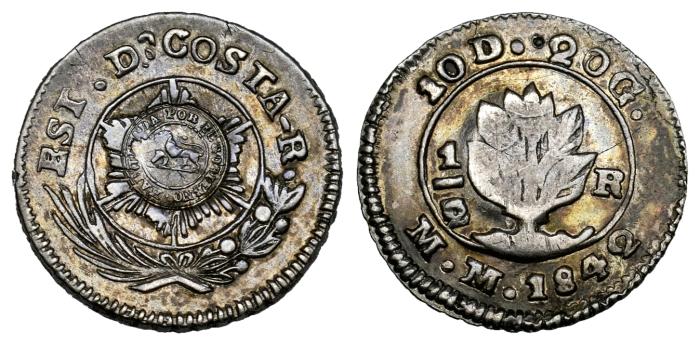
Costa Rica - AU Standard
Costa Rica. 1/2 real, “lion” countermark Type VI, ND (1849-57). Deep and very well struck on the obverse of a Costa Rica provisional 1/2 real of 1842-MM, applied by decree of 22 November 1849. (KM-69). Lovely old cabinet tone with light bluish and golden hues. This countermark has been mistakenly designated as “Type VII” by NGC and some catalogers. Slabbed by NGC as XF Details, Rev. Damage - C/S: AU Standard. Est...1500,00.
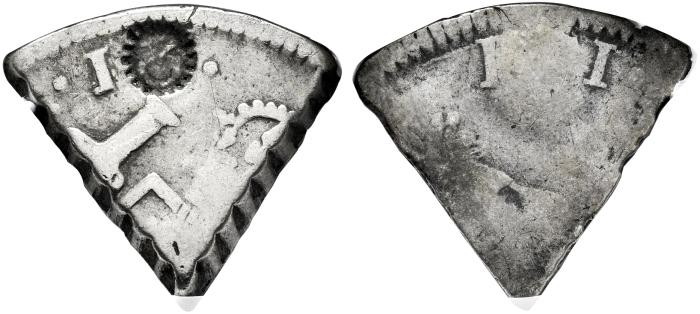
NGC - Fine Details
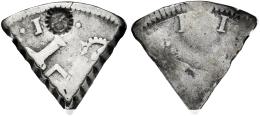
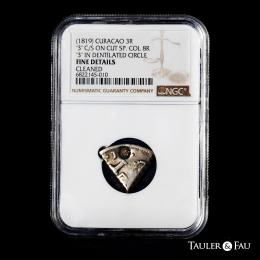
Curaçao. 3 reaals (18 stuivers). ND (1819-25). (Km-29). . 4,74 g. Curaçao countermark, associated with local ordinance of 13 July 1818. Stylized "3" within dentilated circulate indent. Applied to the reverse of a 1/5 cut 8 reales of Ferdinand VII.
Slabbed by NGC Fine as Fine Details, Cleaned - "3" C/S on Cut SP. Col. 8R.
According to a governmental report dated 20th December 1825, after the government ceased buying Dollars to make small change in 3 and 5 parts, cutting was open to anyone and became a general practice with pieces being readily accepted.
The report also goes on to confirm their private token status and that they were permitted for general circulation by convention. Est...300,00.
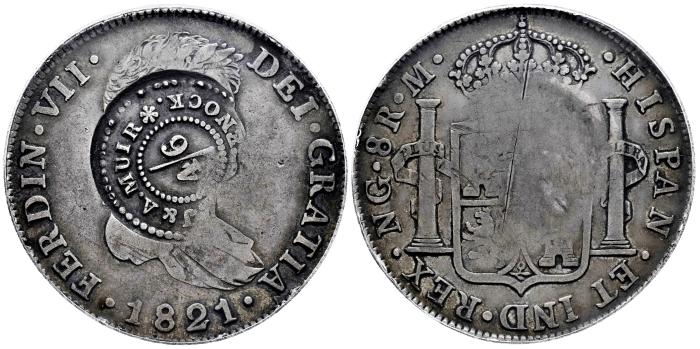
Scotland countermark - VF Detail
Scotland. Circular countermark “J&A.MUIR✶GREENOCK✶4/6”, very well struck, though slightly weak on the right side, applied circa 1823 to the obverse of an 1821-M 8 reales struck in Guatemala under the reign of Ferdinand VII, for circulation at a value of 4 shillings and 6 pence. (Manville-59). (KM-CC56). (Hodge-059S.024a, this specimen).
According to Eric Hodge, author of several studies on these countermarks, only 23 specimens are known, eight of them preserved in museums.
Attractive cabinet toning. Very rare, especially on a Guatemala host coin, and with an exceptional pedigree.
Slabbed by PCGS as VF Details, Scratch. The finest graded specimen in the PCGS census.
Published in SCMB “Spink Coin & Medal Bulletin”, April 1950, no. 5323;
Published in SCMB “Spink Coin & Medal Bulletin”, April 1952, no. 7309;
Ex J. J. Pittman Collection, David Akers Auction, Florida (06-08/08/1999), lot 3999b.
Issued by James and Andrew Muir, haberdashers and straw hat manufacturers established in Greenock. This private countermark was applied approximately between 1820 and 1824, in a context of localized shortage of small silver for daily commerce. During those years, the Muir brothers greatly expanded their hat-making and fashion goods business, resorting, like other British merchants of the period, to countermarking foreign silver coinage in order to facilitate local payments and transactions.
The issue ceased to be necessary around 1825, when the stabilization of British currency and the increased availability of official Bank of England silver brought about the disappearance of this type of private countermark. Est...4000,00.
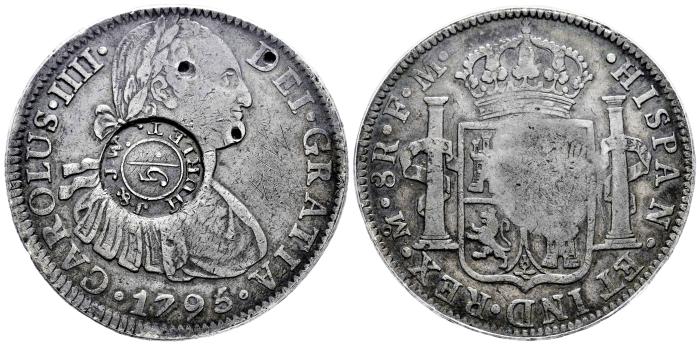
Scotland countermark - VF Details
Scotland. Countermark “J.& J.W. HURLET 5/-”, with a triangle of three dots outside the countermark, applied between 1811 and 1823 to the obverse of a 1795-FM 8 reales struck in Mexico, for circulation at a value of 5 shillings. (Manville-64a). (KM-CC63). (Davis-104a). Attractive cabinet toning.
Only four other specimens of this countermark are known on Mexico City mint coins, with dates grouped between 1796 and 1799. Extremely rare.
Slabbed by PCGS as VF Details, Graffiti; C/M: AU Standard.
This countermark was applied by the Hurlet Copperas Co., a mining and chemical company involved in coal, under the direction of the Scottish industrialist John Wilson.
It served to ensure that foreign coins could circulate locally and be accepted as legitimate payment for wages or goods within the company’s mining community, at a time of severe shortage of official silver in the United Kingdom and coinciding with the restructuring of the ownership of the Hurlet works estate . Est...5000,00.
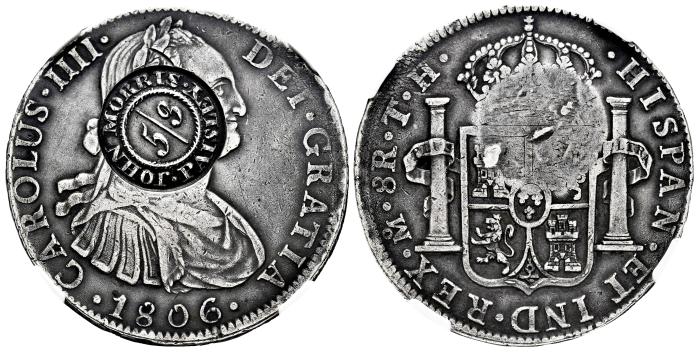
Scotland - XF 45 Top Pop!!
Scotland. Circular «JOHN MORRIS·PAISLEY· 5/3» countermark, deeply and sharply impressed, applied between 1814 and 1815 to the obverse of an 1806-TH 8 reales struck in Mexico during the reign of Charles IV, for circulation at a value of 5 shillings and 3 pence. (Manville-82). (Km-CC86). Attractive patina. Extremely rare.
Contemporary electrotype made from the original 1806 specimen formerly in the Cokayne Collection, which disappeared during a burglary circa 1918. Only three electrotypes of that original are known; based on its distinctive marks, this specimen has been identified as the third. Provenance: Spink 117, Dr. D. Reece-Jones Collection, lot 455, 19 November 1996; Dolphin Coins, fixed-price list, lot 380, November 1997; Noonans, Michael Gietzelt Collection, lot 224, 24 September 2025.
Slabbed by NGC as XF 45, C/S: AU Strong. (Top Pop), the finest-known specimen in the NGC census.
The issuer, John Morris, was a merchant or industrialist active in Great Britain during the height of the Industrial Revolution. As with other early 19th-century British private countermarks, including those of Hurlet, his mark was applied to foreign silver coinage in circulation, chiefly Spanish 8 reales or “Spanish Dollars”, in order to validate these pieces for local use in wage payments and commercial transactions.
Although the host coins generally correspond to issues of the late 18th or early 19th century, this private commercial countermark was applied circa 1814-1815, in the context of the shortage of circulating silver and the monetary pressures caused by the Napoleonic Wars. At that time, the lack of official specie and inflation led to the revaluation of these dollars from the traditional 5 shillings to 5 shillings and 3 pence, the value indicated by the countermark itself. Est...5000,00.
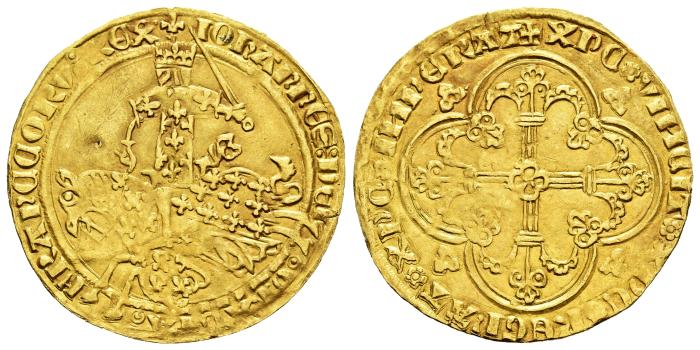
France. Jean II le Bon. Franc a Cheval. ND (1350-64). (Fried-279). (Duplessy-294). Anv.: King on horseback wearing armor, sword in hand, charging left. Rev.: Cross tréflée and feuillue; at center, pellet within quadrilobe; all within quadrilobe, trefoil fleurée at end of each arc; trilobe in spandrels. . 3,64 g.
Attractive orange color, with the details of the king’s armor finely defined. Well centered, with fully legible legends on both sides; some weakness of strike is noted, as usual for this type. XF. Est...1500,00.
X
Confirm your maximum bid
Conecting
 English
 Español




 20
20
 4
4