English
 Español
X
Historical Background
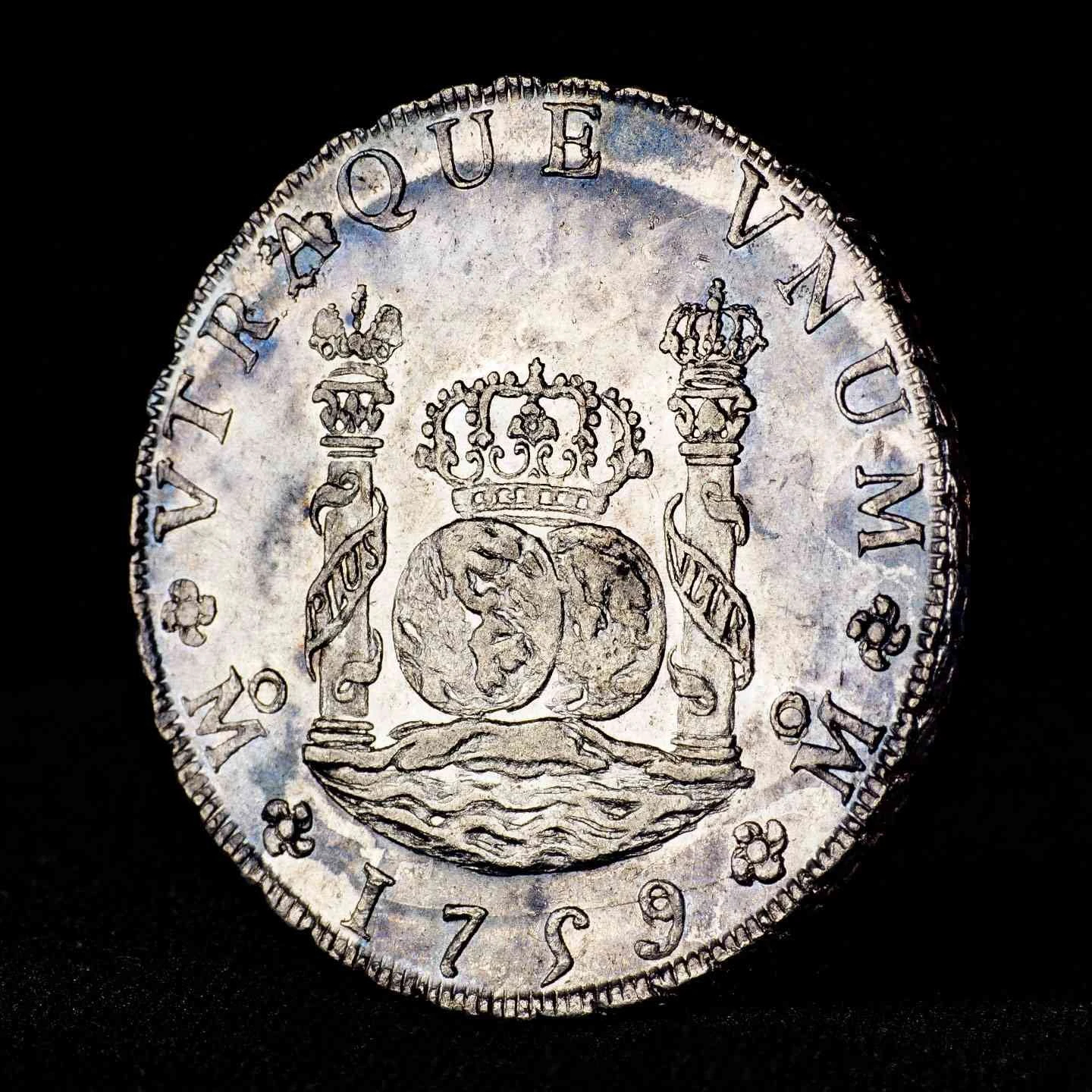
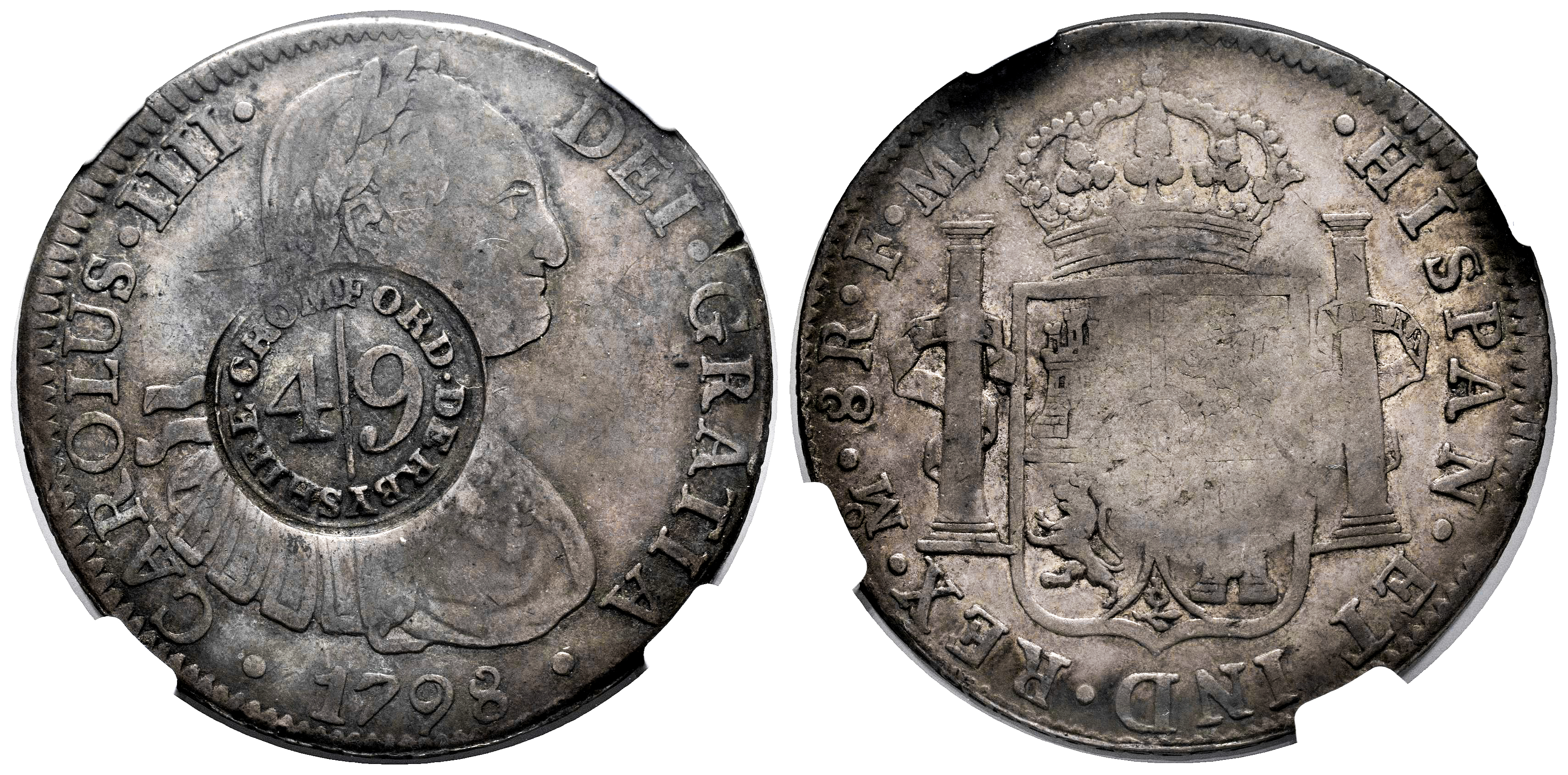
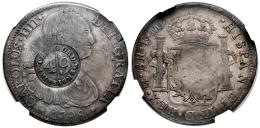
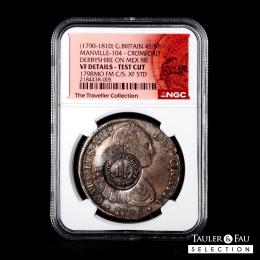
Scotland. Circular countermark “DERBYSHIRE CROMFORD 4/9”, complete and well struck. Applied between 1799 and 1810 to an 8 reales struck in Mexico in 1798-FM, for circulation at a value of 4 shillings and 9 pence. (Manville-104). (Hodge-039). Attractive cabinet toning. Very rare.
Possibly the specimen recorded by Manville and Hodge, and offered in the Numismatic Circular in December 1937, no. 66759.
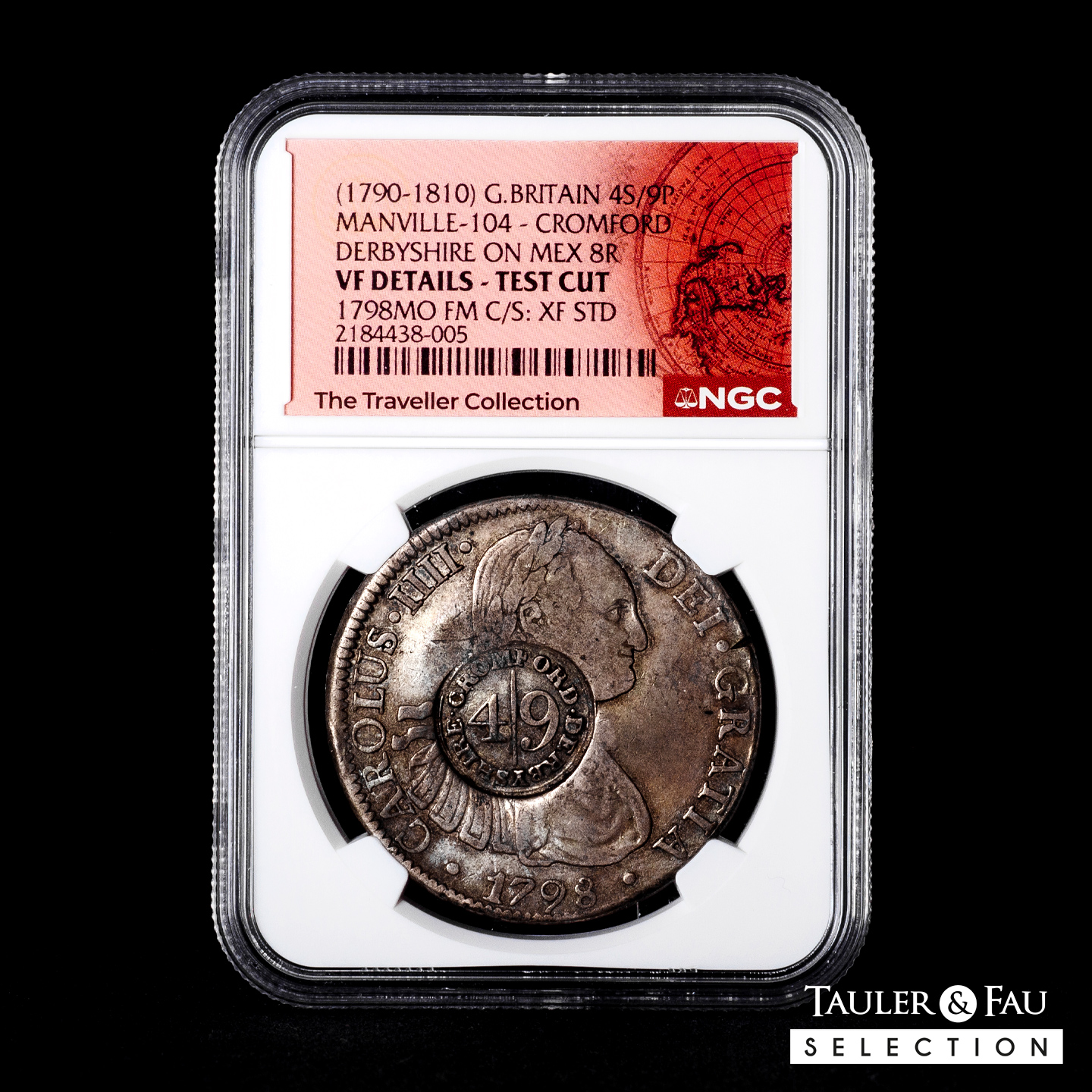
Slabbed by NGC as VF Details, Test Cut. C/S: XF Standard. Special “The Traveller Collection” label.
Cromford, in Derbyshire, was one of the key sites of early British industrialization. There, Sir Richard Arkwright developed his large water-powered cotton-spinning complex. His Cromford mill became one of the models for the modern factory system.
After Sir Richard’s death in 1792, his son Richard Arkwright Jr. continued and expanded the family business. Modern numismatic literature tends to attribute the initiative for these countermarked dollars precisely to the son, partly because the dates of the host coins extend to years well after the father’s death.
The most widely accepted explanation is that these dollars were used as currency for local payments, especially wages, at a time when Great Britain was suffering from a severe shortage of silver coinage suitable for everyday transactions.
The large Spanish and Spanish-American 8 reales were ideal for this purpose: they had a high silver content, circulated internationally, and were widely recognized.
It is therefore much more than a commercial countermark: in practice, it functioned as a form of private industrial currency, backed by one of the largest manufacturing enterprises in England. Studies on British industrial coinage regard Arkwright & Co. of Cromford as the principal English issuer of this type of countermarked silver. Est...2500,00.
Auction Lots
Confirm your maximum bid
Confirm your maximum bid
Loading…
Conecting
Are you sure you want to buy the lot?
X
Confirm your maximum bid
Conecting