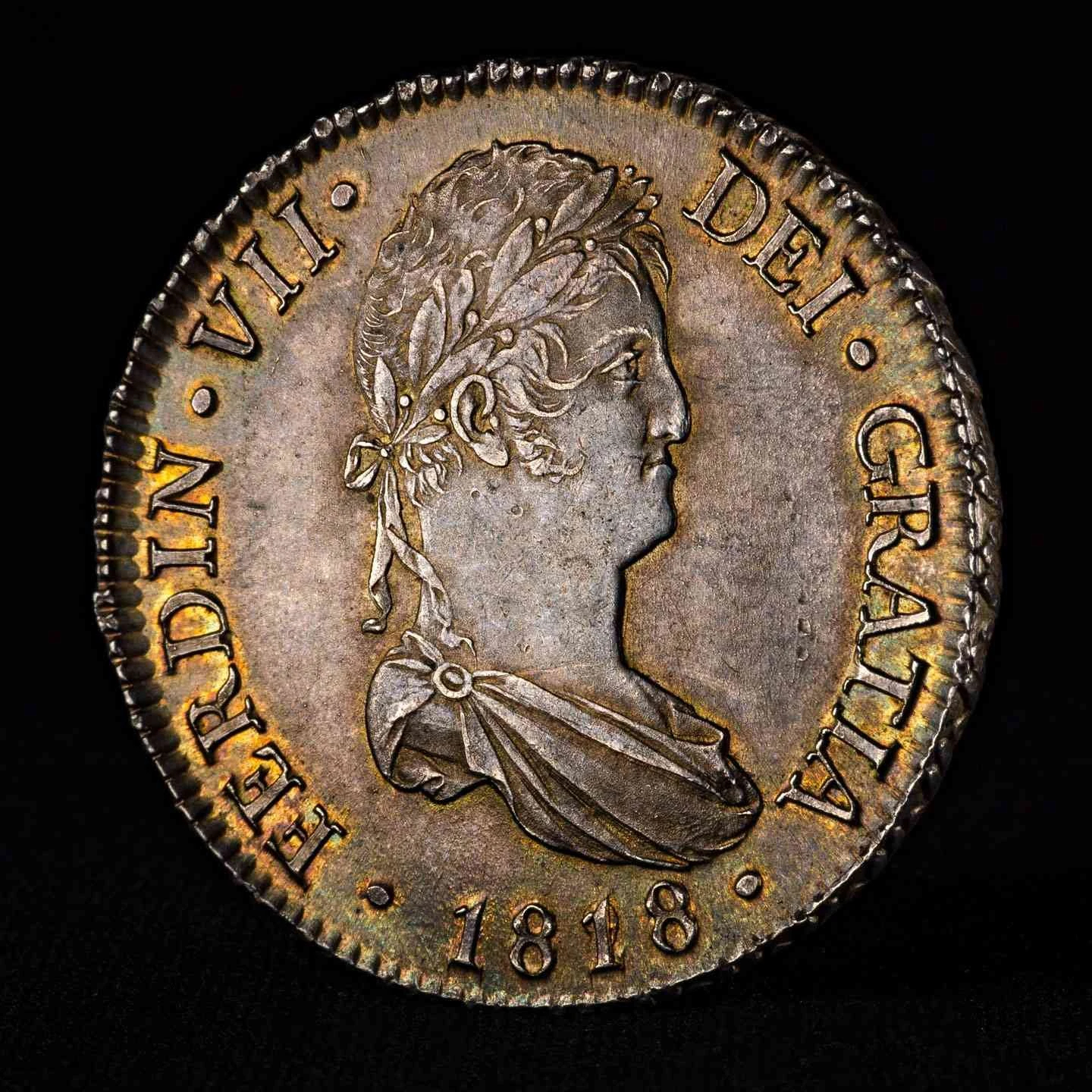
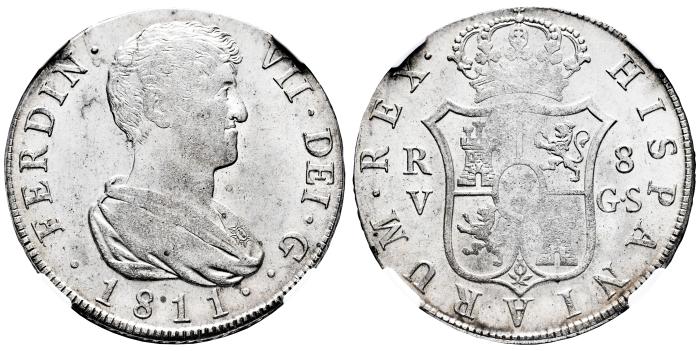
Assayer GS - NGC MS 63
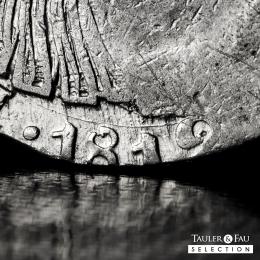
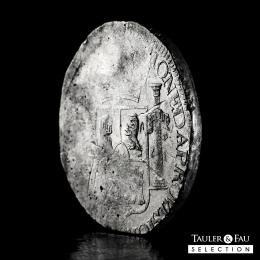
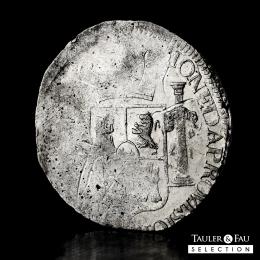
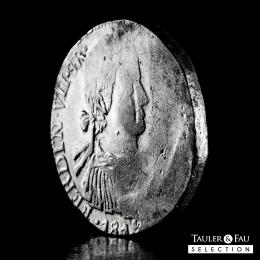
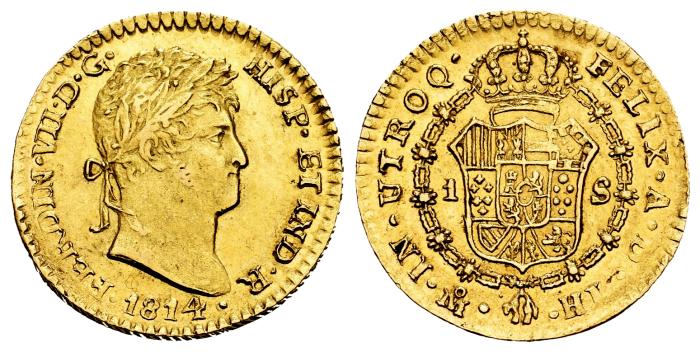
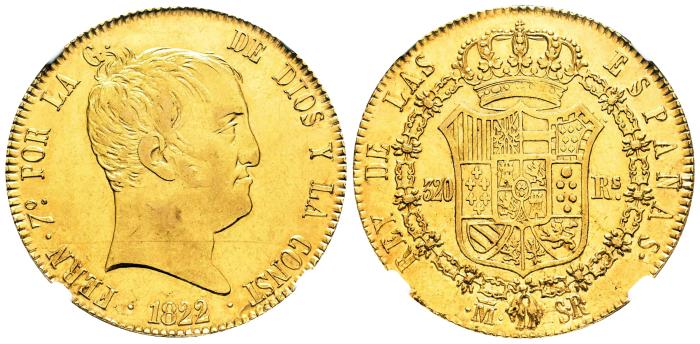
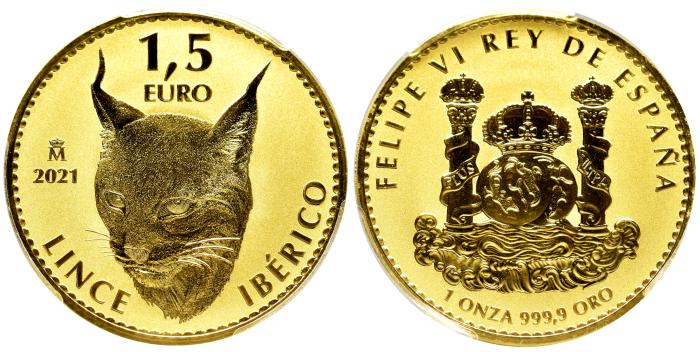
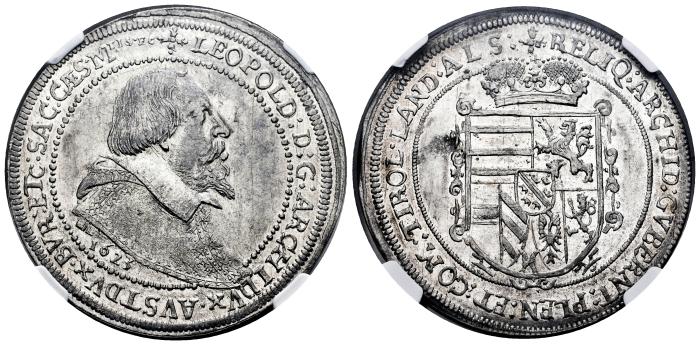
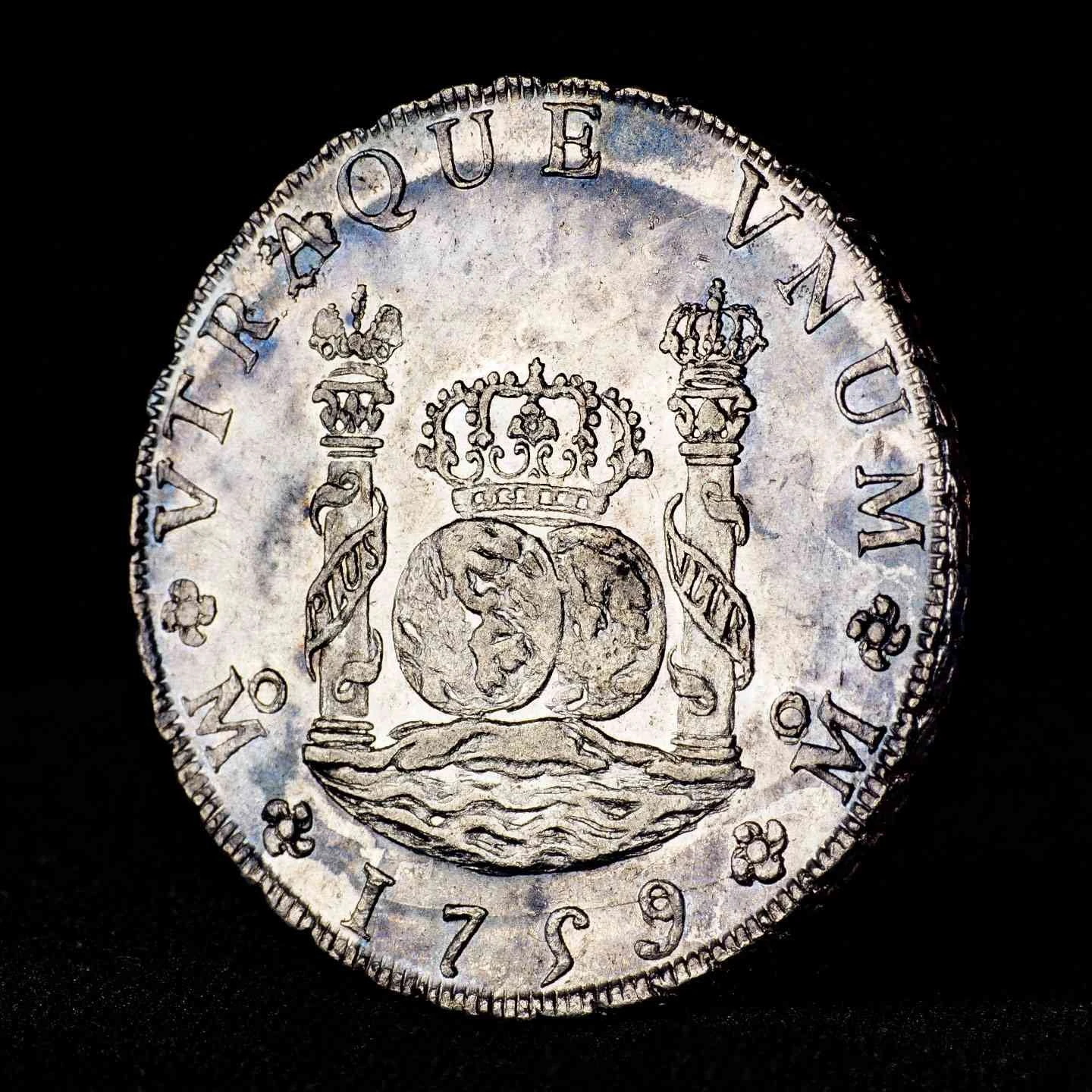
Ferdinand VII (1808-1833). 8 reales. 1811. Valencia. GS. (Cal-1439). . Magnificent specimen with full original luster. Pristine surfaces with slightly weak centers, typical of this issue. Very rare with GS assayers, even more in this condition. Slabbed by NGC as MS 63. Only 1 finer specimen in the NGC census. Est...3000,00.
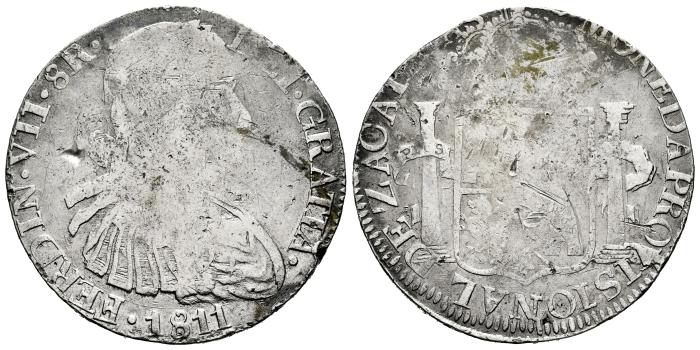
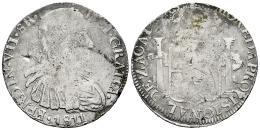
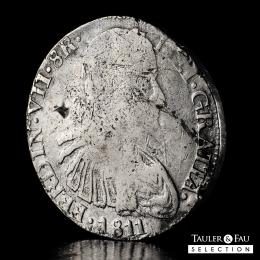
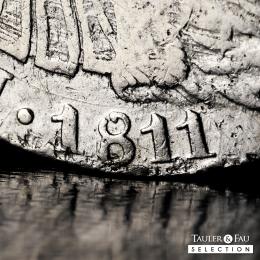
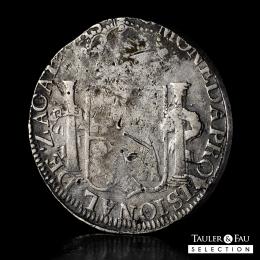
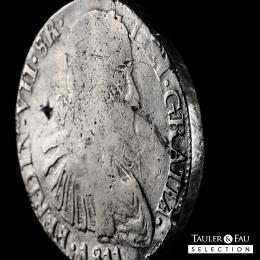
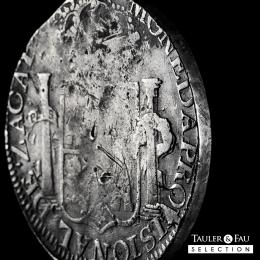
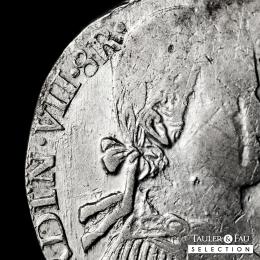
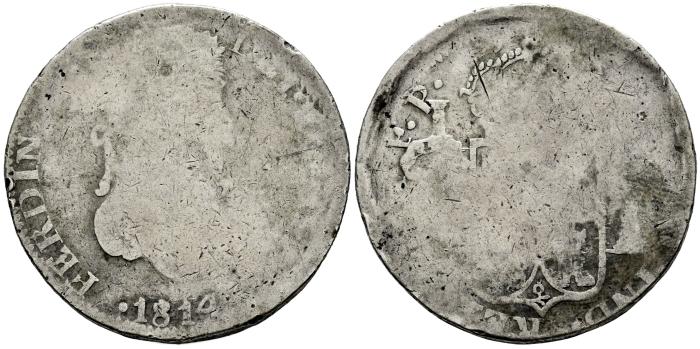
Ferdinand VII (1808-1833). 8 reales. 1811. Zacatecas. Moneda Provisional. (Cal-1448). (Ramírez-Z8.1.3). . 26,87 g. Armored bust. First date struck with this bust type. Plain edge. Despite the generally crude nature of this issue, this specimen stands out for the sharpness and clarity of its legends, complete and far superior to the average known for the type. The date is fully visible. Minor marks. Rare, especially in this condition. VF. Est...1000,00.
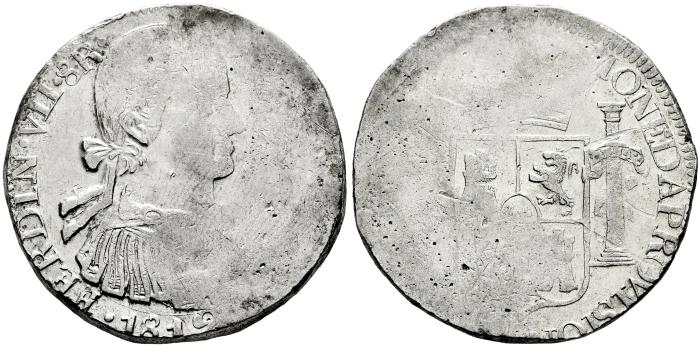
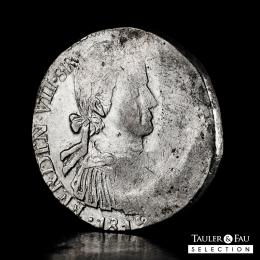
Ferdinand VII (1808-1833). 8 reales. 1812. Zacatecas. Moneda Provisional. (Cal-1449). (Ramírez-Z8.2.1a). . 27,87 g. Armored bust. Despite the crude style and some weakness, it is strongly struck, with several bust details well defined, portions of the legends visible, and the date fully clear. Light hairlines. Rare, especially in this condition. Choice VF. Est...1000,00.
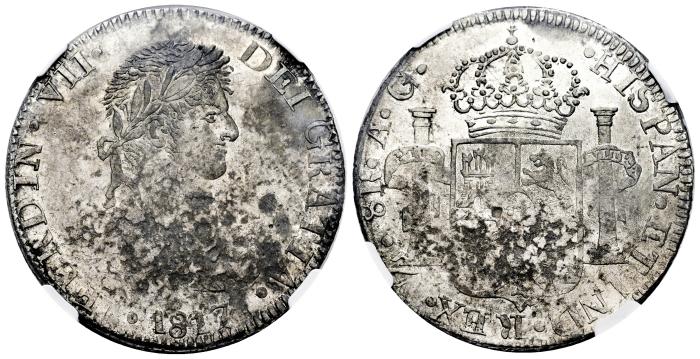
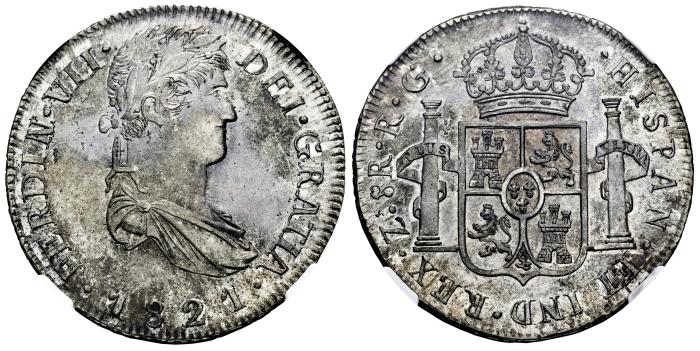
NGC - MS 60
Ferdinand VII (1808-1833). 8 reales. 1817. Zacatecas. AG. (Cal-1458). (Ramírez-Z8.7.2). . No stop between I and G. Soft patina. Slightly crude but strong strike, with most design details well defined. Original luster, unusual for this type. Very rare in this preservation. Slabbed by NGC as MS 60. Est...1000,00.
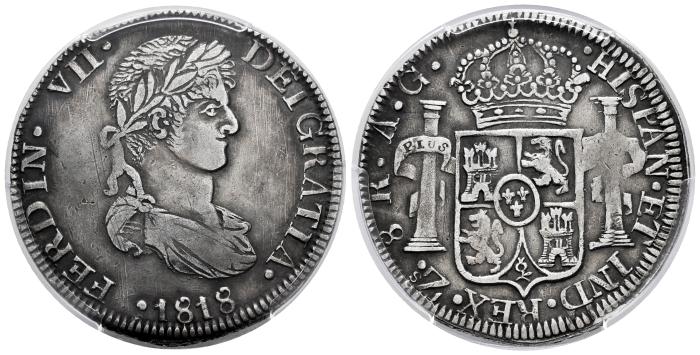
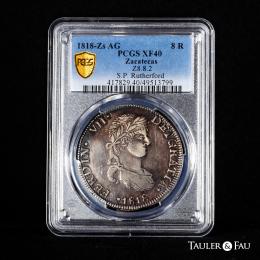
PCGS - XF 40
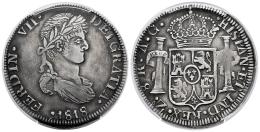
Ferdinand VII (1808-1833). 8 reales. 1818. Zacatecas. AG. (Cal-1459). (Ramírez-Z8.8.2). . First King´s bust. A well struck example with an expressive portrait, problem-free surfaces, and pleasing gray toning that darkens in the protected areas. Rare in this condition. Slabbed by PCGS as XF 40. Only 1 finer specimen in the PCGS census. Ex S.P. Rutherford Collection. Est...600,00.
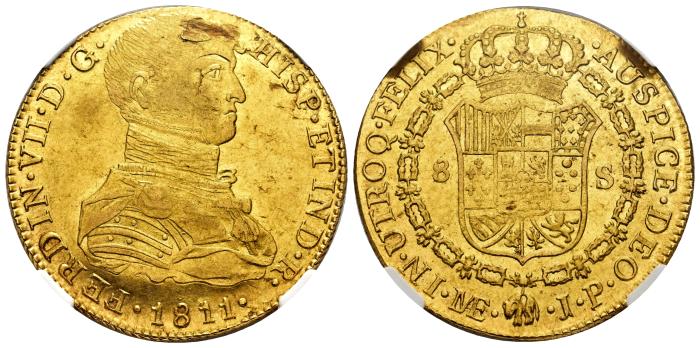
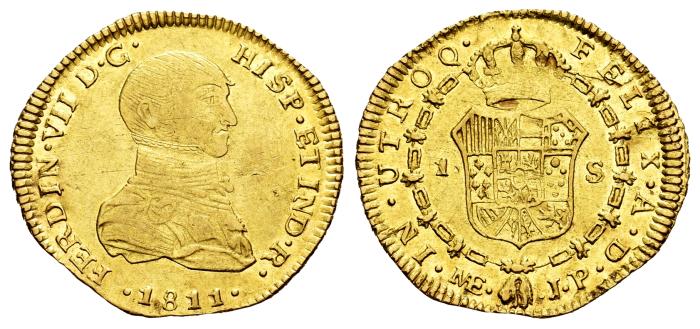
NGC - MS 60
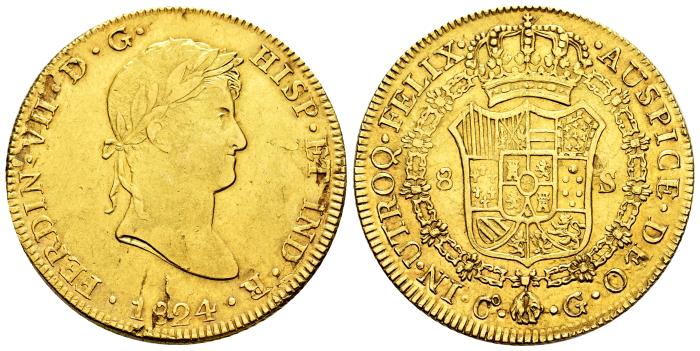
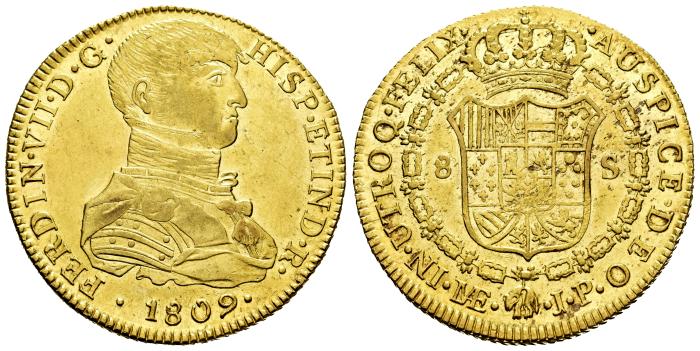
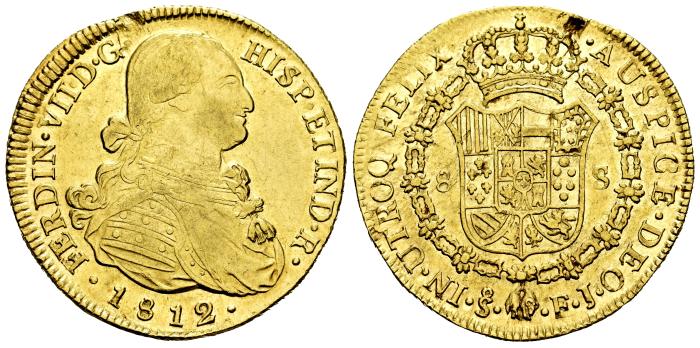
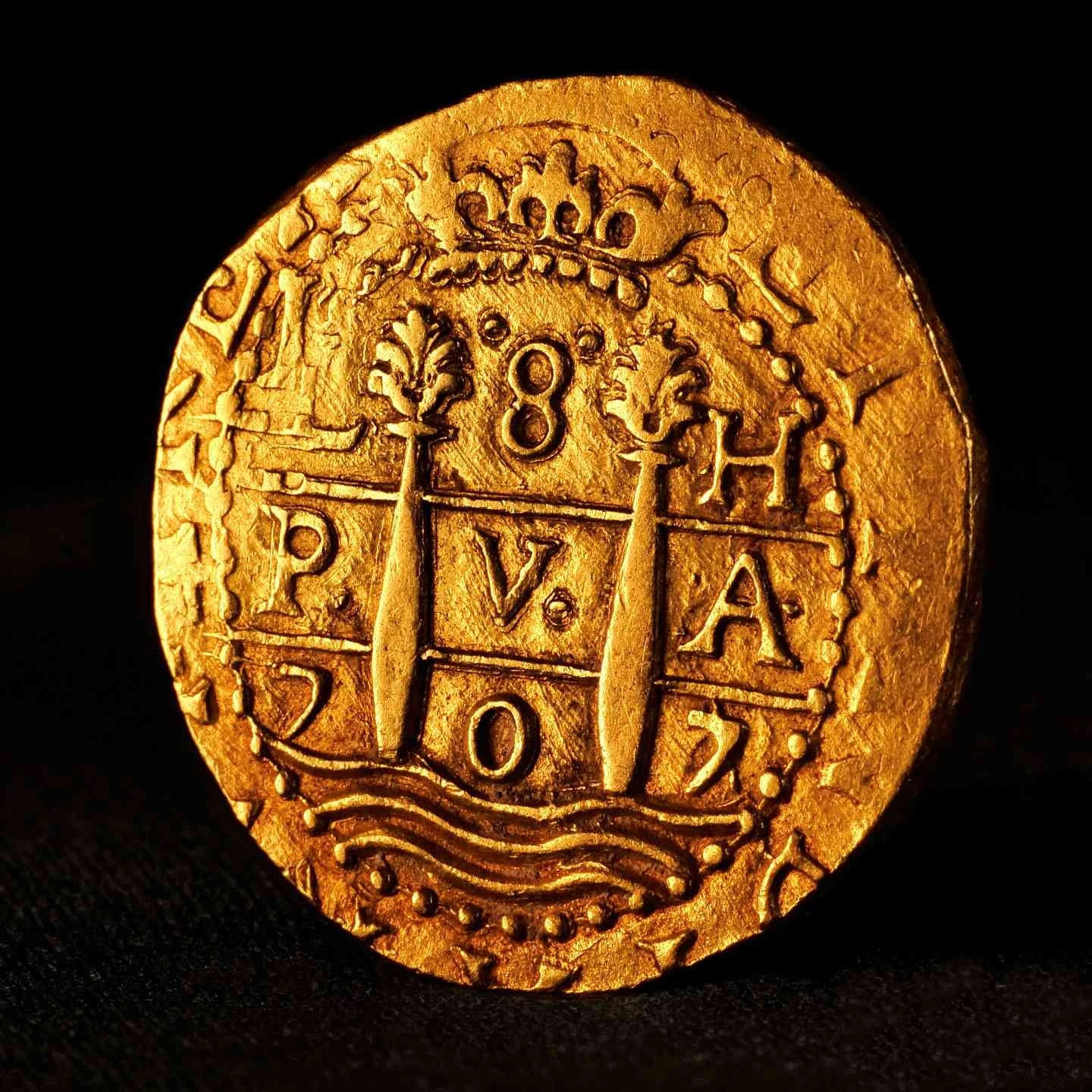
Ferdinand VII (1808-1833). 8 escudos. 1811. Lima. JP. (Cal-1756). (Cal onza-1214). . An admirable representative of this fleeting imaginary bust type for Ferdinand VII coined in Lima between 1808 and 1811 before the proper dies with realistic King's effigy had been obtained from Europe. The laudably sharp characteristics are attractively styled upon appreciably reflective fields. Planchet flaws on the obverse. Conditionally very scarce at this level of preservation, and an enticing offering for the quality-minded collectors. Slabbed by NGC as MS 60. Est...6000,00.
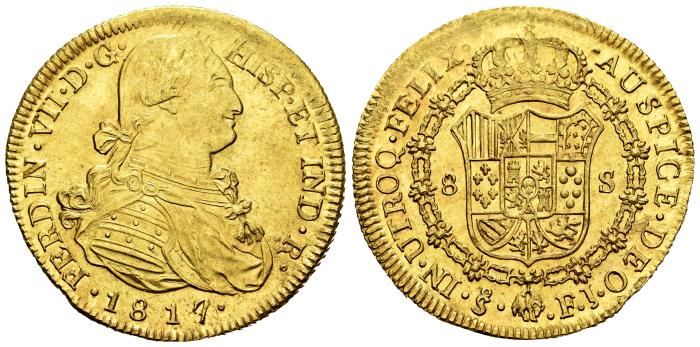
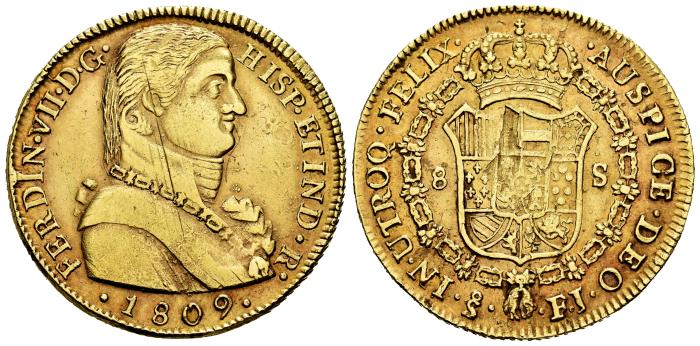
Ferdinand VII (1808-1833). 8 escudos. 1817/8. Santiago. FJ. (Cal-1877). (Cal onza-Unlisted). . 27,11 g. Bust of Charles IV. Minimal superficial hairlines, otherwise lovely specimen retaining full original luster and sharply struck with all details well defined. Rare, especially in this condition.. Some dies dated 1818 were prepared by the Republicans before they had completed the engraving of the Republican 2-flags type, but those were eventually dismissed as unacceptable (since they would be proof of an independent republic issuing colonial coinage) and repunched with the 1817 date. This fact accounts for the apparently puzzling 1817/8 specimens extant, which were struck in early 1818. Almost MS. Est...5000,00.
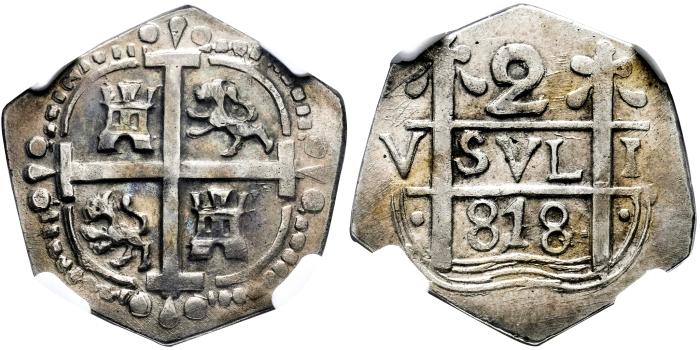
Mendoza - NGC MS 62 ¡¡Top Pop!!
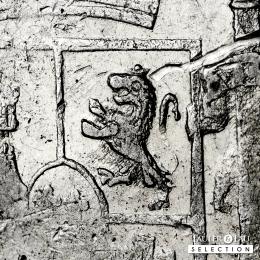
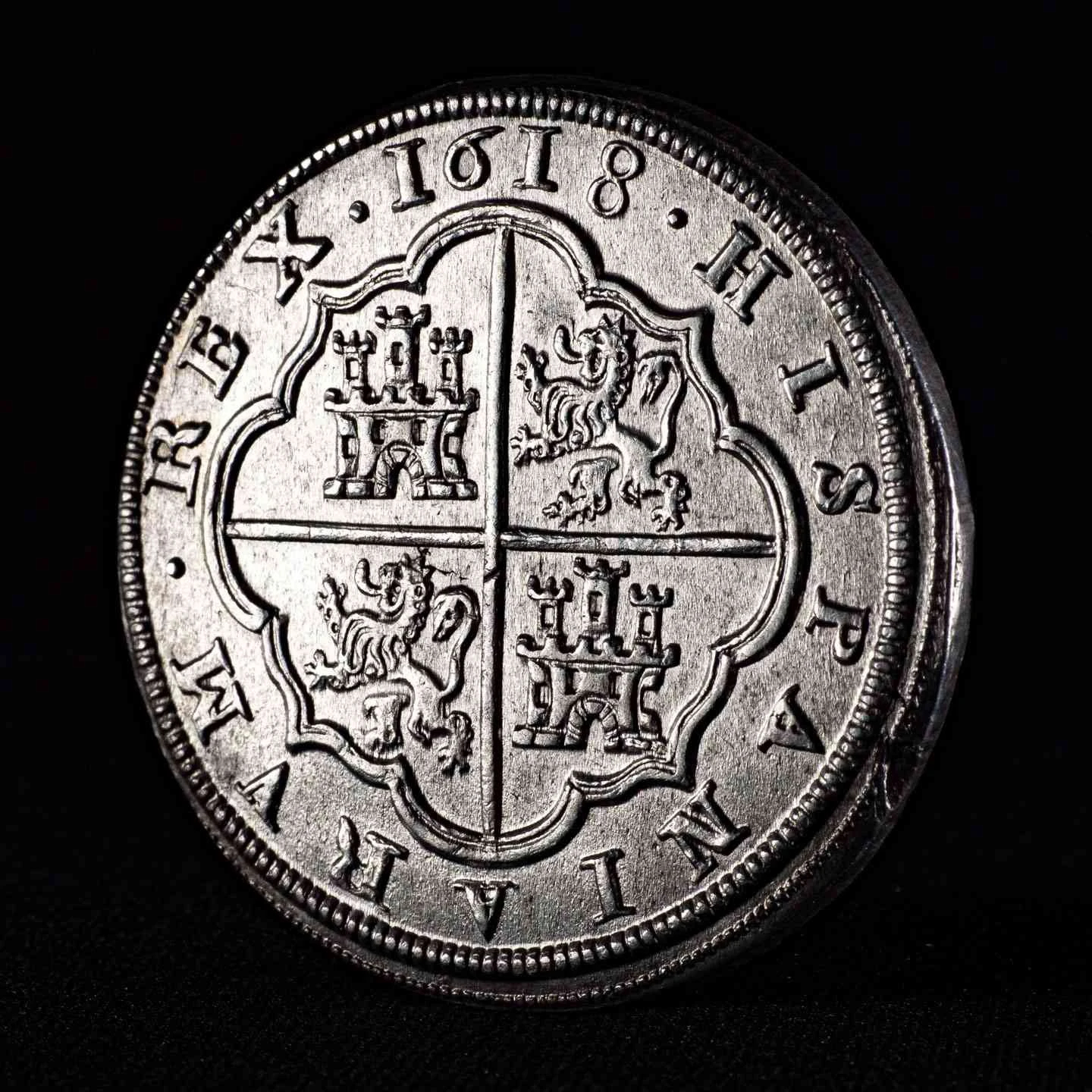
Argentina. 2 reales. ND “818” date (ca. 1823 clandestine issue). Mendoza. (Km-Unlisted). (Janson-10.1). (Medina-267, Plate coin). . 5,92 g. “Imitation cob”. Struck on a broad flan with exceptional definition for the type, showing a full cross with well-shaped lions and castles, and complete pillars-and-waves on the reverse.
Retains original luster beneath a soft iridescent tone, more pronounced on the obverse, enhancing its eye appeal. It is the finest of the 5 specimens known.
Extremely rare and boasting an important pedigree, as plate coin illustrated in José Toribio Medina’s "Las Monedas Obsidionales Hispano-Americanas" (Santiago, 1919), specimen no. 267, pictured on page 199.
Slabbed by NGC as MS 62 (Top Pop), the finest specimen in the NGC census.
This rare “818” variety belongs to a short-lived and clandestine series attributed to the mint of Mendoza, Argentina, around 1823. Long misattributed to Venezuela since Medina’s time, recent research by Héctor Carlos Janson (see Janson, 2020, p. 472, nos. 10.1–10.2) reclassified these emissions based on the discovery of a single specimen bearing the Fidelidad countermark decreed on December 2, 1823. These emergency issues emerged amidst a silver shortage that forced local authorities to validate circulating coinage by countermarking all pieces appearing to be silver between December 1823 and April 1824.
Janson speculates that these imitation cobs were secretly struck in Chile and smuggled into Mendoza, where local law tolerated unofficial coinage provided it was countermarked and revalidated for circulation. The few known specimens lacking countermarks, such as this piece, likely remained in rural circulation and escaped later withdrawal decrees.
A fascinating relic of early Argentine monetary history and one of the most elusive types of the independence period. The single finest known example, combining exceptional preservation, sharp detail, and historic significance—a true centerpiece for the connoisseur of South American colonial and post-colonial silver coinage. Est...18000,00.
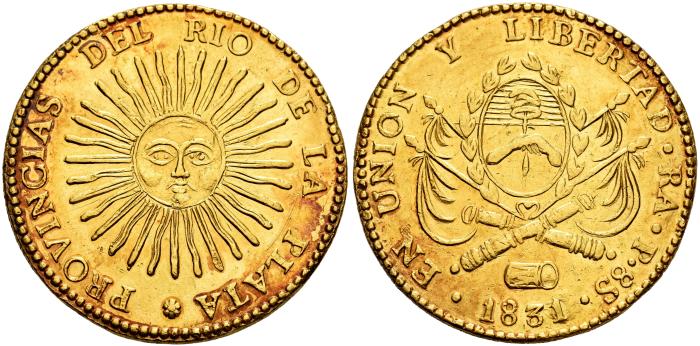
NGC - AU Details
Argentina. 8 escudos. 1831/0. La Rioja. RA P. (Km-21). (Cal onza-1564). . Traces of expertly repaired solder at 1 o’clock on the obverse and 10 o’clock on the reverse. Despite this, the piece retains strong visual appeal, with well-defined details —including a clearly visible overdate— and an attractive orange tone. Very rare; we have not found any examples of this overdate offered at auction in recent years. Slabbed by NGC as AU Details, Removed from jewelry. Est...9000,00.
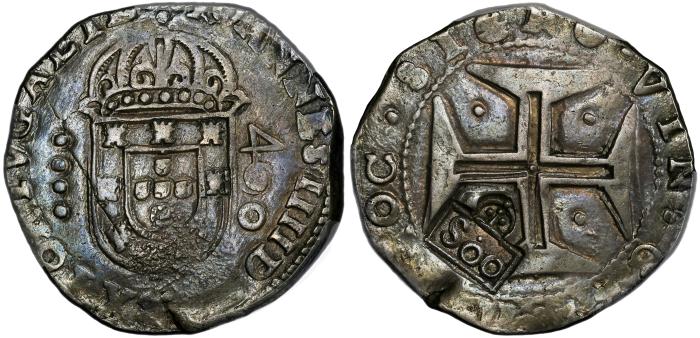
PCGS - XF 45 ¡¡Top Pop!!
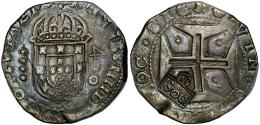
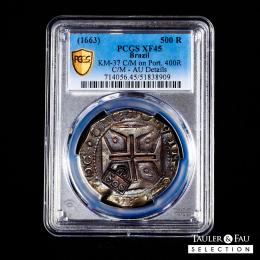
Brazil. D. Afonso VI (1656-1667). ND (1663). Counterstamp of 500 Reis with crowned “S00”, issued by decree of 22 March 1663 and strongly applied to the reverse of a 400 Reis (Cruzado) struck at the Lisbon mint under João IV. Lovely cabinet tone with golden and bluish hues. Very rare. Ag. (KM-37). Certified by PCGS as XF 45, C/M AU Details. (Top Pop), the finest known in the PCGS census. Est...2500,00.
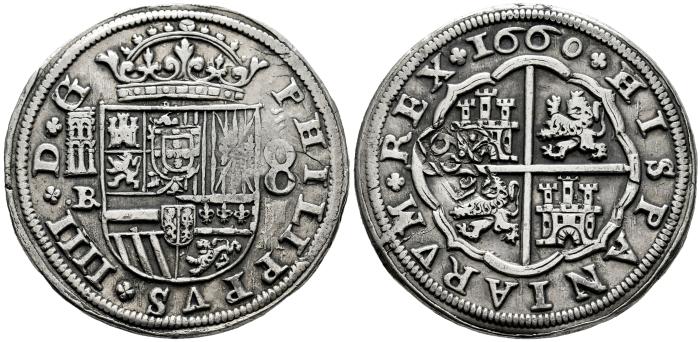
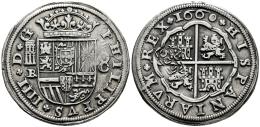
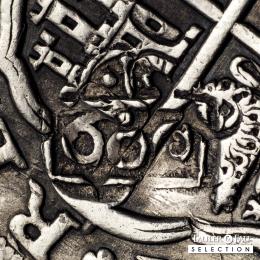
600 Reis Brazil countermark
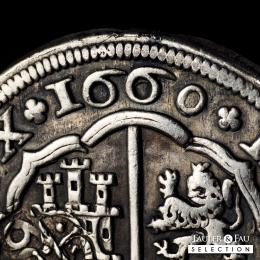
Brazil. D. Afonso VI (1656-1667). 1660. ND (1663). 600 Reis countermark, sharply applied on the reverse of a 1660-BR Segovia 8 Reales struck under Philip IV, issued for circulation in Brazil from 1663. Value 8 to the right, smaller horizontal aqueduct and assayer to the left. Three fleurs-de-lis in Burgundy. A very rare countermark, particularly scarce on a Segovia issue. Ag. 27.14 g. Retains the original collector’s tag. Ex Centro Numismático de Valencia Auction (11/10/1991), lot 1080. Almost XF. Est...3000,00.
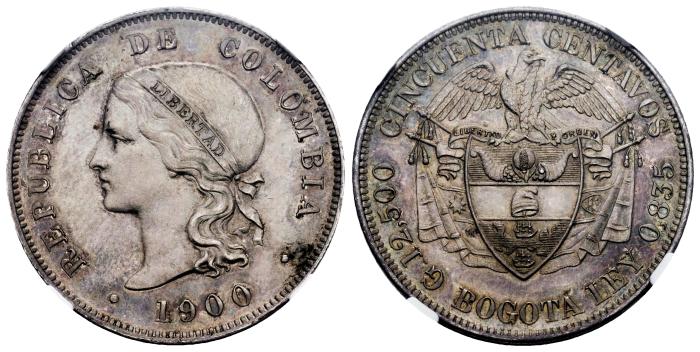
NGC - PF 58
Colombia. 50 centavos. 1900. Heaton. (Km-Pn82). (Restrepo-80). . Silver pattern struck at the Heaton Mint (England) for Bogota, Colombia. Lovely old cabinet tone with nice iridiscent shades. Original luster. Extremely rare, listed as "three known" in KM. Slabbed by NGC as PF 58. Only 1 finer specimen in the NGC census. Est...3000,00.
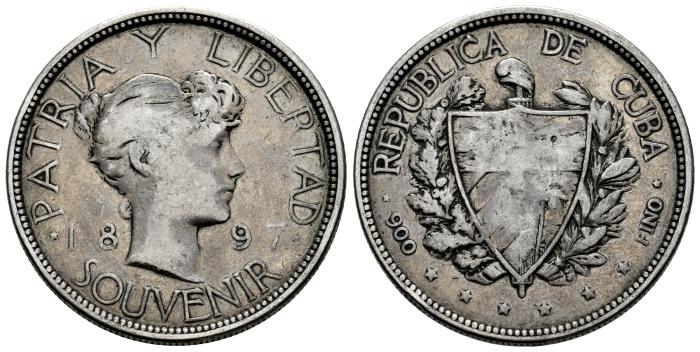
PAT 97
Cuba. 1 peso souvenir. 1897. (Km-XM1). . high relief variety with wide date and "PAT.97." on truncation, toned, mintage of only 828 pieces. Nick on the edge. In 1897, to raise money for Cuba's struggle for independence, a New York banker came up with the idea to issue souvenir "coins." These 1897 Cuban liberation pesos bear no denomination (inscribed SOUVENIR instead of a denomination) and were sold for US$1 each. They were designed by Philip Martiny and show the Cuban coat of arms on the obverse and a personification of Liberty on the reverse. Gorham Manufacturing Co., of Providence, R.I., was contracted to produce the pieces, but could not initially, so in July 1897, Dunn Air-Brake in Philadelphia struck the first 828 pieces, using dies and planchets that Gorham had provided. In August, Gorham produced an additional 9,142 pieces. The two versions can be distinguished by the spacing of the date on the obverse, the rarer one (Dunn) having a wide date. VF. Est...700,00.
X
Confirm your maximum bid
Conecting
 English
 Español





 6
6
 4
4