English
 Español
X
Historical Background
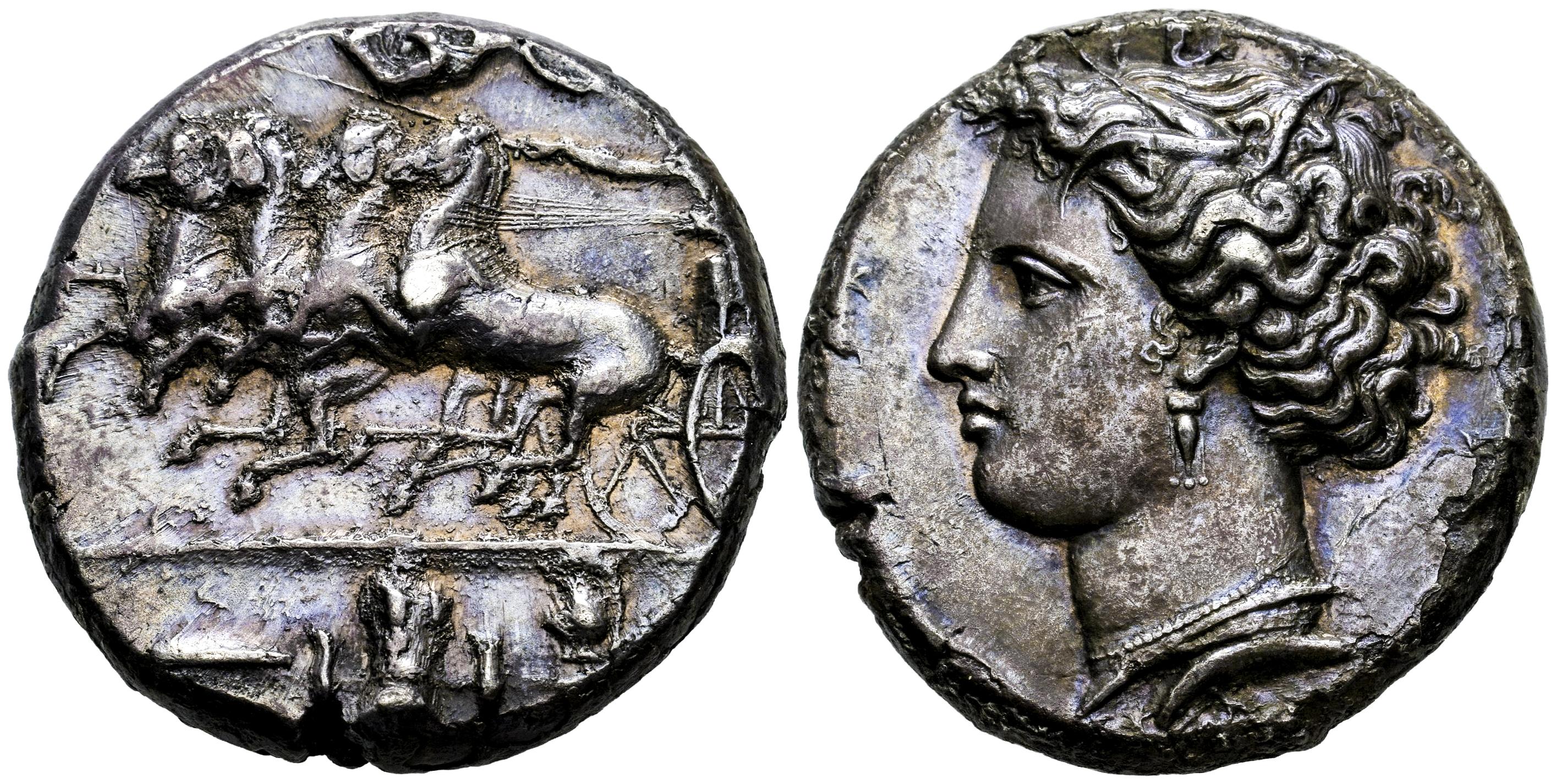
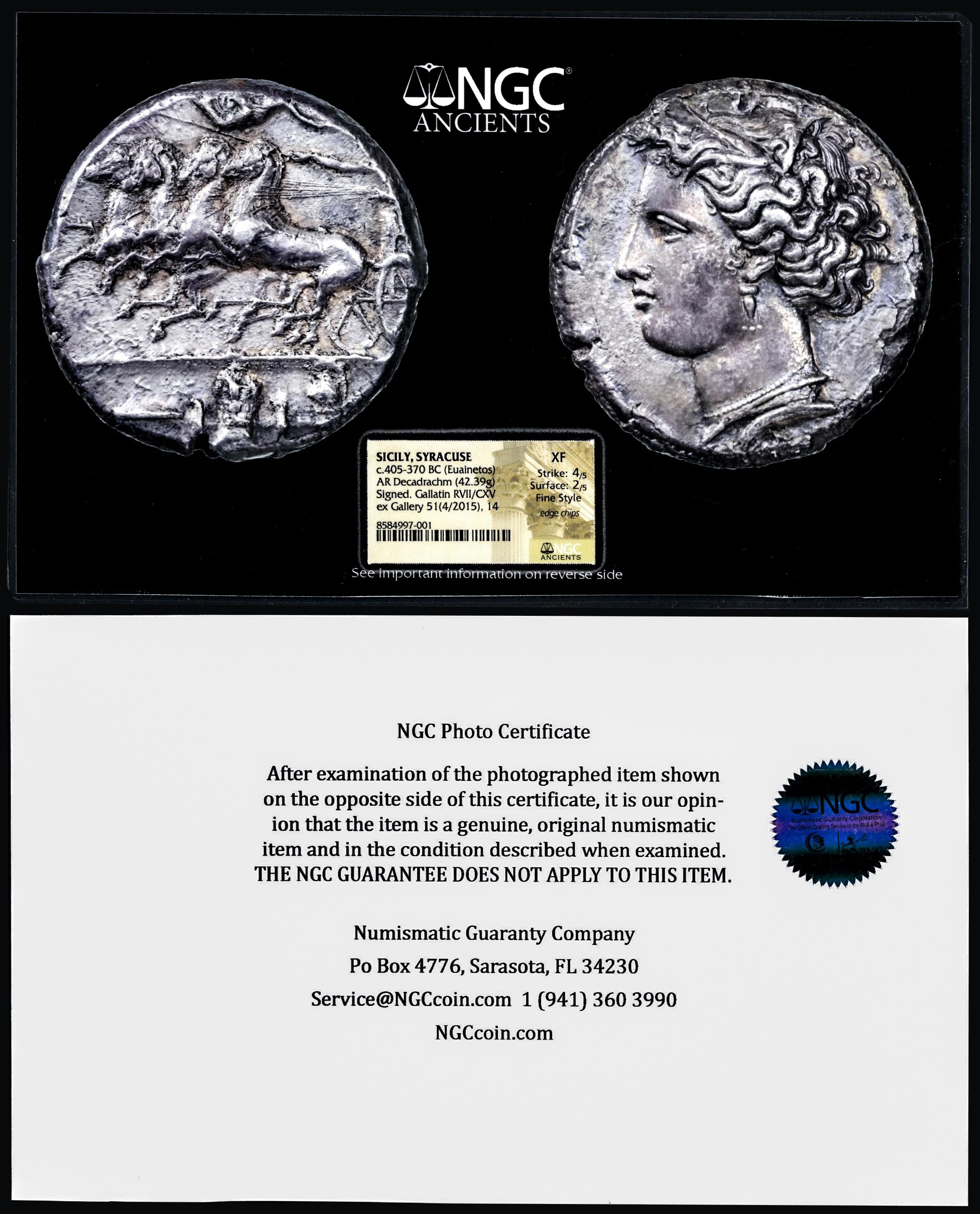
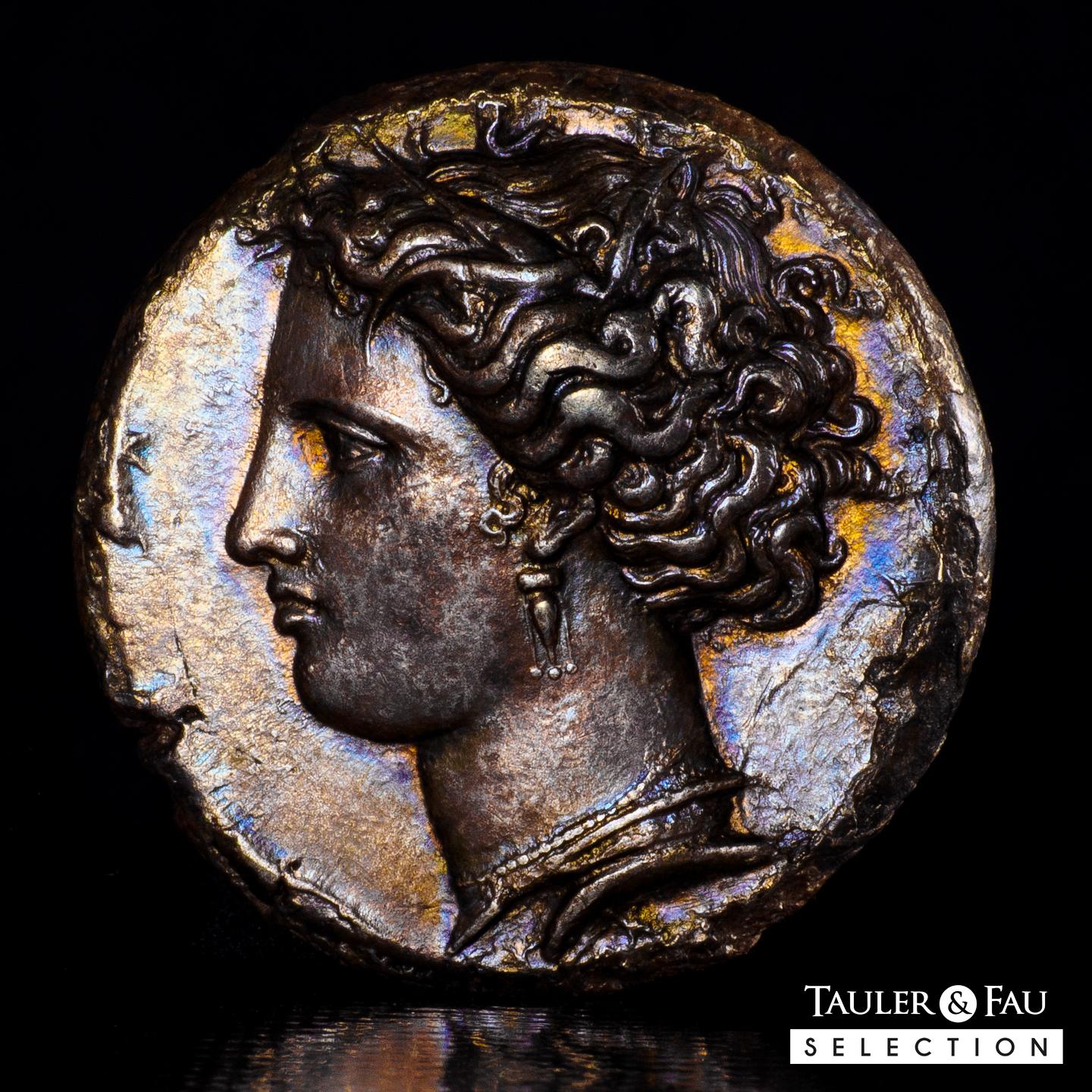
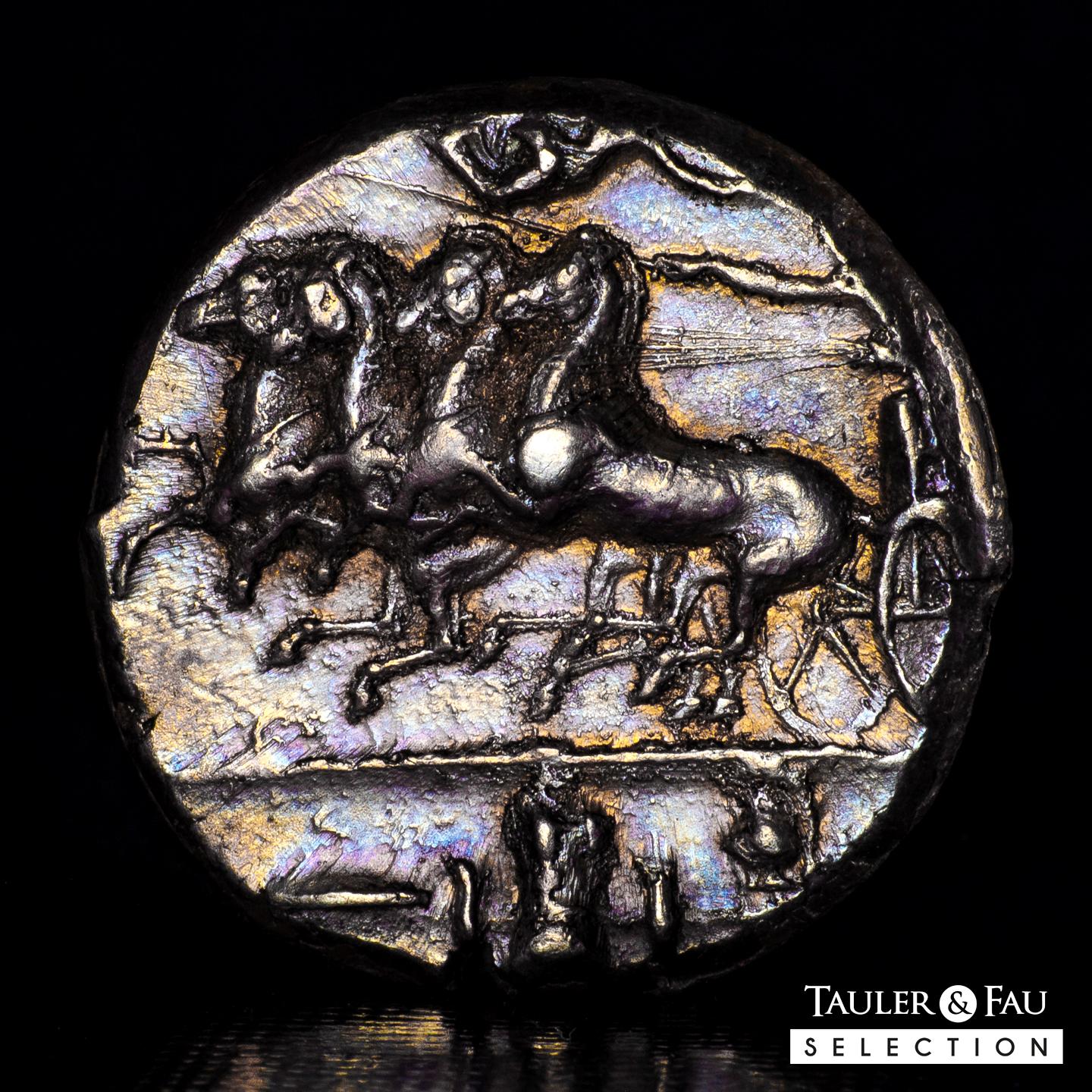
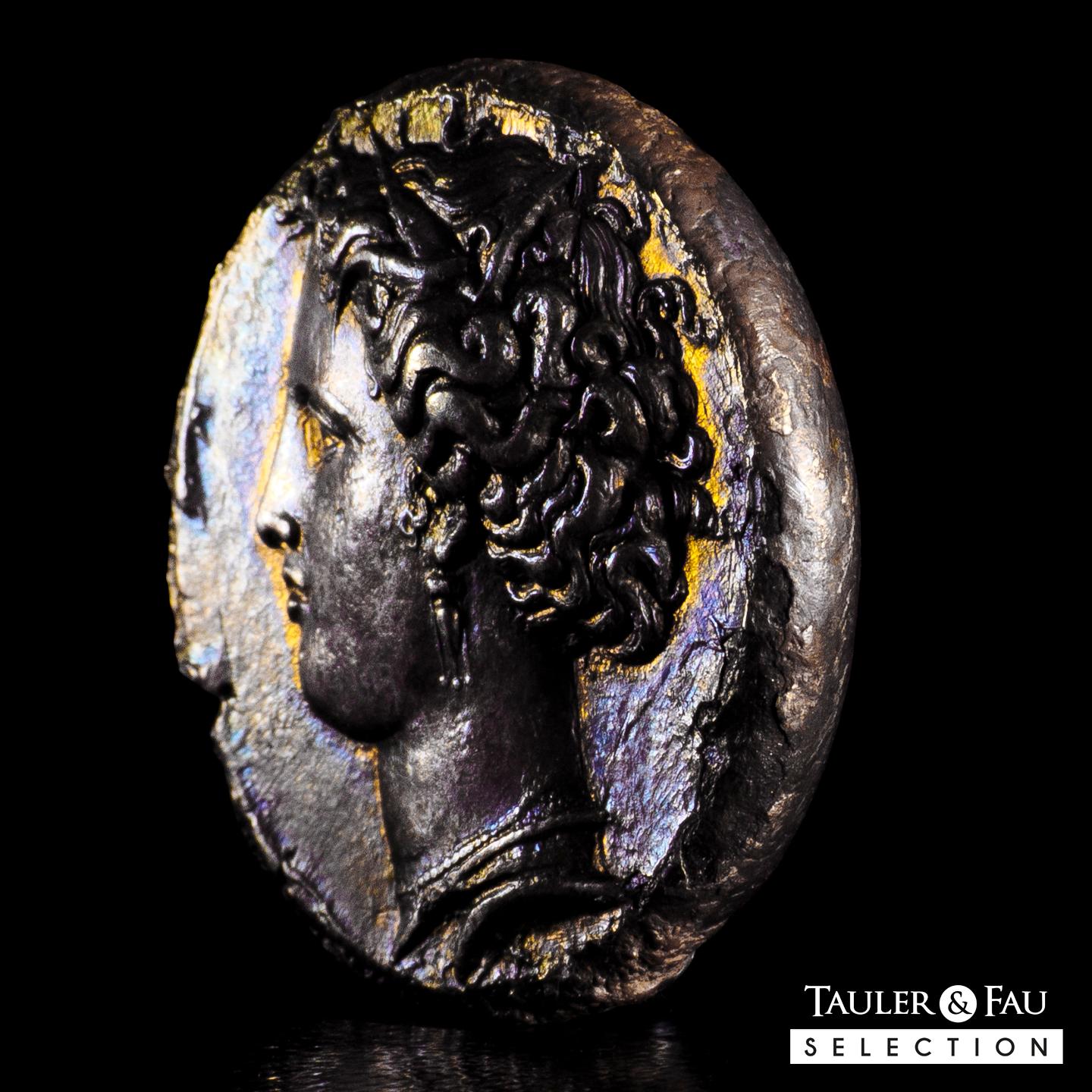
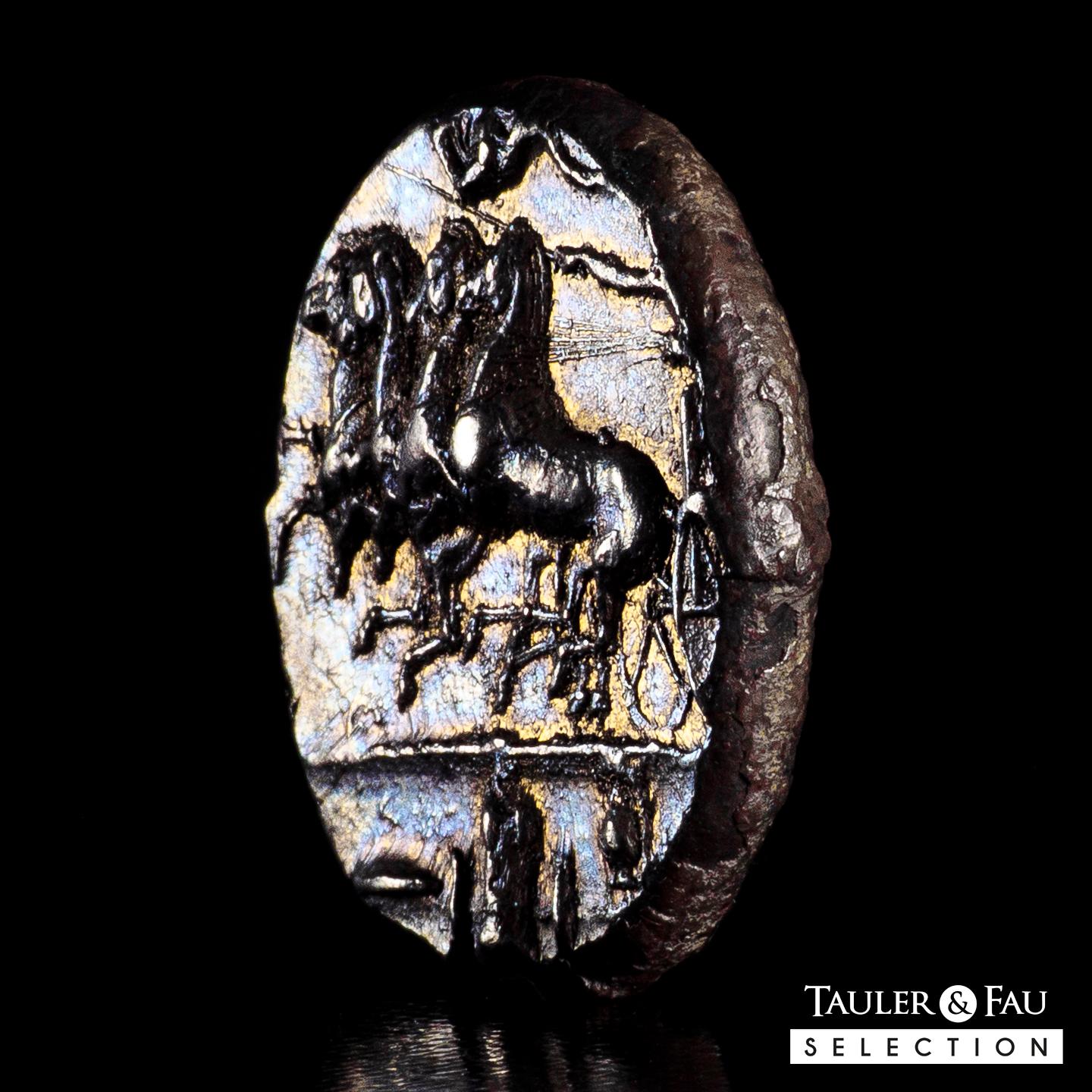
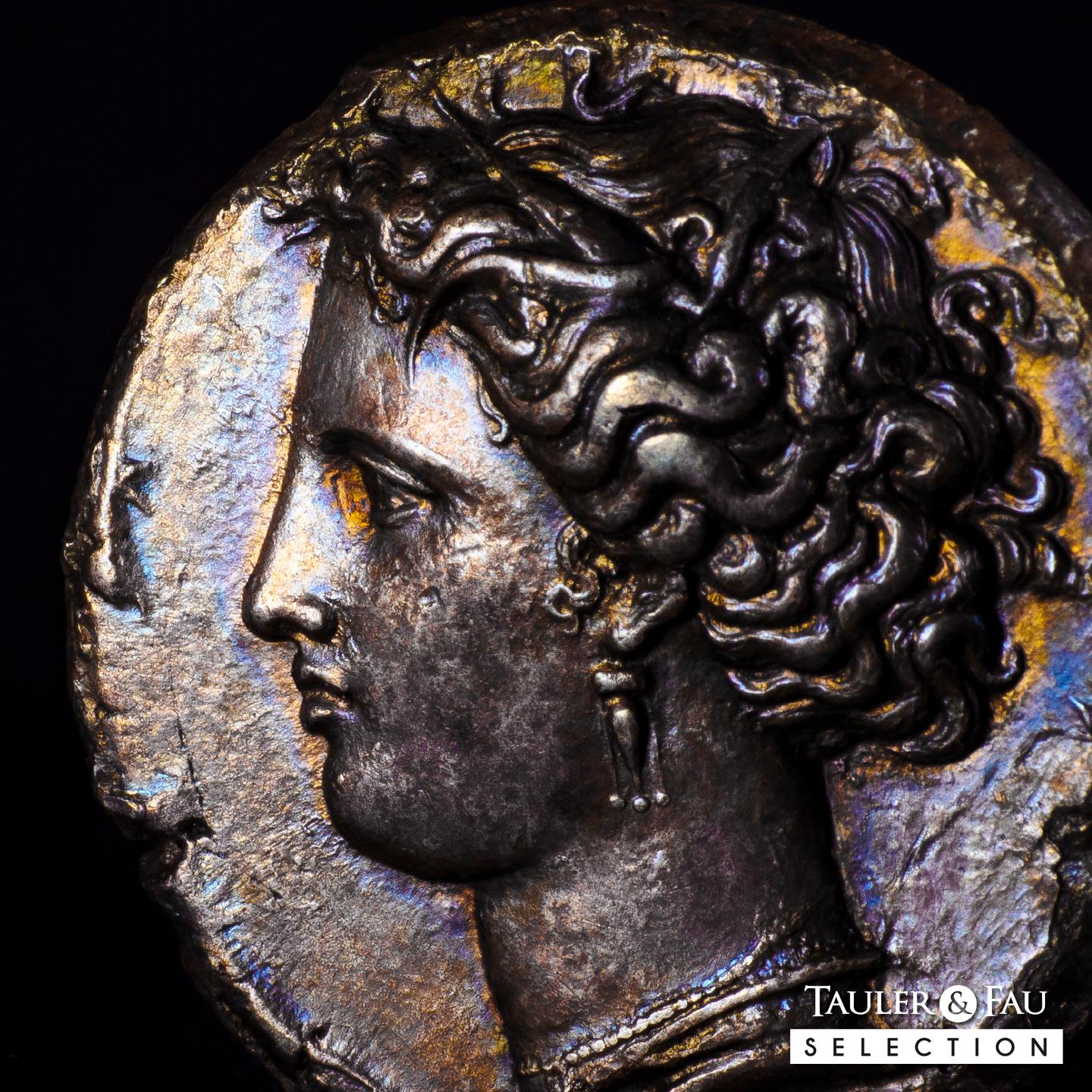
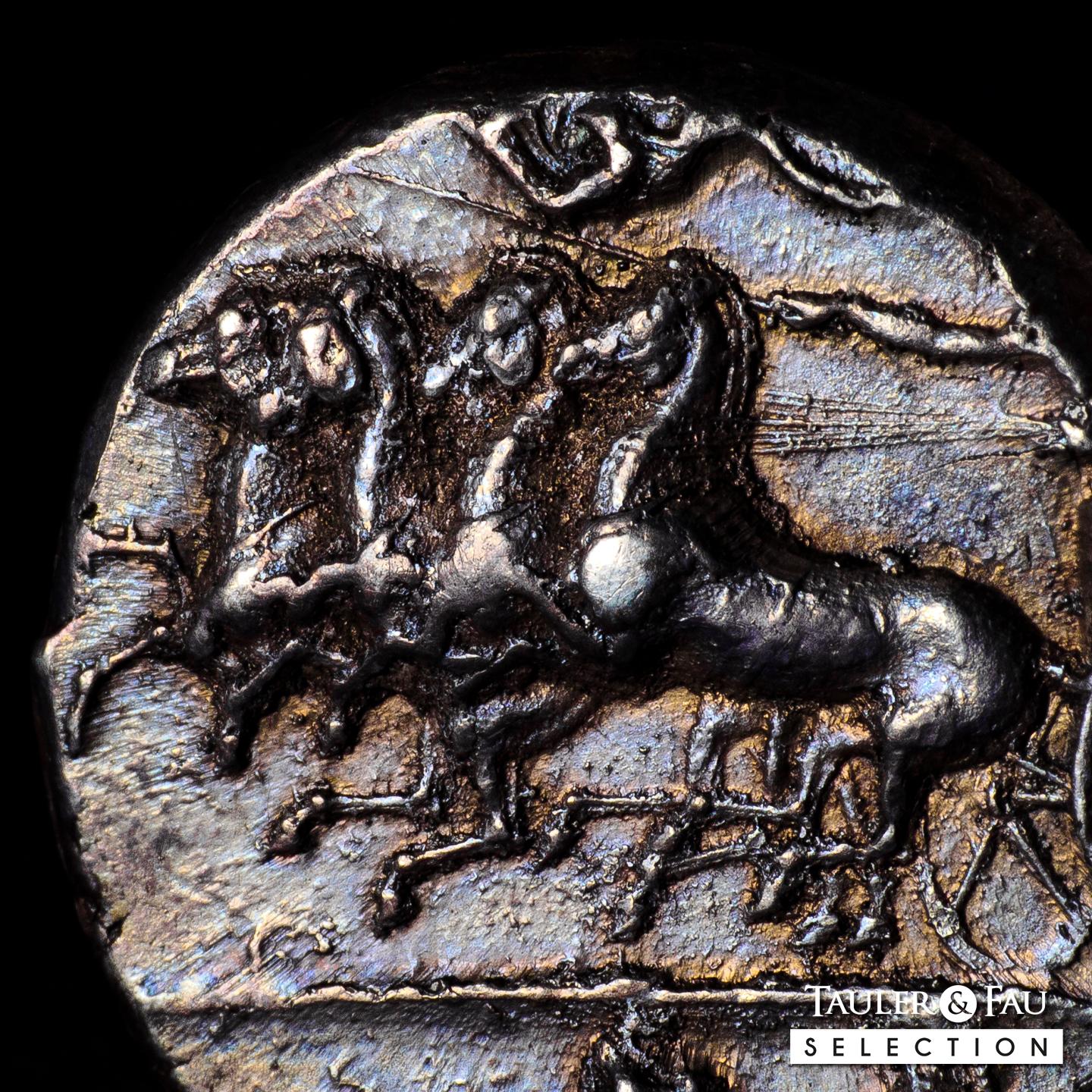
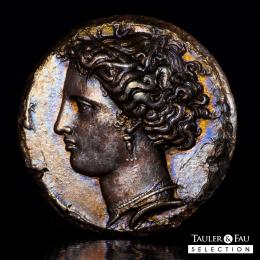
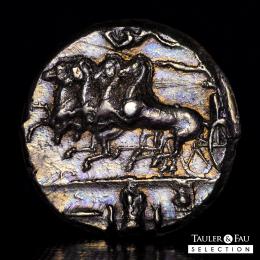
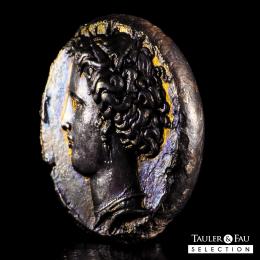
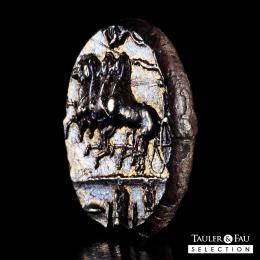
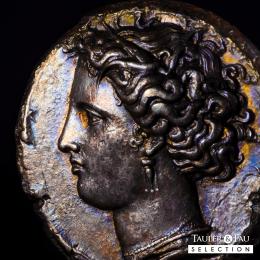
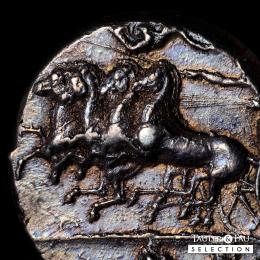
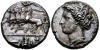
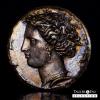
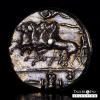
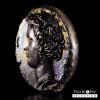
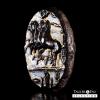
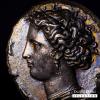
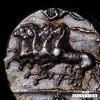
Sicily. Syracuse. Dekadrachm. 405-370 BC. Signed works by Master Euainetos. (Gallatin RVII/CXV, same dies). (Sng Ans-362). Anv.: Charioteer driving galloping quadriga to left, holding kentron in right hand, reins in left; above, Nike flies to right, wreath in outstretched arms to crown charioteer; in exergue, panoply of arms on two steps: cuirass, two greaves, Phrygian helmet; horizontal spear behind. Rev.: Head of nymph Arethusa to left, wearing wreath of reeds, triple-pendant earring, and pearl necklace; ΣΥΡΑΚΟΣΙΩΝ behind, four dolphins around and below lowermost dolphin under neck, signature EY-AINE. . 42,39 g.
Well-centered with deeply carved reliefs. Lovely cabinet patina with soft golden and bluish hues that further enhance its outstanding eye appeal. Some minor edge corrosion and signature off flan. Extremely rare.
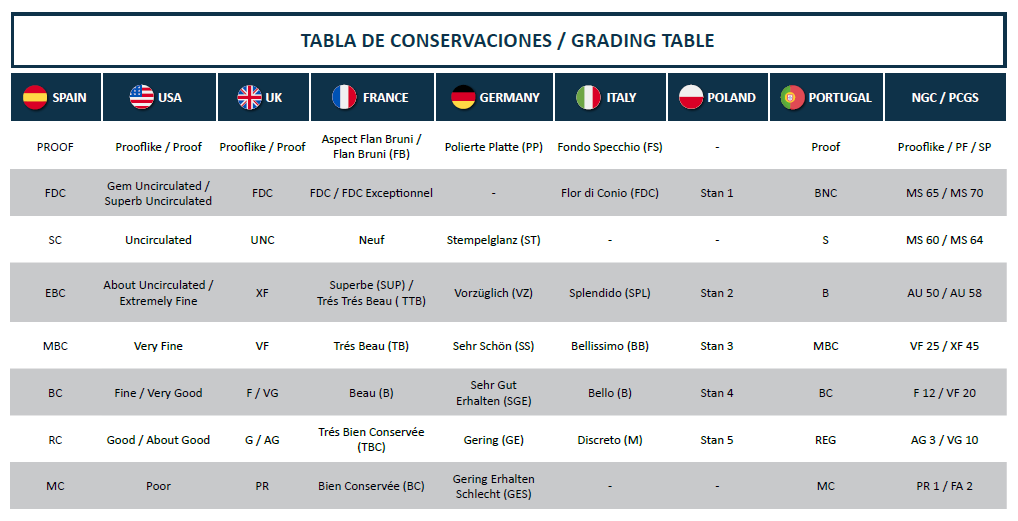
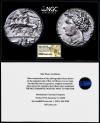
Photo certificate by NGC as XF, Strike 4/5, Surface 2/5, Fine style and edge chips.
Ex 51 Gallery (29-04-2015), lot 14.
Widely considered to be the most beautiful coins ever struck, the immense silver decadrachms of Syracuse from the later fifth century BC represent the full flowering of classical Greek sculptural art. Syracuse, the foremost Greek city in Sicily, had produced coins of exceptional beauty for nearly a century when, ca. 415 BC, engravers began signing their coin dies. Chief among these were the master engravers Kimon and Euainetos, whose large silver decadrachms seemed to capture the spirit of the artistic and intellectual revolution then sweeping the Greek world. The decadrachm of Euainetos became a widely-copied archetype for Greek coinage, and the master engraver's head of Arethusa remains a paradigm of cool, classical beauty today. Est...20000,00.
Bid history ( bids)
Auction Lots
Confirm your maximum bid
Confirm your maximum bid
Loading…
Conecting
Are you sure you want to buy the lot?
X
Confirm your maximum bid
Conecting