English
 Español
X
Historical Background
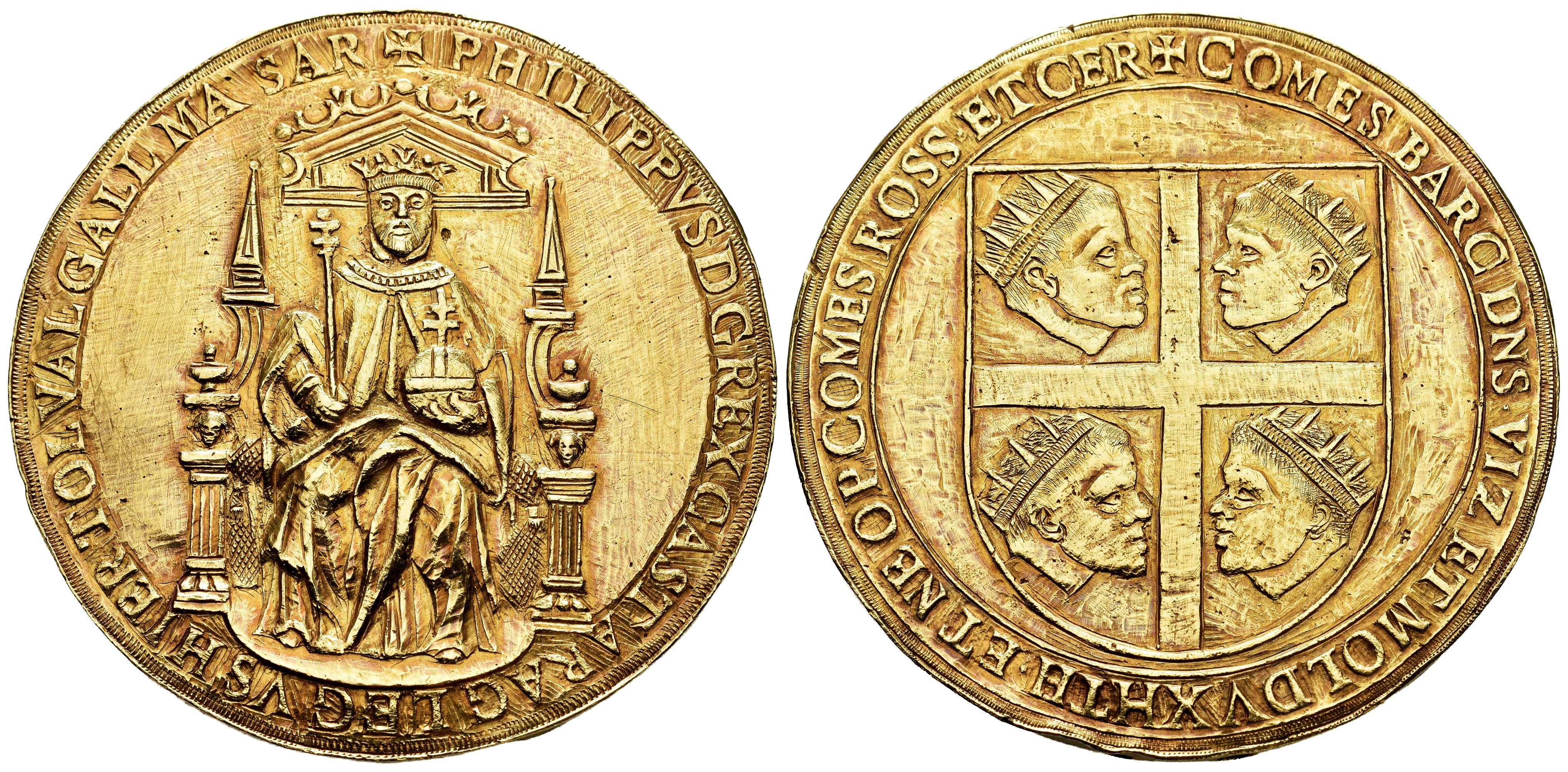
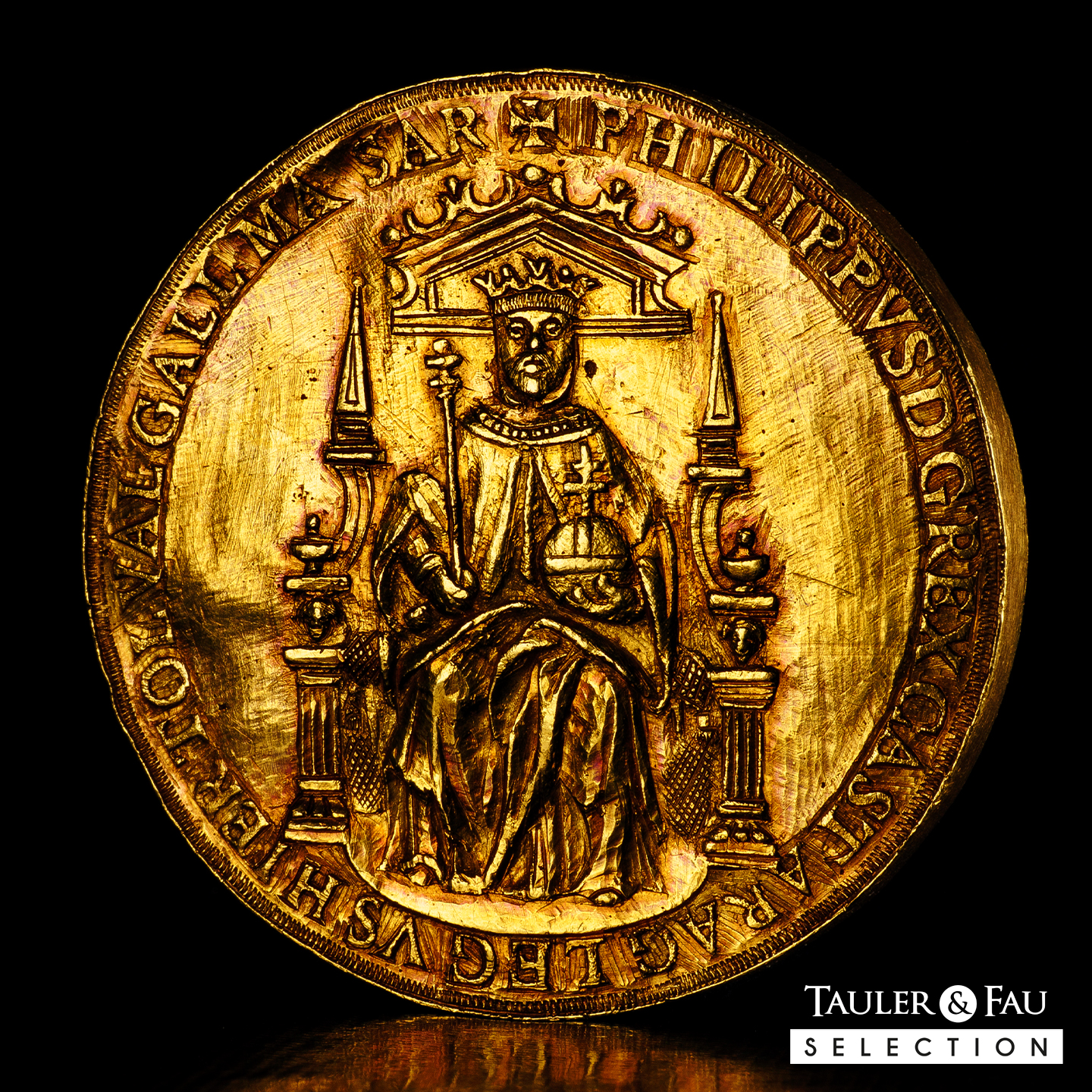
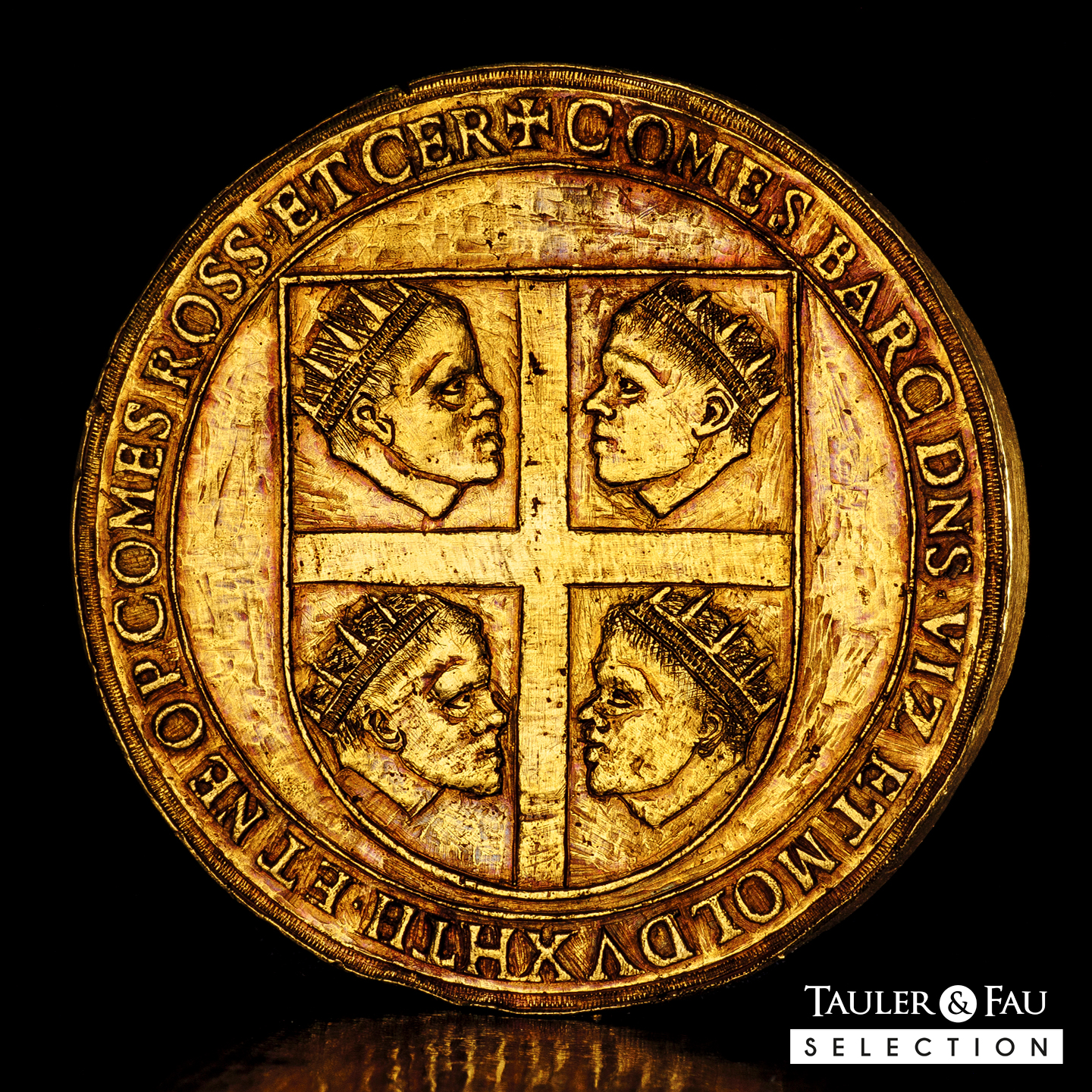
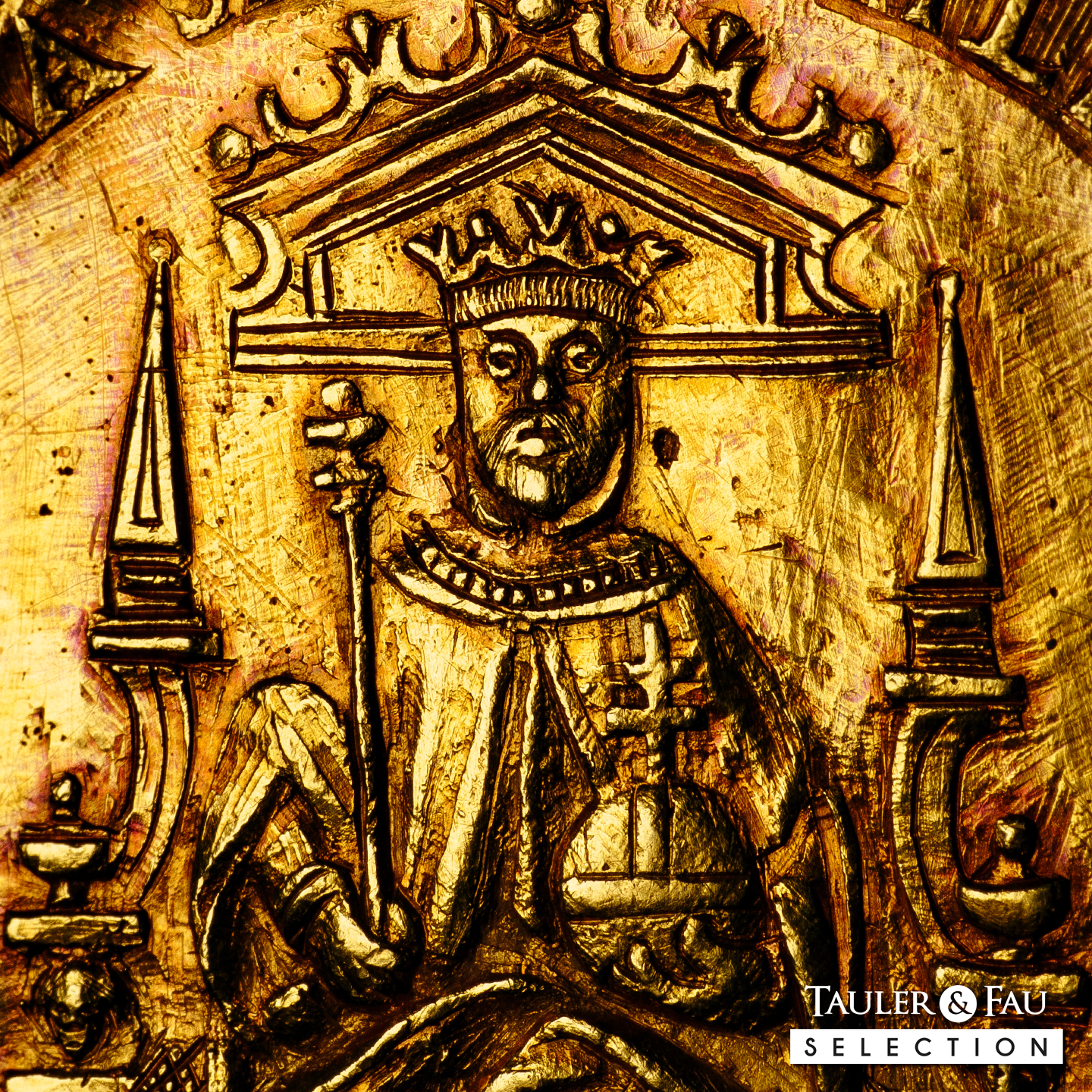
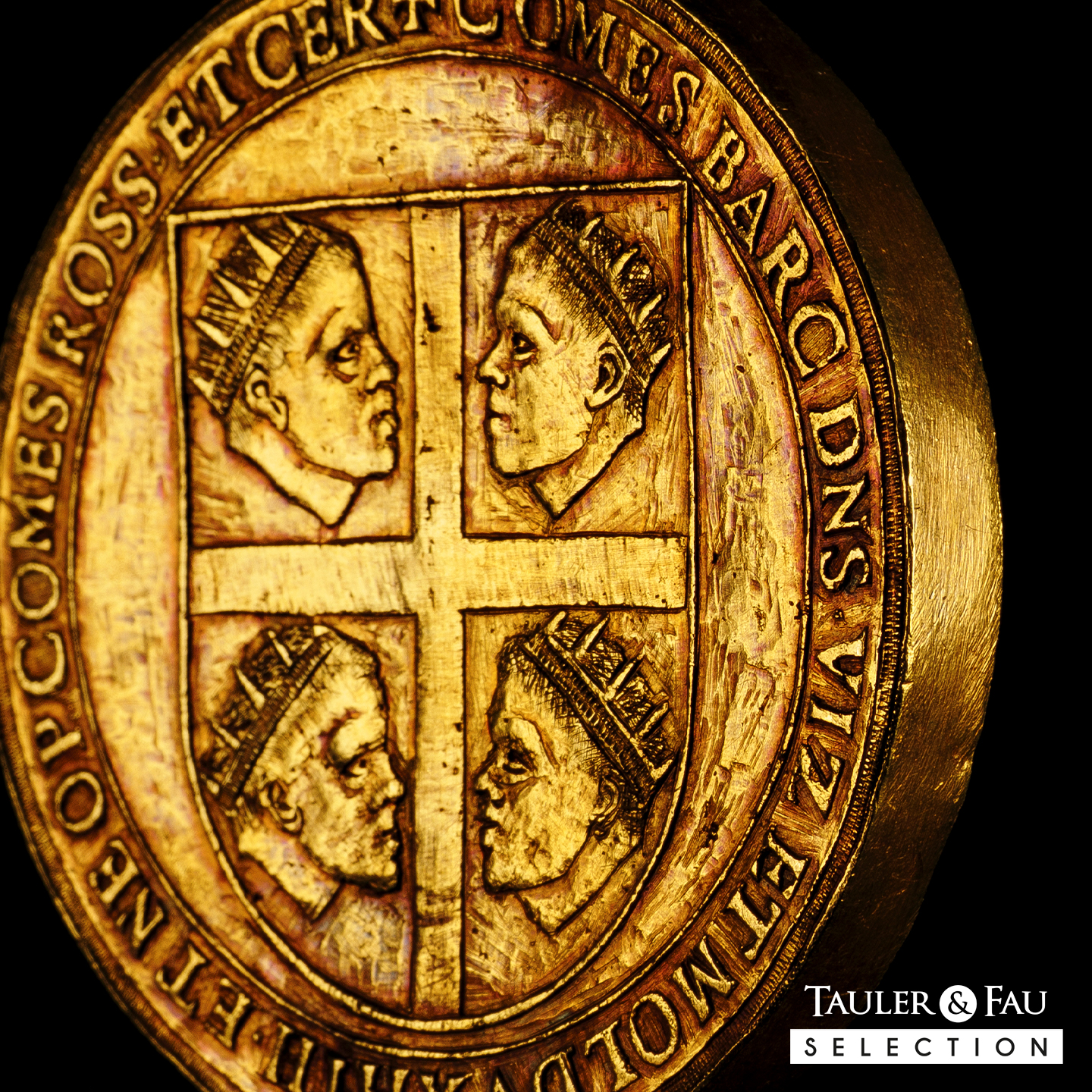
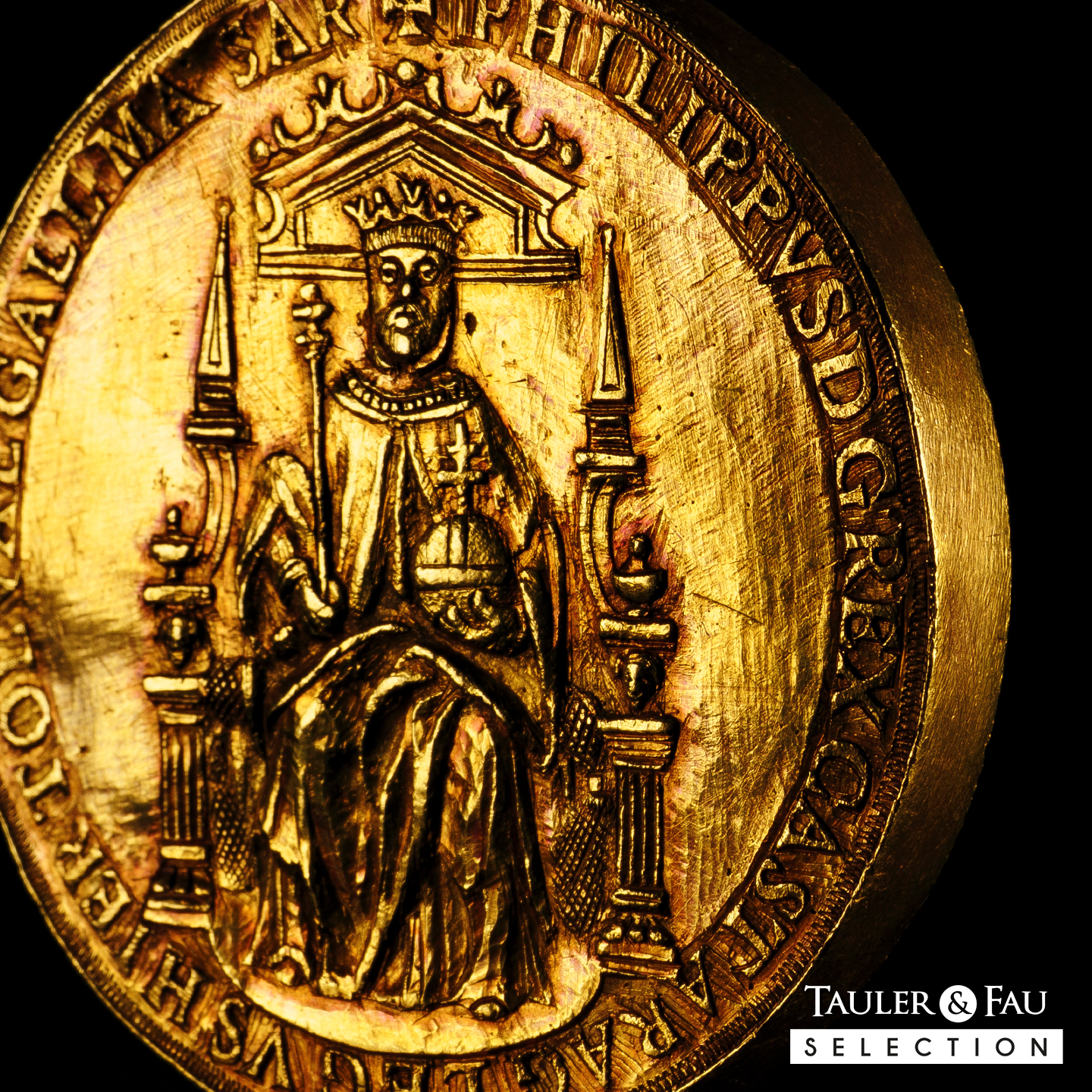
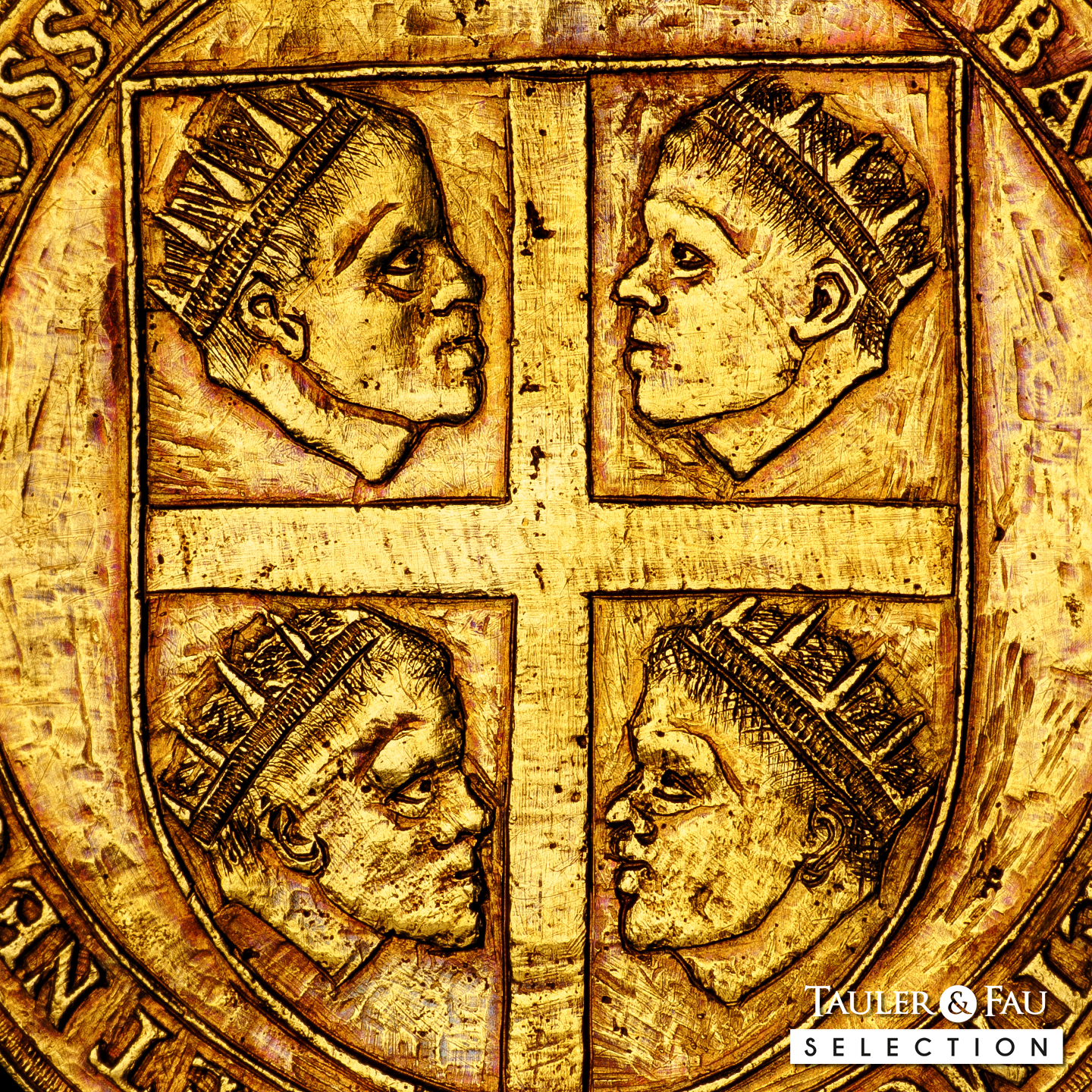
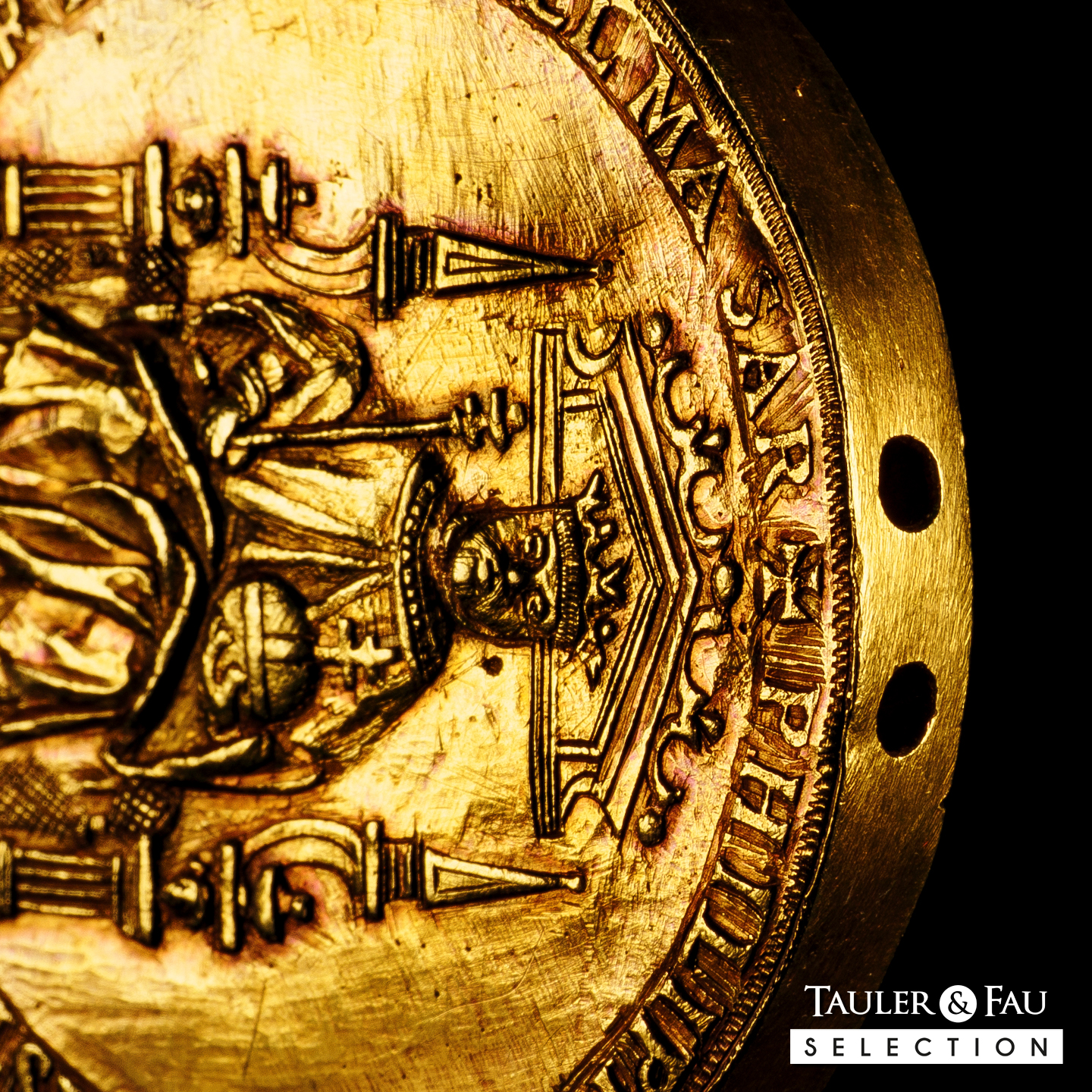
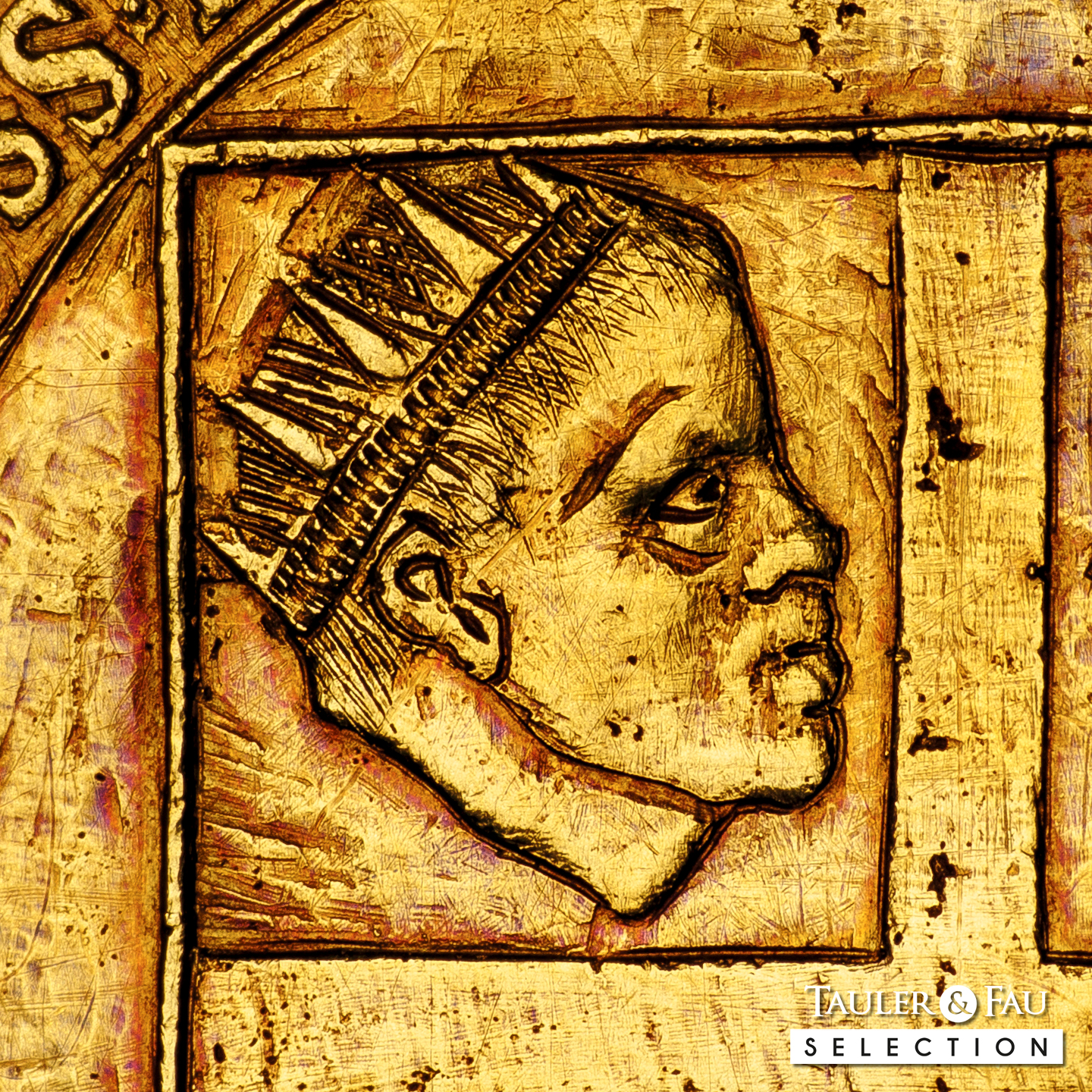
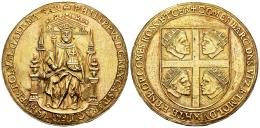
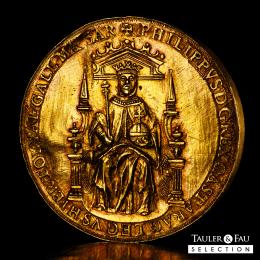
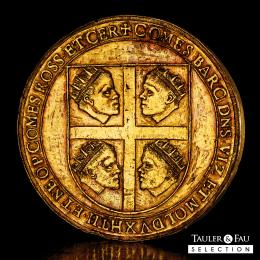
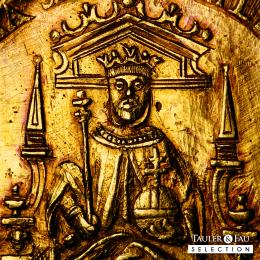
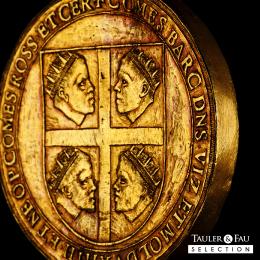
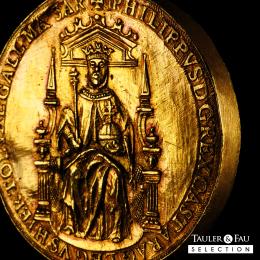
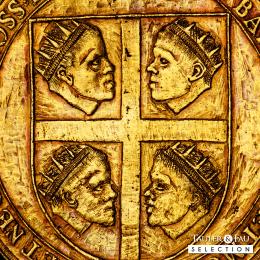
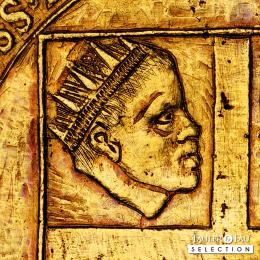
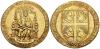
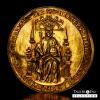
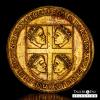
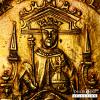
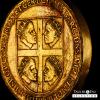
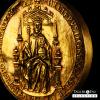
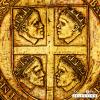
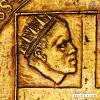
Philip II (1556-1598). Royal gold seal as King of Aragon, of exceptional historical importance. Obv.: + PHILIPPVS D G REX CAST ARAG HIER TOL GALL MA SAR. Royal figure seated on a high throne, holding scepter and globus cruciger. Rev.: + COMES BARC DNS VIZ ET MOL DVX HTH.ET NEOP COMES ROSS ET CER. Quartered shield with the crowned heads of the four Moorish kings, facing left and separated by the cross of Saint George. Gold. 93.85 g. 67.7 mm.
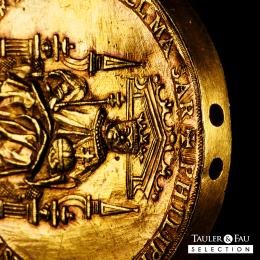
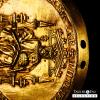
Executed using a mixed technique of striking and burin work. It presents four perforations on the edge —two at the top and two at the bottom— probably intended to house the suspension system by which the seal was attached to the document it sanctioned and authenticated.
The monarchs used pending gold seals to sanction documents of exceptional solemnity. Until the early 18th century, documentation issued for the Crowns of Castile and Aragon followed distinct sigillographic traditions and rules. The present piece fully corresponds to the model used in the Crown of Aragon since the medieval period: on the obverse, the sovereign enthroned and bearing the symbols of his dignity; on the reverse, the cross of Saint George cantoned by four heads of Moorish kings.
A gold specimen of Philip II closely related to the present example is preserved in the Museo Arqueológico Nacional, weighing 83.93 g and measuring 63 mm. According to the information published by the museum itself, that seal was originally formed of two faces joined by colored threads to the document it authenticated, now unknown. The MAN specimen was cut at an undetermined date, so that the obverse and reverse are now preserved separately. Its iconographic composition likewise follows the Aragonese model: the king enthroned with the attributes of his dignity and, on the reverse, the cross of Saint George with the four heads of Moorish kings.
The comparison with the specimen in the Museo Arqueológico Nacional is particularly significant, as it confirms both the Aragonese typology of this piece and its function as a great royal seal intended for the validation of documents of special importance. The present specimen, moreover, preserves the complete structure of the seal and the perforations linked to its original suspension system, a circumstance that considerably enhances its historical and sigillographic interest.
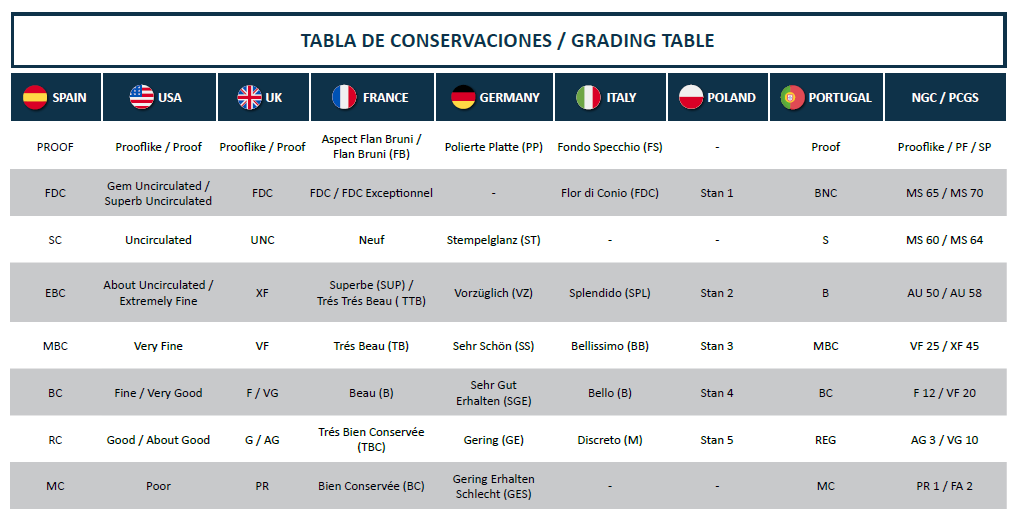
Ex Auktionshaus H.D. Rauch (25/05/1998), lot 2259. XF. Est...40000,00.
Auction Lots
Confirm your maximum bid
Confirm your maximum bid
Loading…
Conecting
Are you sure you want to buy the lot?
X
Confirm your maximum bid
Conecting